AI SEO tools speed up keyword research, content briefs and technical fixes, so your team publishes better pages faster and spends less time on manual checks. Some tools focus on writing, some on site-wide fixes and some on local listings. The nine below cover each job, with what each tool does and who it suits.
Choose an AI SEO Tool by the Job You Need
AI SEO tools split into three groups: all-in-one platforms, content optimisation tools and AI writing assistants. Most teams pair one platform with one writing or optimisation tool.
| Tool | Main job | Best for | Group |
|---|---|---|---|
| Semrush | Keywords, audits and tracking | Teams that want one platform | All-in-one platform |
| Alli AI | Site-wide on-page and technical changes | Large sites and online stores | Technical automation |
| Frase | Content briefs from top-ranking pages | Writers planning articles | Content optimisation |
| MarketMuse | Topic gaps and content planning | Teams building topical depth | Content optimisation |
| Surfer | Real-time content scoring | Writers editing drafts | Content optimisation |
| ChatGPT | Drafts, ideas and metadata | Fast first drafts | AI writing assistant |
| Yext | Local listings and location data | Multi-location businesses | Local search |
| Clearscope | Term coverage and content grades | Editors reviewing content | Content optimisation |
| Claude | Drafts, structure and editing | Long-form writing and editing | AI writing assistant |
1. Semrush: All-in-One SEO Platform for Data-Driven Decisions
Semrush suits teams that want keyword research, site audits, competitor data and rank tracking in one place. Semrush adds AI features such as content ideas on top of its search data.
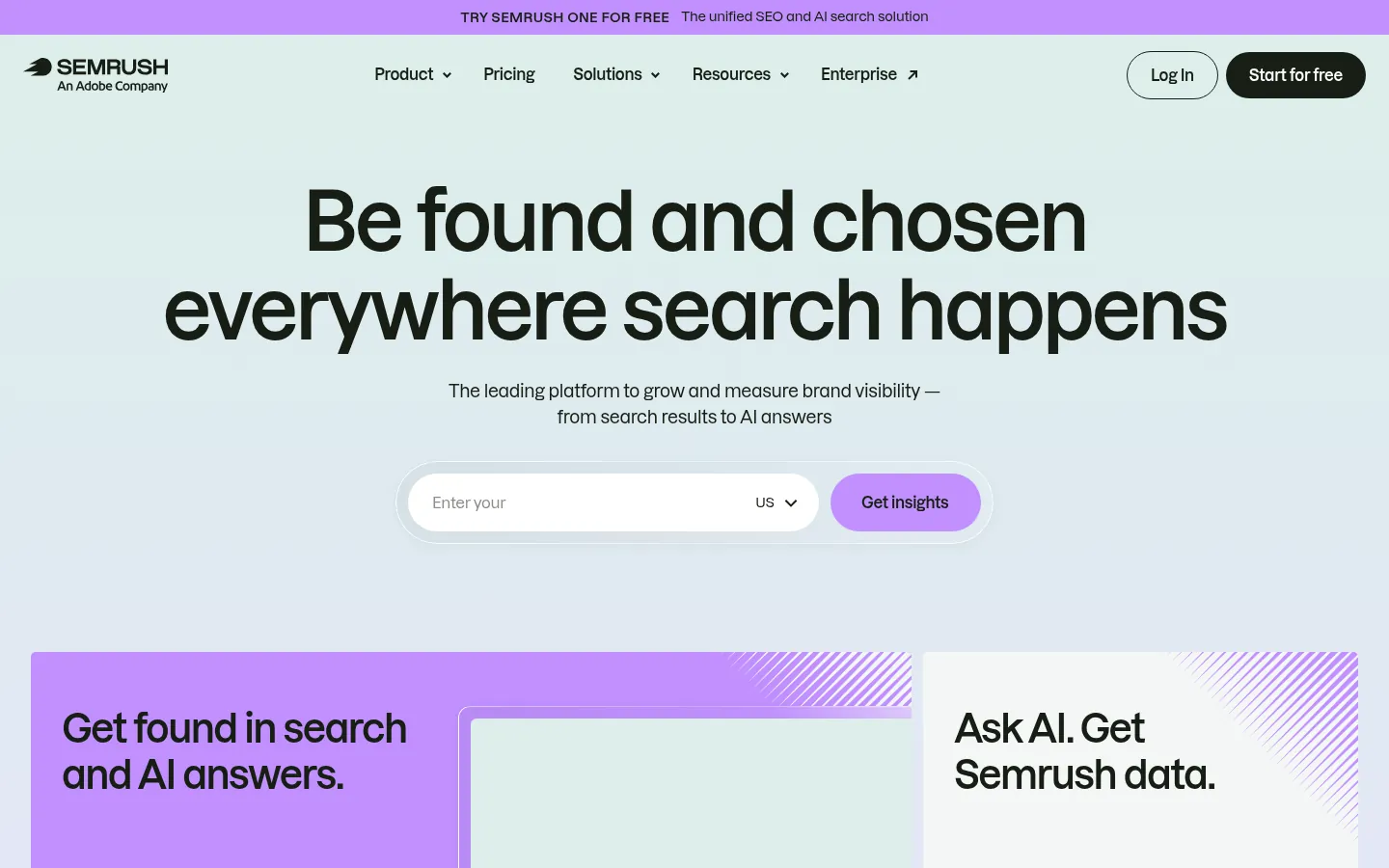
Screenshot: Semrush website, October 2026.
- Finds keyword opportunities with search volume and difficulty.
- Generates content ideas from search data.
- Audits your site for broken links and on-page errors.
- Tracks keyword rankings and competitors.
Semrush gathers data that otherwise sits in several tools, so your content team spends more time writing and less time collecting numbers.
2. Alli AI: Automating Technical SEO for Large Websites
Alli AI suits large websites and online stores that need on-page changes across thousands of pages without editing each one by hand. Alli AI applies changes site-wide from one dashboard.
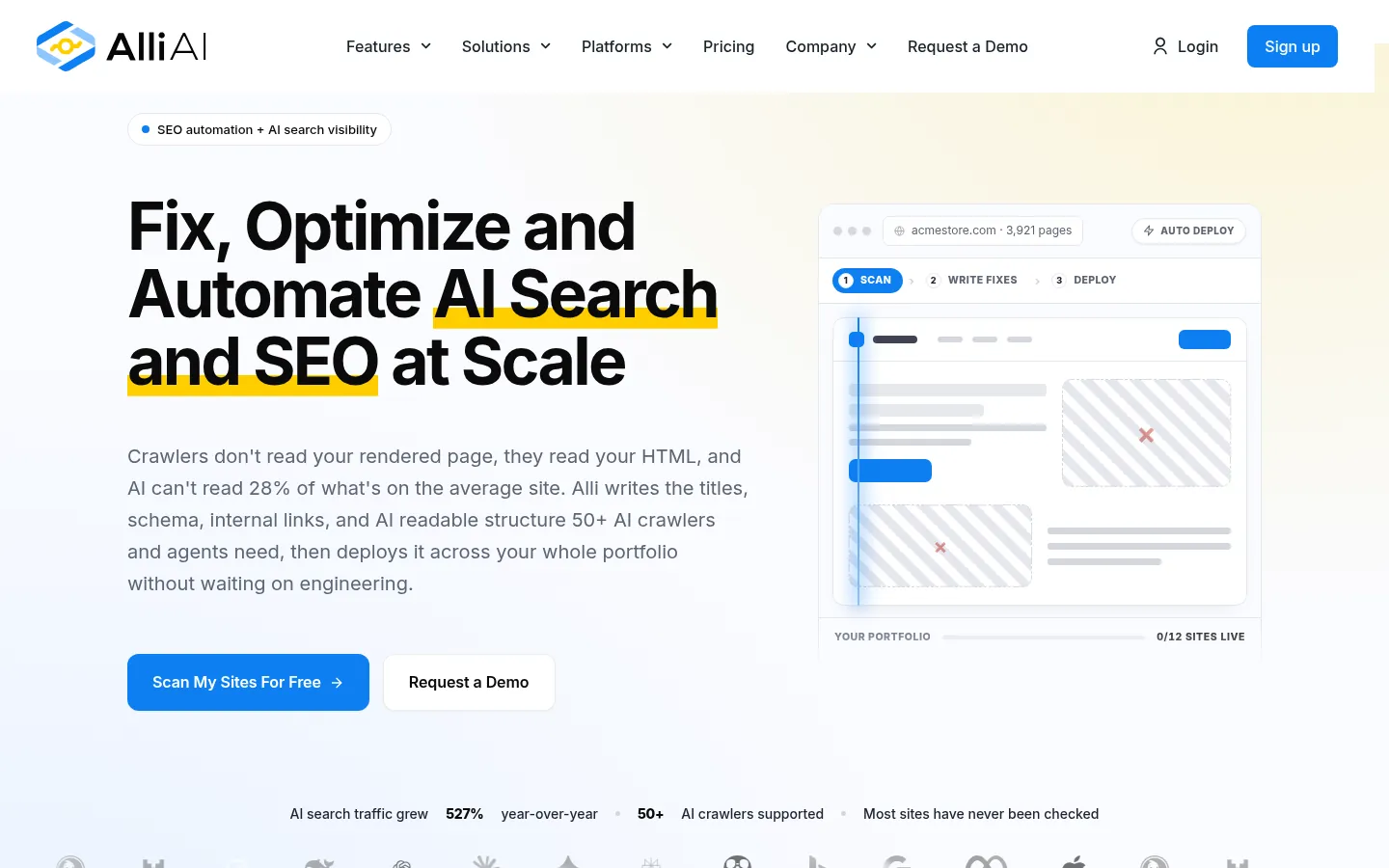
Screenshot: Alli AI website, October 2026.
- Automates internal links between related pages.
- Adds schema markup at scale.
- Updates meta tags and other on-page elements in bulk.
- Connects to common content management systems.
3. Frase: Content Briefs Built From Top-Ranking Pages
Frase studies the pages that already rank for your topic and turns them into a brief, so each article covers what searchers expect. Frase suits writers and editors who plan content around search intent.
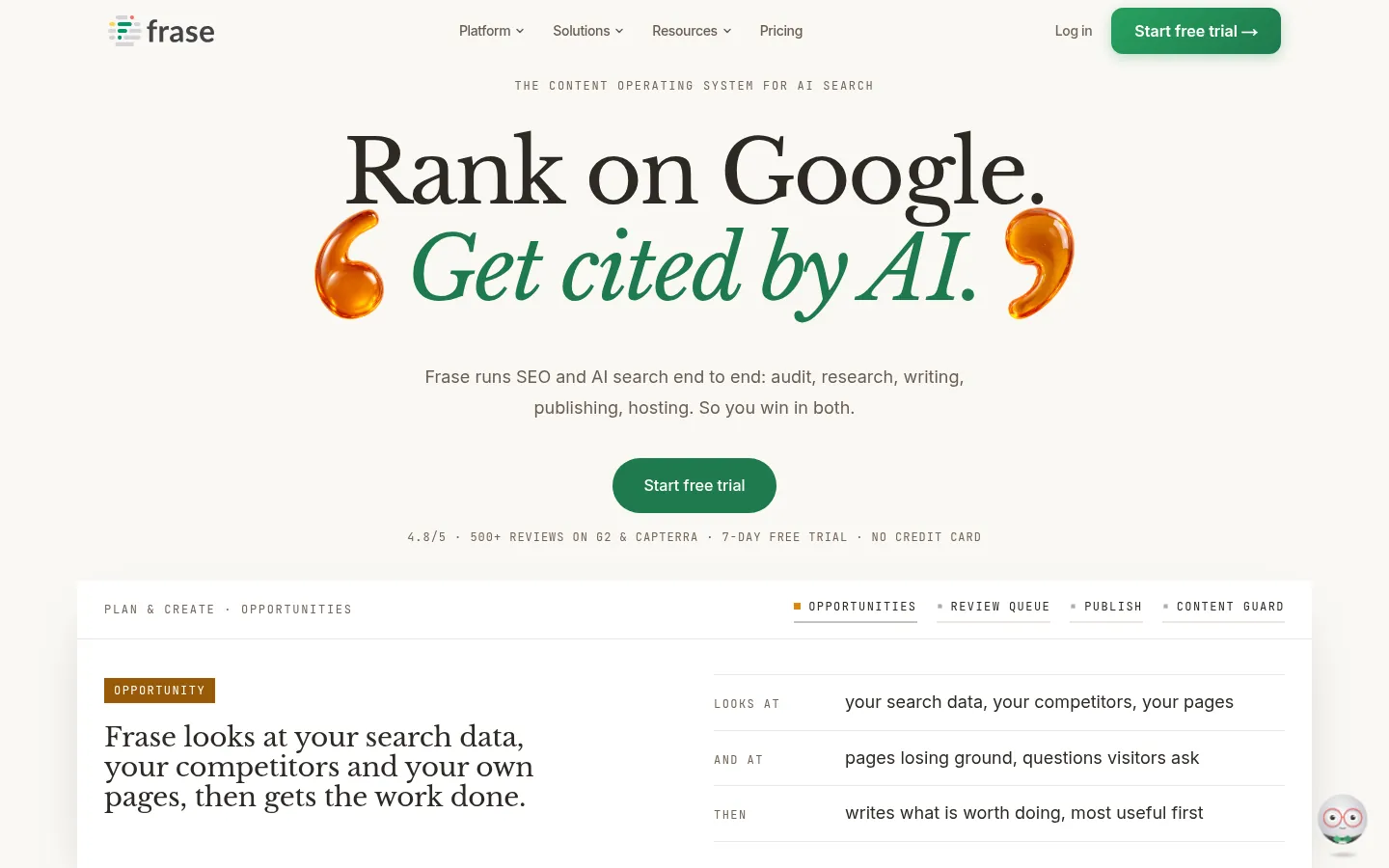
Screenshot: Frase website, October 2026.
- Builds content briefs from competitor pages.
- Collects the questions people ask about your topic.
- Shows keyword reports with difficulty scores.
- Grades drafts for coverage and readability.
4. MarketMuse: Content Strategy for Topical Authority
MarketMuse finds the topics and subtopics your site is missing, so you build depth on the subjects you want to be known for. MarketMuse suits teams planning a body of content, not a single article.
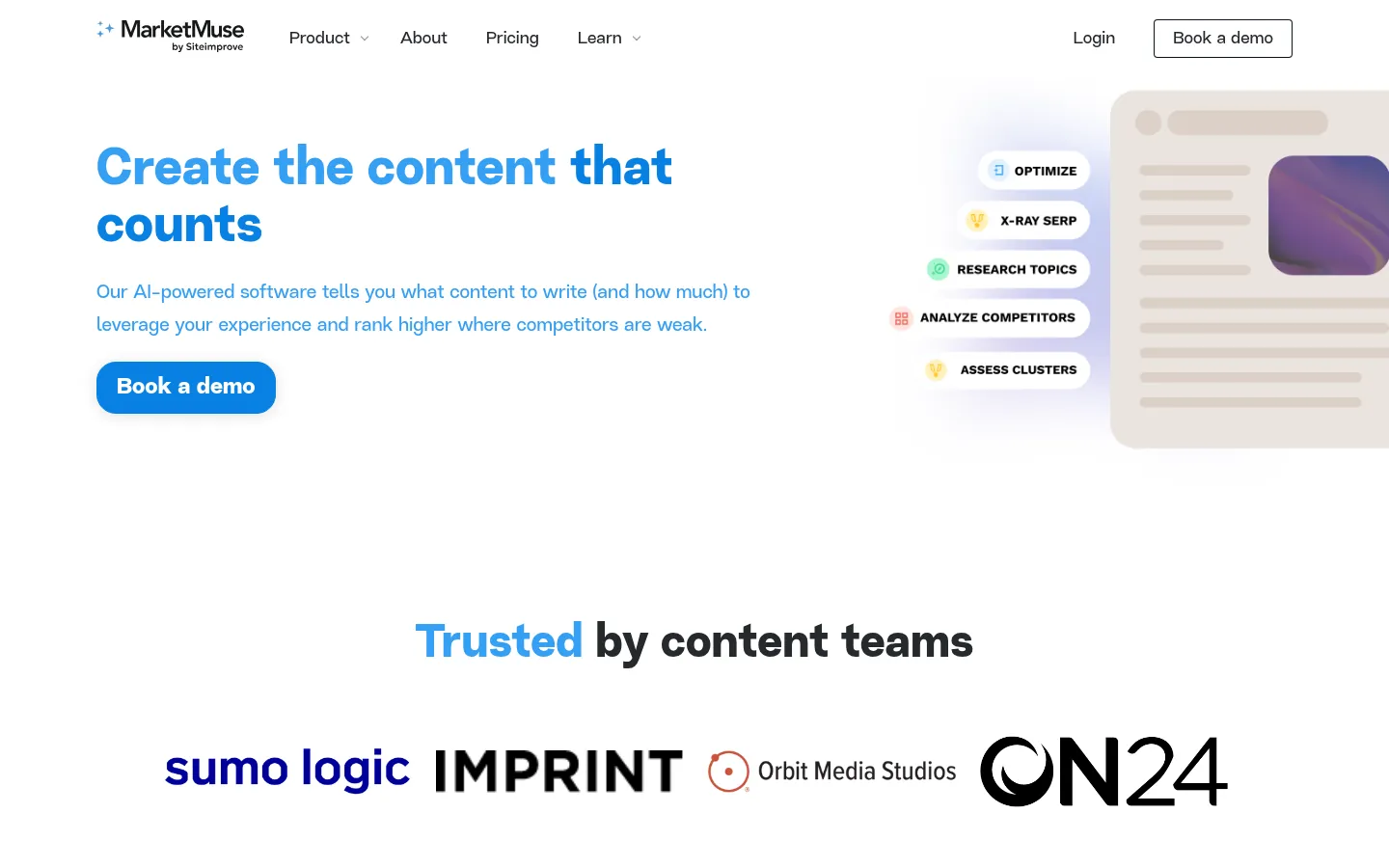
Screenshot: MarketMuse website, October 2026.
- Highlights missing content opportunities.
- Suggests keyword clusters for fuller coverage.
- Scores content on depth and relevance.
- Compares your coverage with competitors.
5. Surfer: Real-Time Content Scoring While You Write
Surfer scores your draft against top-ranking pages as you write, so you see which terms and sections to add before you publish. Surfer suits content teams that want a structured, data-led editing process.

Screenshot: Surfer website, October 2026.
- Checks term usage and relevance.
- Gives a content score as you edit.
- Suggests internal links.
- Recommends title tags and meta descriptions.
6. ChatGPT: Versatile AI Writing Help for SEO Content
ChatGPT speeds up first drafts, content ideas and metadata, so writers start from a structure instead of a blank page. ChatGPT suits teams that check facts and edit every output before publishing.
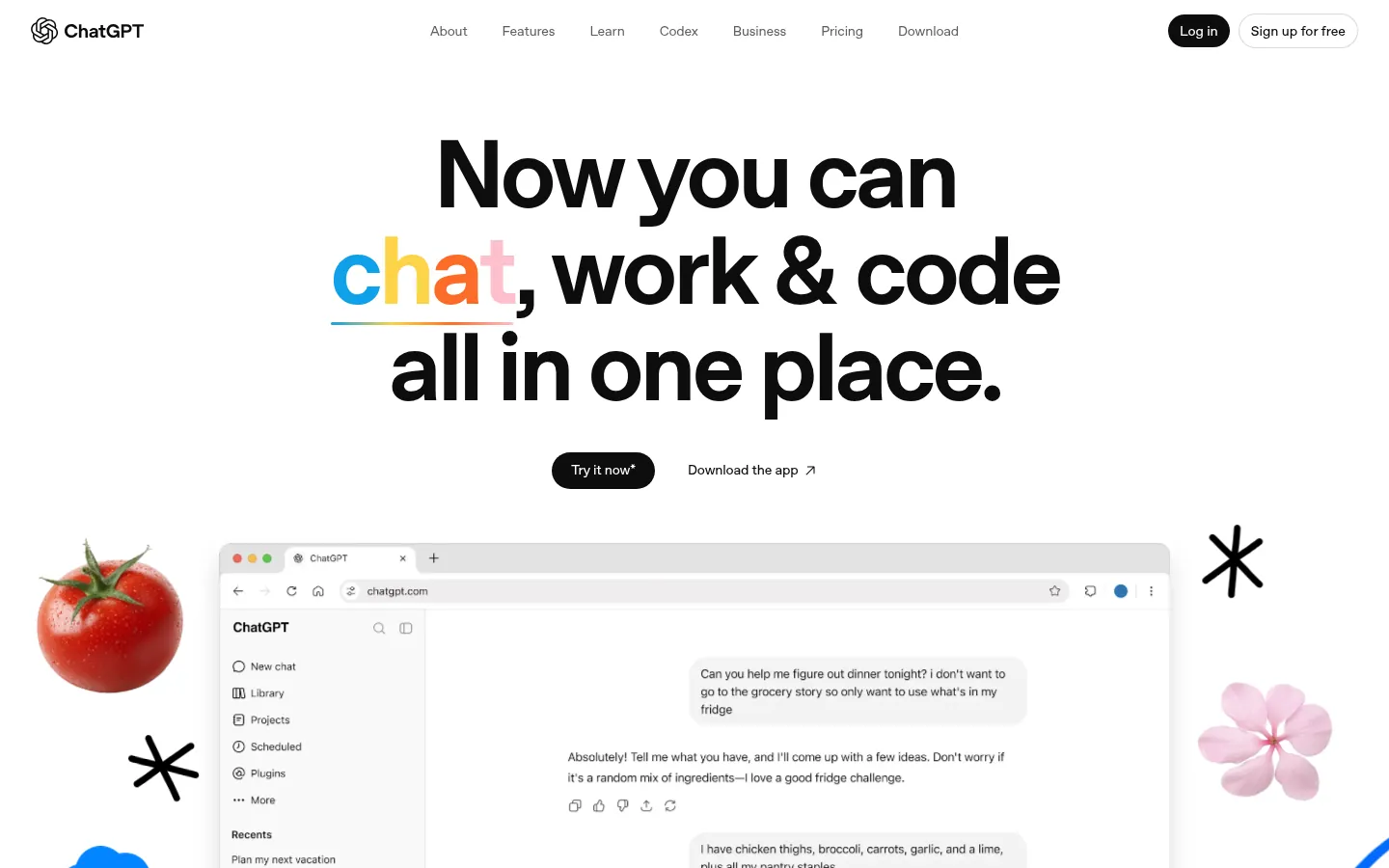
Screenshot: ChatGPT website, October 2026.
- Drafts articles, product descriptions and outlines.
- Suggests title tags and meta descriptions.
- Generates content ideas from your prompts.
- Rewrites copy for tone and length.
7. Yext: Location Data for Local Search
Yext keeps your business details consistent across listings and directories, so local searches and voice assistants find the right information. Yext suits businesses with many locations.

Screenshot: Yext website, October 2026.
- Manages listings such as your Google Business Profile from one place.
- Keeps names, addresses and opening hours consistent across sites.
- Publishes structured data for each location.
8. Clearscope: Content Grades for Editors
Clearscope grades your content against top-ranking pages and lists the related terms it is missing, so editors raise quality before publishing. Clearscope suits editors who review content from several writers.

Screenshot: Clearscope website, October 2026.
- Grades content for search relevance.
- Suggests related terms to cover.
- Highlights keyword opportunities.
- Compares your page with competing pages.
9. Claude: AI Writing Help for Long-Form Content
Claude helps with long-form drafts, structure and editing, so writers produce clear articles and product copy faster. Claude suits content teams who keep a human editor on every page.
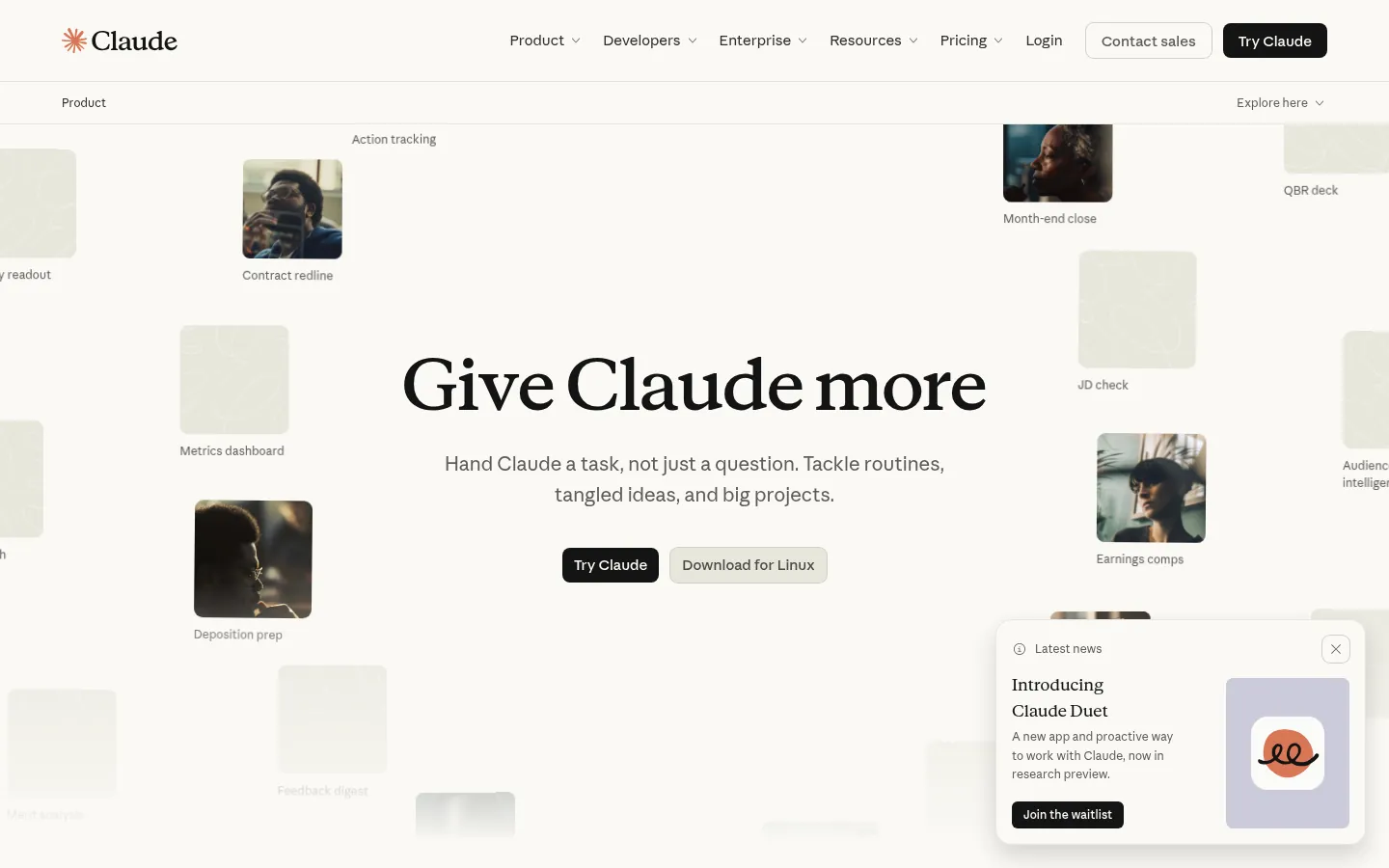
Screenshot: Claude website, October 2026.
- Suggests related terms and topics.
- Structures content to match search intent.
- Edits drafts for clarity and length.
How AI SEO Tools Fit Into Your Content Work
AI SEO tools handle the research and repetitive checks, while your team supplies the expertise, examples and judgement that make content worth ranking.
How do AI SEO tools help with content structure?
AI SEO tools compare your draft with top-ranking pages and show the headings, sections and terms you are missing. Frase and Clearscope, for example, flag gaps in coverage before you publish.
Do AI SEO tools replace human writers?
No, AI SEO tools speed up research and drafting, but they lack first-hand experience and judgement, so a human writer and editor stay essential. The best results come from AI handling research and structure while people add expertise and check every fact.
Do AI SEO tools work for small businesses?
Yes, AI SEO tools save small teams the time they lack for manual keyword research and audits. An all-in-one platform such as Semrush covers keywords, audits and tracking in one subscription.
How do AI SEO tools improve technical SEO?
AI SEO tools find broken links, missing alt text, duplicate content and slow pages, and some apply fixes in bulk. Alli AI, for example, changes meta tags and internal links across many pages at once. The technical SEO tools guide compares dedicated crawlers.
Are AI SEO tools worth the cost?
AI SEO tools pay off when they replace hours of manual research and checks that your team otherwise does each month. Free tools cover the basics; paid tools add competitor data, scale and automation.
Combine AI Tools With an SEO Plan
AI tools make SEO work faster, and a clear plan decides which pages to write and fix first. Learn what AI SEO is, compare on-page SEO tools, or see how Aemorph's AI SEO service gets your business ranked in Google and cited in AI answers.