API management tools give you one place to secure, publish, monitor and scale your APIs, so every service follows the same access rules and you see problems before customers do. The seven platforms below cover enterprise integration suites, cloud-native gateways and open-source options. Each entry shows who the platform suits and how it is priced in October 2026, from pay-per-request to custom contracts.
Why API Management Matters
Unmanaged APIs drift into inconsistent security, untracked versions and no clear view of usage; an API management platform puts all of that under one set of policies. That matters most once you run many services or open APIs to partners and customers.
What an API management platform gives you:
- Routes traffic through a central API gateway.
- Enforces authentication, authorisation and rate limits.
- Manages versions and deprecations.
- Onboards developers through a self-service portal.
- Monitors usage, errors and latency.
What are the parts of an API management platform?
Most platforms combine five parts: a gateway, a developer portal, lifecycle tools, security policies and analytics. Gateways handle live traffic; the other four govern how APIs are designed, published and measured. Some tools on this list, such as Amazon API Gateway, focus mainly on the gateway.
1. MuleSoft Anypoint Platform
MuleSoft suits large organisations that manage APIs and system integrations together under one governance framework. It combines a gateway with integration tooling for connecting legacy and cloud systems.
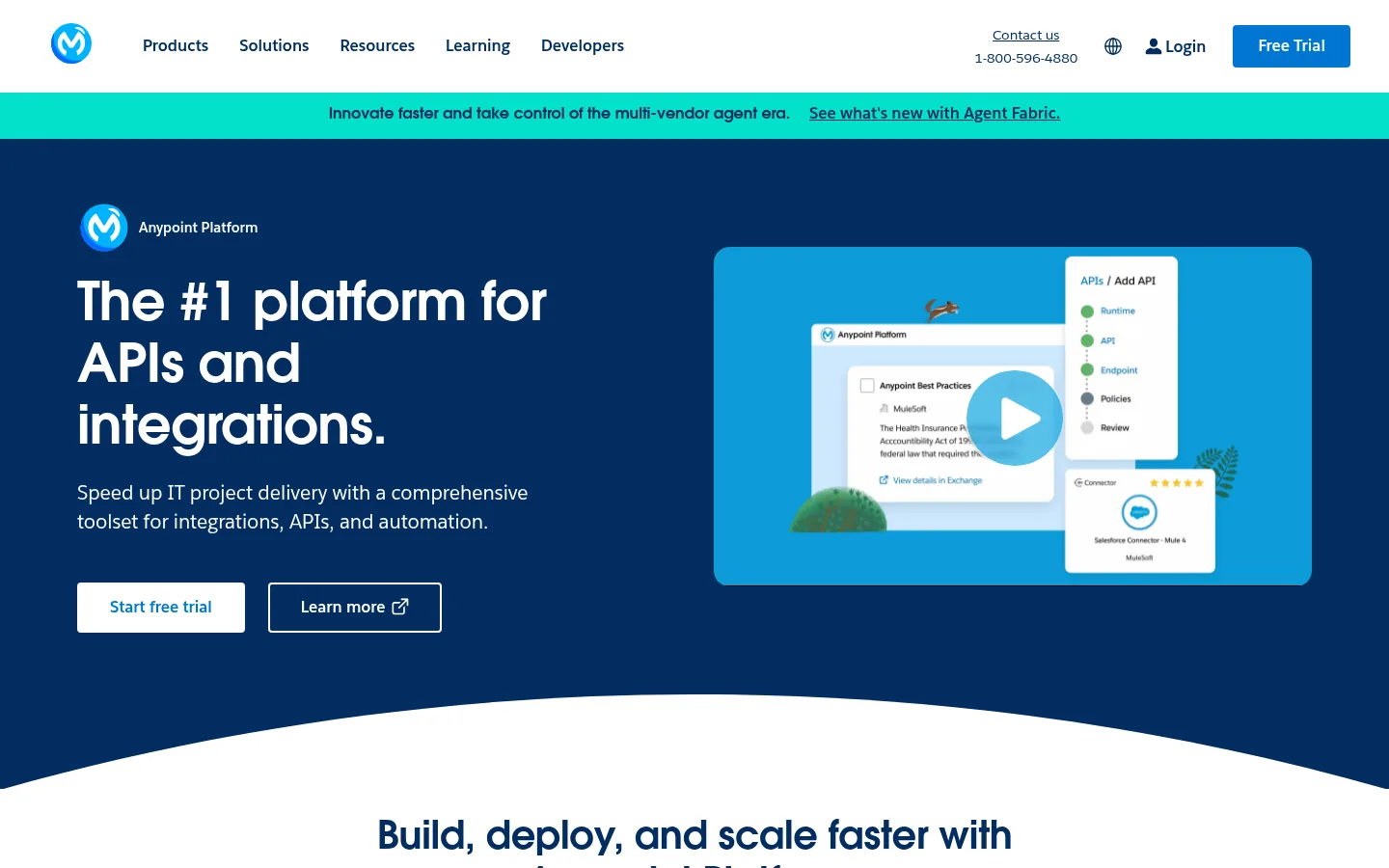
Screenshot: MuleSoft Anypoint Platform website, October 2026.
What MuleSoft does well:
- Enforces gateway policies.
- Manages the full API lifecycle.
- Publishes APIs through a developer portal.
- Integrates and orchestrates enterprise systems.
MuleSoft pricing
MuleSoft sells Anypoint Platform through custom contracts, with no public price list.
| Plan | Price | Pricing basis | Best for | Watch for |
|---|---|---|---|---|
| Anypoint Platform | Custom | APIs, integrations and environments | Mid-size to large organisations | High entry cost |
Source: MuleSoft pricing, checked October 2026.
2. Google Apigee
Apigee suits teams that run APIs as products, with deep analytics, security and monetisation for partner and customer APIs. It runs on Google Cloud and supports hybrid deployment.
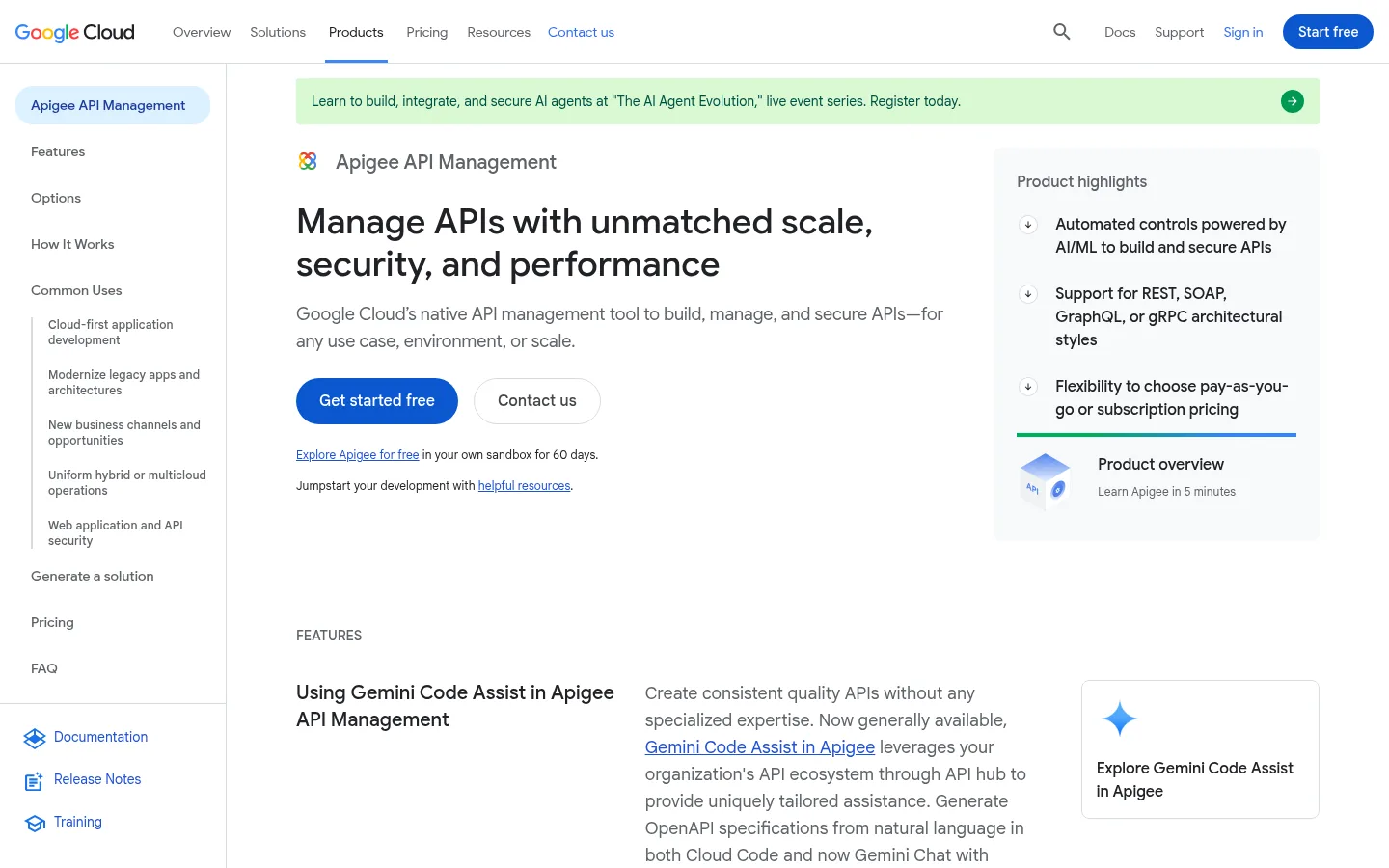
Screenshot: Google Apigee website, October 2026.
What Apigee does well:
- Manages traffic and quotas.
- Analyses API usage and performance.
- Secures APIs with policies and threat protection.
- Monetises APIs through developer portals.
Apigee pricing
Apigee offers a free evaluation, pay-as-you-go usage pricing and quoted subscriptions.
| Option | Price | Pricing basis | Best for | Watch for |
|---|---|---|---|---|
| Evaluation | USD 0 for 60 days | Trial organisation | Testing | Not for production |
| Pay-as-you-go | USD 20 per 1 million calls (Standard proxy, up to 50 million) | Calls plus environments from USD 365 a month per region | Growing API programmes | Costs rise with volume |
| Subscription | Quote | Standard, Enterprise or Enterprise Plus | Large API programmes | Annual commitment |
Source: Apigee pricing, checked October 2026.
3. Azure API Management
Azure API Management suits organisations on Microsoft Azure or running hybrid environments, with tiers from a serverless consumption plan to multi-region Premium. It connects to Azure identity and security services.
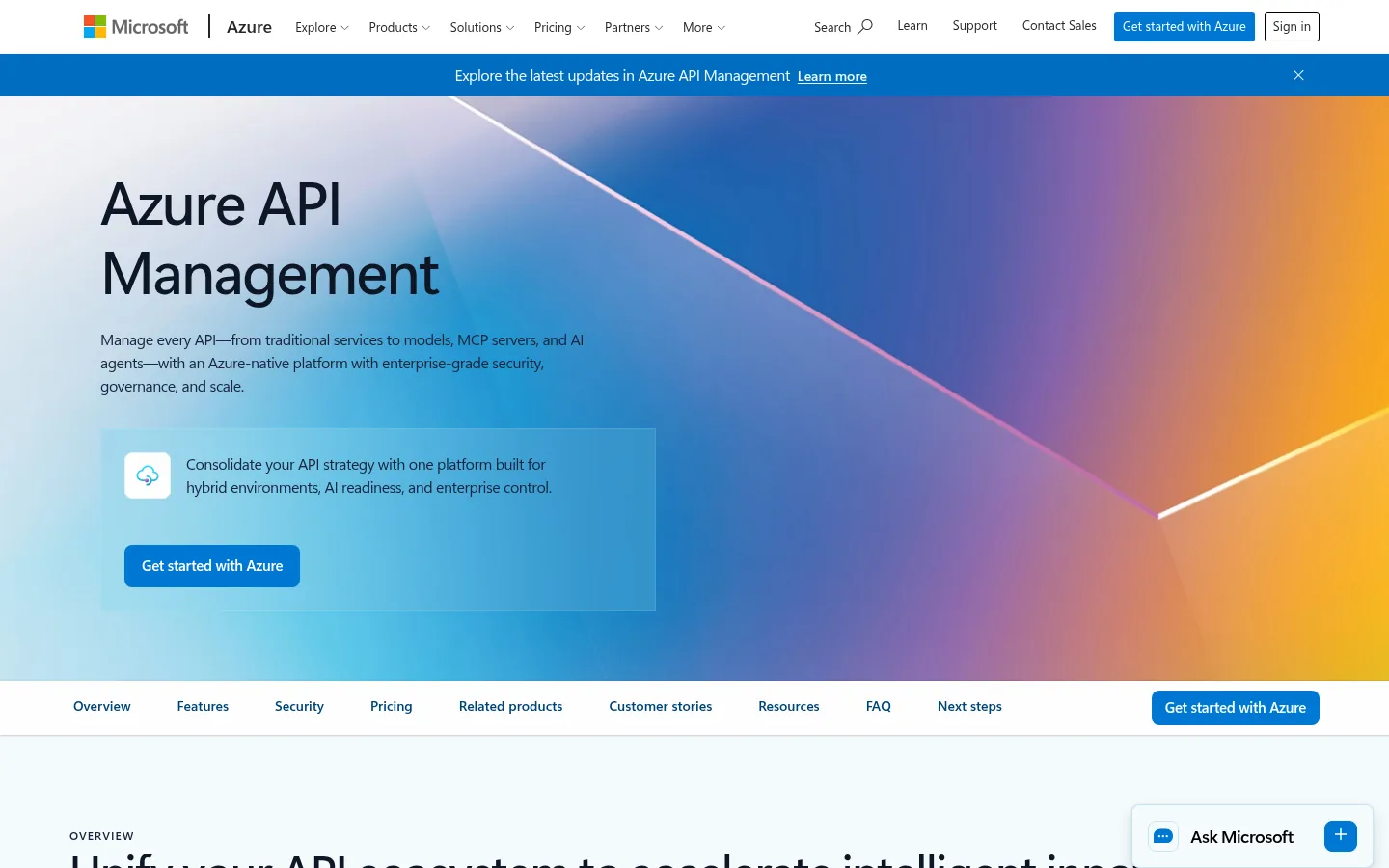
Screenshot: Azure API Management website, October 2026.
What Azure API Management does well:
- Applies gateway policies.
- Deploys across regions and hybrid environments on higher tiers.
- Publishes a developer portal.
- Connects to Microsoft Entra ID and Azure security.
Azure API Management pricing
Azure API Management prices by tier and unit, with a consumption tier billed per operation.
| Tier | Price | Billing | Best for | Watch for |
|---|---|---|---|---|
| Consumption | First 1 million operations included, then USD 0.042 per 10,000 | Per operation | Light or spiky traffic | Fewer features |
| Developer | USD 48.04 a month | Per unit | Non-production testing | No production SLA |
| Basic | USD 147.17 a month | Per unit | Small production workloads | Limited scale |
| Standard | USD 686.72 a month | Per unit | Medium workloads | Cost per unit |
| Premium | USD 2,795.17 a month | Per unit | Multi-region enterprise | Highest cost |
Source: Azure API Management pricing, East US classic tiers, checked October 2026. Newer v2 tiers are also listed on the page.
4. Amazon API Gateway
Amazon API Gateway suits AWS teams that want a fully managed, serverless gateway priced per request. It focuses on runtime traffic rather than full lifecycle governance.
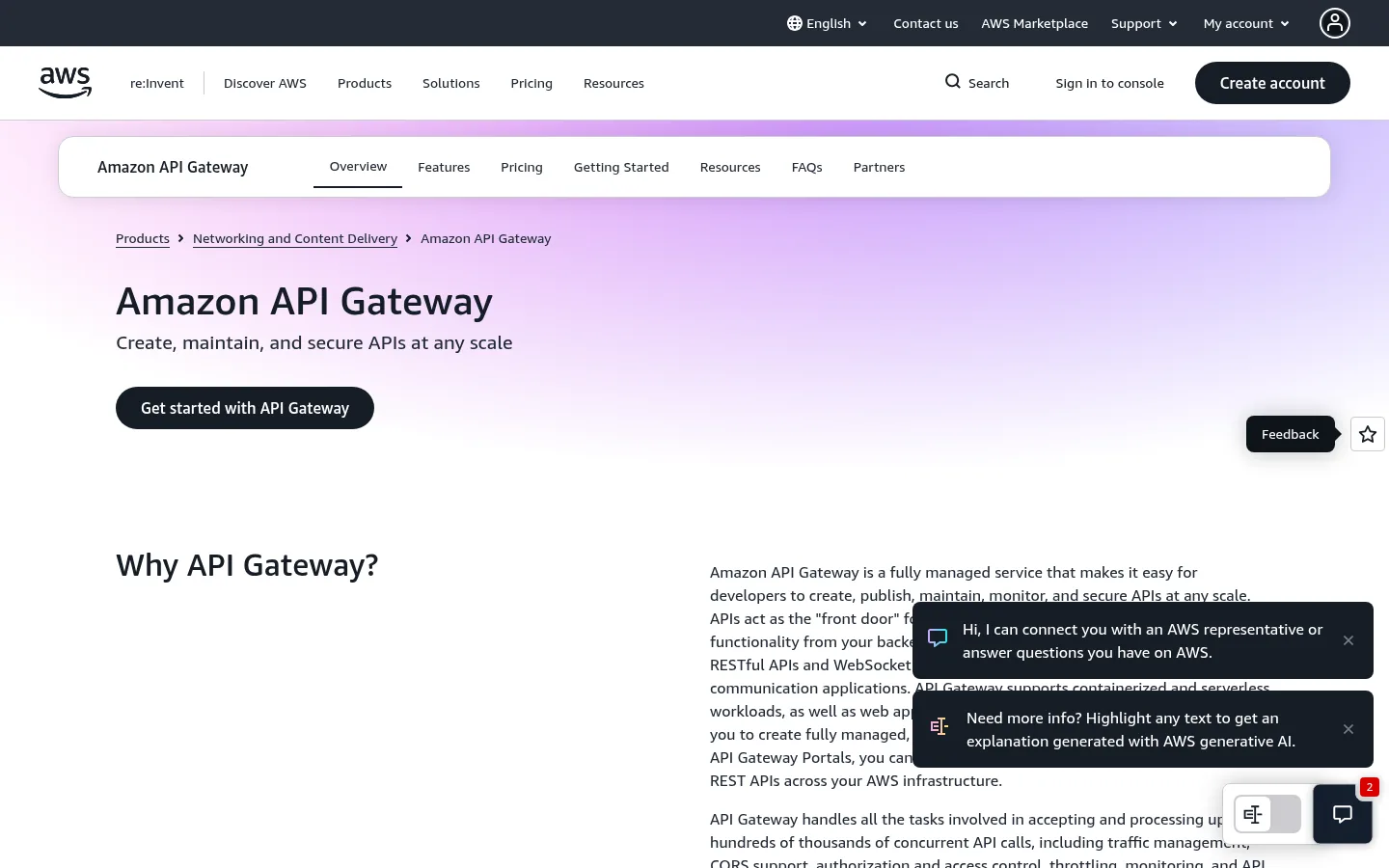
Screenshot: Amazon API Gateway website, October 2026.
What Amazon API Gateway does well:
- Runs a serverless gateway.
- Routes and throttles requests.
- Integrates with IAM and other AWS services.
- Scales automatically with traffic.
Amazon API Gateway pricing
Amazon API Gateway charges per request, with a free tier in the first 12 months.
| API type | Price | Free tier | Best for | Watch for |
|---|---|---|---|---|
| HTTP APIs | USD 1.00 per million requests | 1 million calls a month for 12 months | Simple, low-cost APIs | Fewer features than REST |
| REST APIs | USD 3.50 per million requests | 1 million calls a month for 12 months | Full-featured APIs | Higher price per call |
Source: Amazon API Gateway pricing, first-tier US prices, checked October 2026. Prices fall at higher volumes.
5. Kong
Kong suits cloud-native and Kubernetes teams that want a high-performance gateway with plugins, as open source or as the managed Konnect platform. Enterprise governance and analytics sit in the paid tiers.
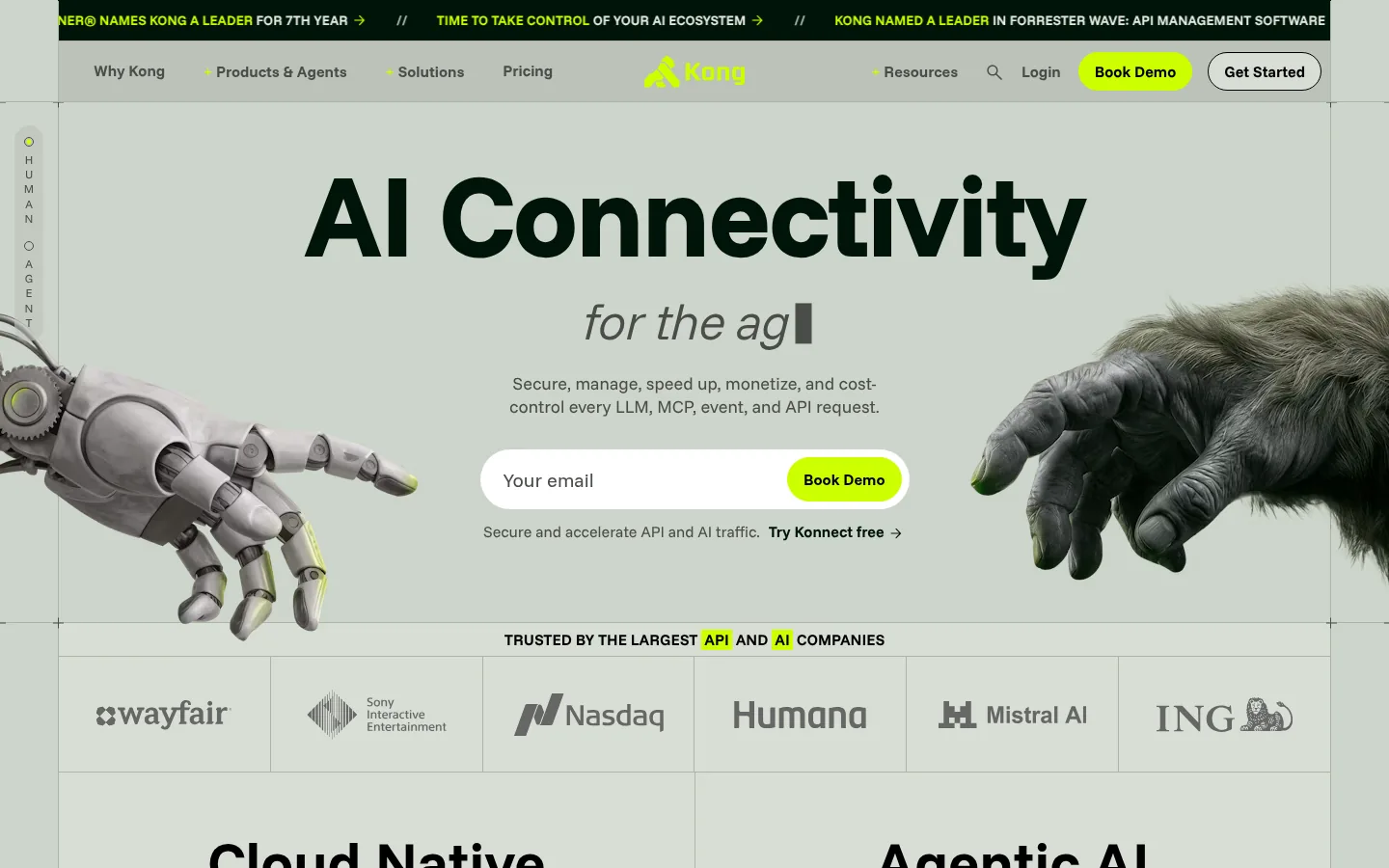
Screenshot: Kong website, October 2026.
What Kong does well:
- Runs a high-performance gateway.
- Supports Kubernetes and cloud-native deployment.
- Extends through plugins.
- Adds governance and analytics in Konnect.
Kong pricing
Kong Konnect Plus starts at USD 25 a month plus usage, and Enterprise is priced on an annual contract.
| Option | Price | Pricing basis | Best for | Watch for |
|---|---|---|---|---|
| Konnect Plus | From USD 25 a month | Plus usage | Small teams starting on Konnect | Usage adds up |
| Serverless gateway | USD 25 a month | Per control plane | Light workloads | Usage charges |
| Hybrid gateway | USD 200 a month | Per control plane | Self-hosted data planes | You run the infrastructure |
| Dedicated cloud gateway | USD 500 a month | Per control plane, plus USD 200 per extra 1 million requests | Managed production | Request charges |
| Enterprise | Custom | Annual contract | Large organisations | Sales-led |
Source: Kong pricing, checked October 2026.
6. IBM API Connect
IBM API Connect suits regulated industries such as finance, healthcare and government that need strict lifecycle governance and audit trails. It favours policy control over lightweight deployment.
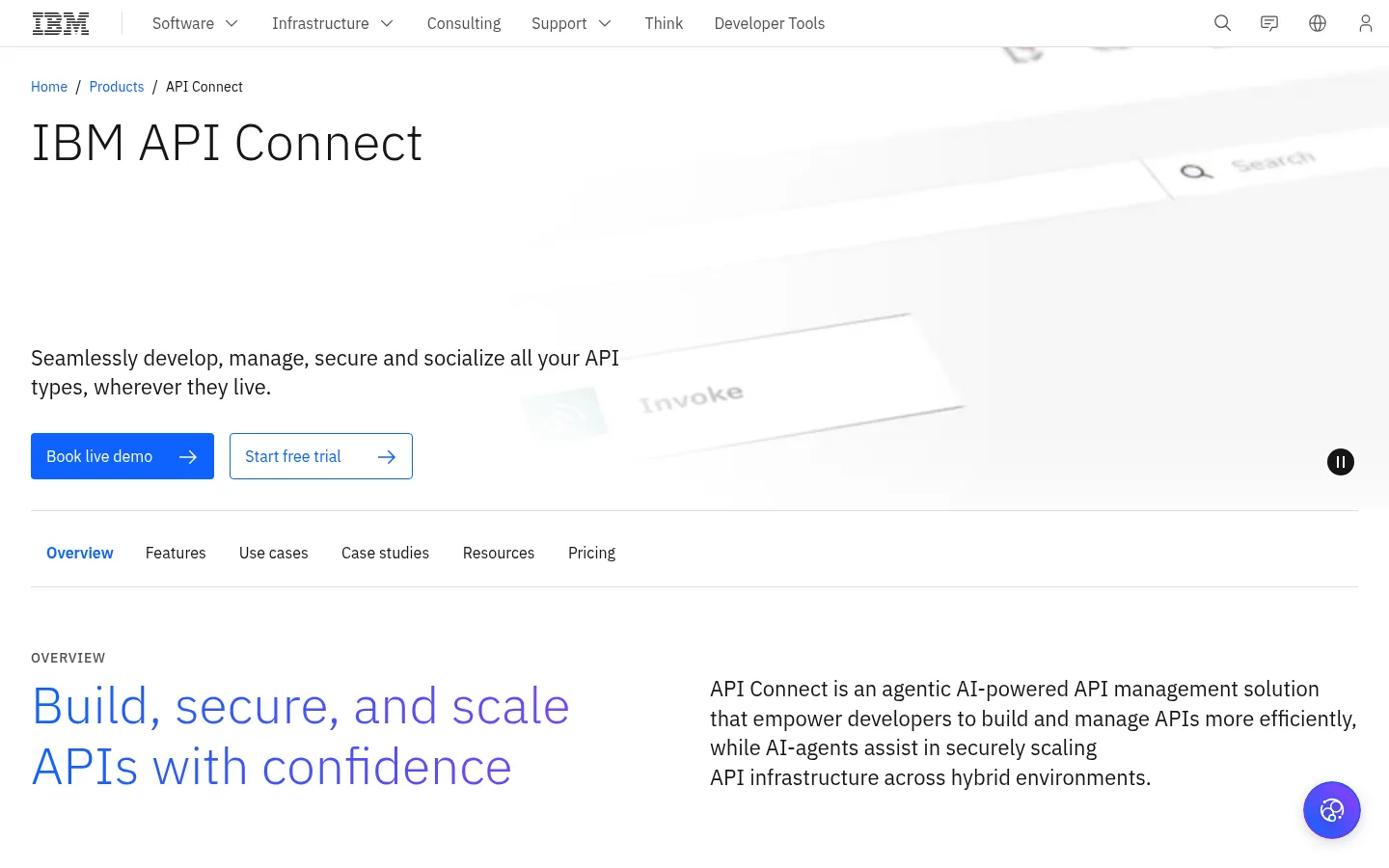
Screenshot: IBM API Connect website, October 2026.
What IBM API Connect does well:
- Governs the API lifecycle.
- Enforces security and compliance policies.
- Publishes a developer portal.
- Integrates with enterprise systems.
IBM API Connect pricing
IBM sells API Connect through enterprise agreements, with prices on request.
| Plan | Price | Pricing basis | Best for | Watch for |
|---|---|---|---|---|
| API Connect | Quote | Deployment size and usage | Regulated industries | Heavy enterprise footprint |
Source: IBM API Connect, checked October 2026.
7. WSO2 API Manager
WSO2 API Manager suits technically mature teams that want open-source API management they deploy and control themselves. Paid subscriptions add vendor support.
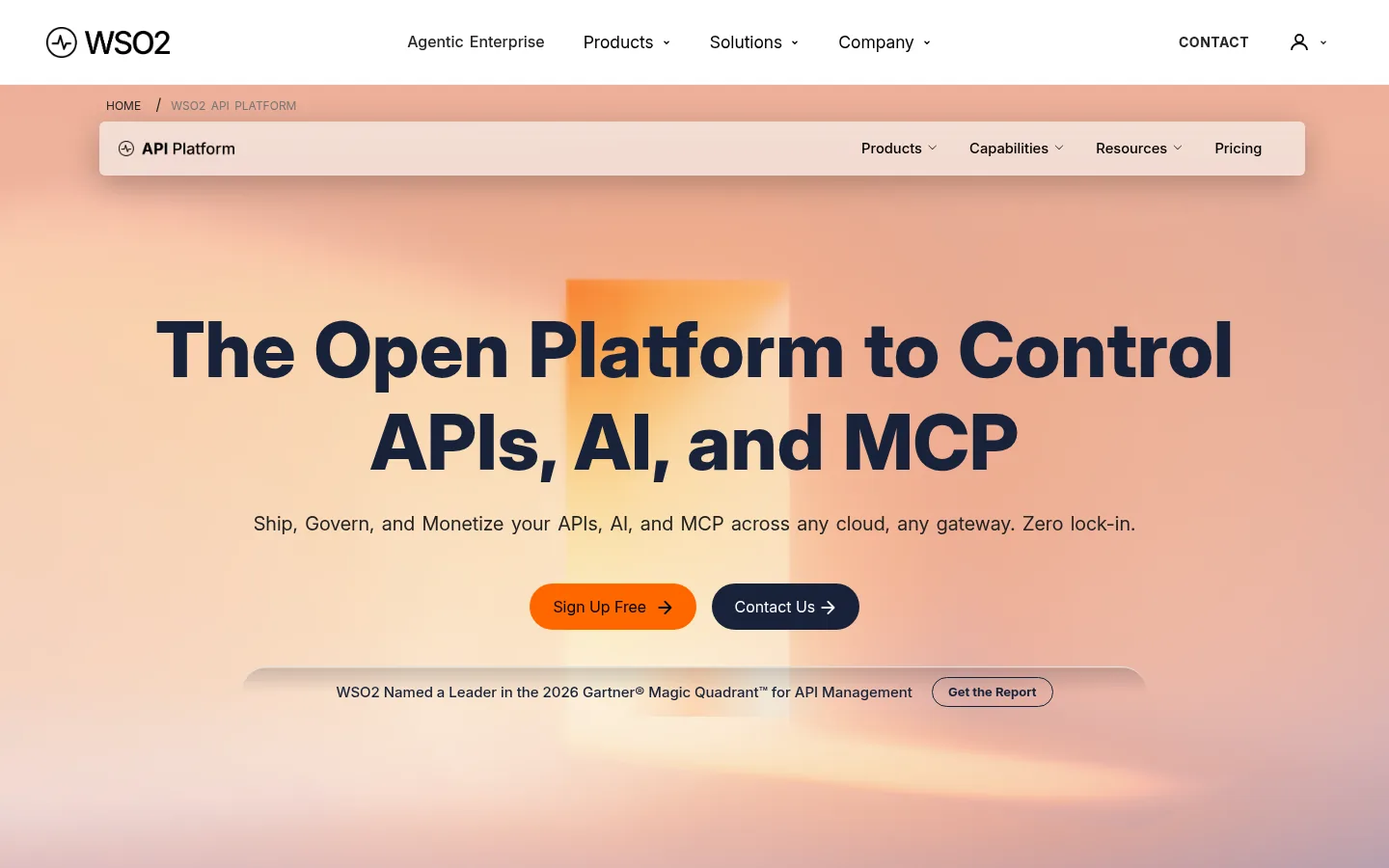
Screenshot: WSO2 API Manager website, October 2026.
What WSO2 does well:
- Manages the full API lifecycle.
- Publishes a developer portal.
- Extends through open-source code.
- Deploys on-premises or in the cloud.
WSO2 pricing
WSO2 API Manager is free as open source, and enterprise support is priced on request.
| Option | Price | Pricing basis | Best for | Watch for |
|---|---|---|---|---|
| Open source | USD 0 | Self-managed | Teams with in-house skills | You run operations |
| Enterprise subscription | Quote | Support level | Production deployments | Operational complexity |
Source: WSO2 API Manager, checked October 2026.
How to Choose an API Management Tool
Choose by where your systems run, how strict your governance needs are and how predictable your costs have to be. Weigh these factors:
- Cloud: AWS, Azure, Google Cloud, hybrid or multi-cloud.
- Governance: compliance, audit and lifecycle needs.
- Developers: portal and self-service onboarding.
- Cost model: per request, per unit or contract.
- Skills: managed service or self-run open source.
Which API management tool fits which team?
Start with the platform that matches your main cloud, then compare governance depth and cost model.
| Tool | Best for | Strength | Watch for | Pricing model |
|---|---|---|---|---|
| MuleSoft Anypoint | Large enterprises | Governance and integration | High cost | Contract |
| Apigee | API product teams | Analytics and monetisation | Volume costs | Usage or subscription |
| Azure API Management | Microsoft environments | Hybrid deployment | Azure dependence | Tier or consumption |
| Amazon API Gateway | Serverless AWS teams | Scale with no servers | Lighter lifecycle tools | Per request |
| Kong | Cloud-native teams | Performance and plugins | Paid governance | Subscription plus usage |
| IBM API Connect | Regulated industries | Compliance and control | Heavy footprint | Contract |
| WSO2 API Manager | Open-source adopters | Control and extensibility | Self-run operations | Free or support contract |
Source: vendor pricing pages listed above, checked October 2026.
From Managed APIs to Automated Work
Once your APIs are secure and reliable, you connect them to automate approvals, notifications and data transfers across apps. See AI automation tools for platforms that build those workflows, and AI security tools for protecting the systems behind them.