AI marketing automation tools decide when to contact each customer, on which channel and with which message, based on behaviour and predicted intent, so your campaigns reach people at the right moment and your team runs more journeys without more manual work. The seven tools below cover lifecycle automation for growing businesses, enterprise marketing clouds, B2B demand generation, real-time cross-channel engagement, e-commerce automation, product-led messaging and unified customer data. Each entry shows what the tool does best, who it suits and what it costs in October 2026.
Why AI Marketing Automation Tools Matter to Your Growth
AI marketing automation turns customer data into timely, relevant messages across every channel, which lifts engagement and keeps campaigns consistent as your audience grows. Rule-based marketing automation tools follow fixed workflows: a trigger fires and the same message goes to everyone in a segment. AI marketing automation weighs behaviour, timing and likelihood to act before it sends, so journeys adapt to each customer as they move through the funnel.
What does AI marketing automation give your team?
AI marketing automation gives your team coordinated journeys, better timing and less manual prioritisation. The main benefits:
- Coordinates messages across email, SMS, push, web and paid channels.
- Predicts the best send time and the contacts most likely to convert.
- Scores leads and customers by engagement and intent.
- Adapts journeys automatically as behaviour changes.
- Reports results by journey, channel and lifecycle stage.
1. ActiveCampaign
ActiveCampaign suits small and growing businesses that want lifecycle automation with predictive features at an accessible price.
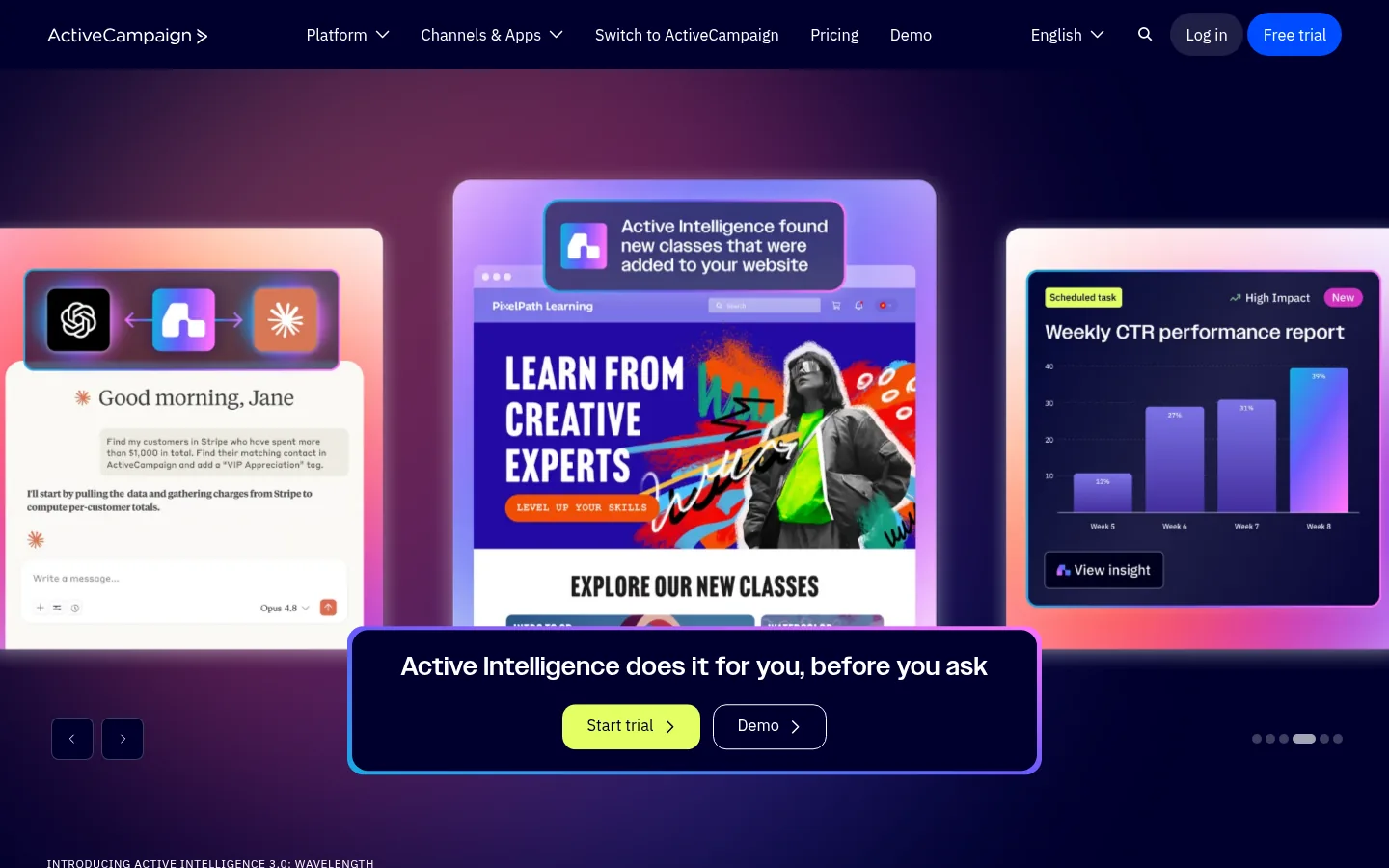
Screenshot: ActiveCampaign website, October 2026.
ActiveCampaign combines email marketing, automation and CRM features with predictive insights. Teams use it to score contacts, time messages and guide customers through structured journeys across touchpoints.
Core features:
- Behaviour-based automation journeys
- Predictive sending and contact scoring
- Built-in CRM features
- Forms, landing pages and reporting
What does ActiveCampaign cost?
ActiveCampaign starts at USD 15 a month for Starter at 1,000 contacts, billed yearly, and prices rise with your contact list.
| Plan | Price | Billing | Suitable for | Contacts |
|---|---|---|---|---|
| Starter | USD 15 a month | Billed yearly | Getting started with automation | 1,000 |
| Plus | USD 49 a month | Billed yearly | Growing teams needing CRM features | 1,000 |
| Pro | USD 79 a month | Billed yearly | Advanced automation and reporting | 1,000 |
| Enterprise | USD 145 a month | Billed yearly | Larger organisations | 1,000 |
Source: ActiveCampaign pricing, checked October 2026.
2. Salesforce Marketing Cloud
Salesforce Marketing Cloud suits enterprises that want AI agents and predictive engagement connected to their Salesforce sales and service data.
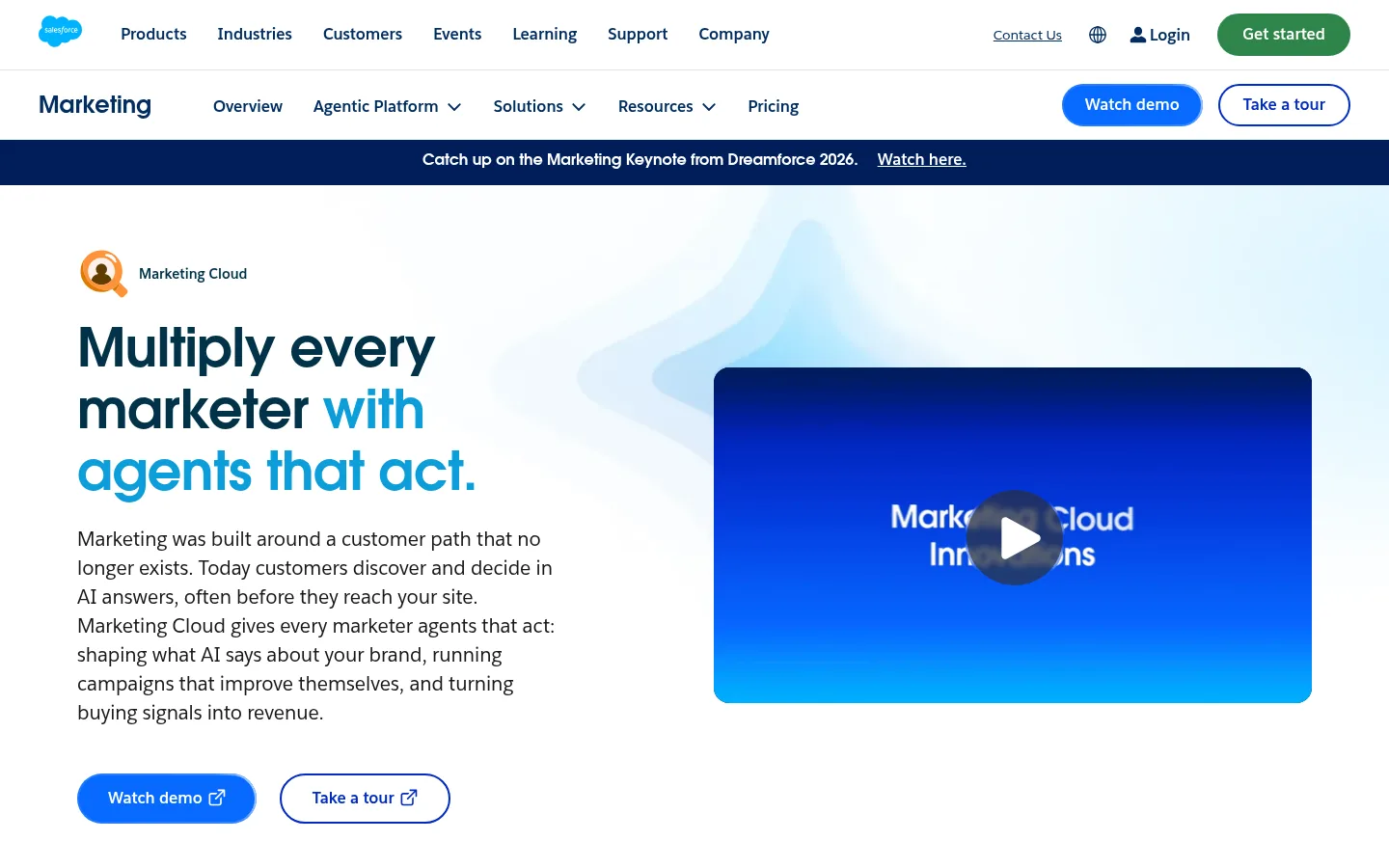
Screenshot: Salesforce Marketing Cloud website, October 2026.
Salesforce Marketing Cloud brings email, mobile, advertising and personalisation together with Agentforce AI. Its editions include agentic campaign creation, AI-powered engagement scoring and personalisation decisioning, tied to the same customer records your sales team uses.
Core features:
- Agentforce campaign creation and content
- AI-powered engagement scoring
- Personalisation decisioning
- Connection to Salesforce CRM data
What does Salesforce Marketing Cloud cost?
Marketing Cloud Next starts at USD 1,500 per org a month for Growth, billed annually, and B2B Account Engagement+ starts at USD 1,250.
| Edition | Price | Billing | Suitable for | AI highlight |
|---|---|---|---|---|
| Marketing Cloud Next Growth | USD 1,500 per org a month | Billed annually | Growing marketing teams on Salesforce | Campaign Agent and agentic content |
| Marketing Cloud Next Advanced | USD 3,250 per org a month | Billed annually | Larger programmes | AI-powered engagement scoring |
| Salesforce Personalisation | USD 8,000 per org a month | Billed annually | Real-time personalisation | Agentforce personalisation decisioning |
| Account Engagement+ | USD 1,250 per org a month | Billed annually | B2B marketing | Agentforce campaign creation |
| Engagement+ | USD 2,000 per org a month | Billed annually | Cross-channel engagement | Agentforce campaign creation |
Source: Salesforce Marketing Cloud pricing, checked October 2026.
3. Adobe Marketo Engage
Marketo Engage suits B2B organisations with long buying cycles, account-based programmes and dedicated marketing operations teams.
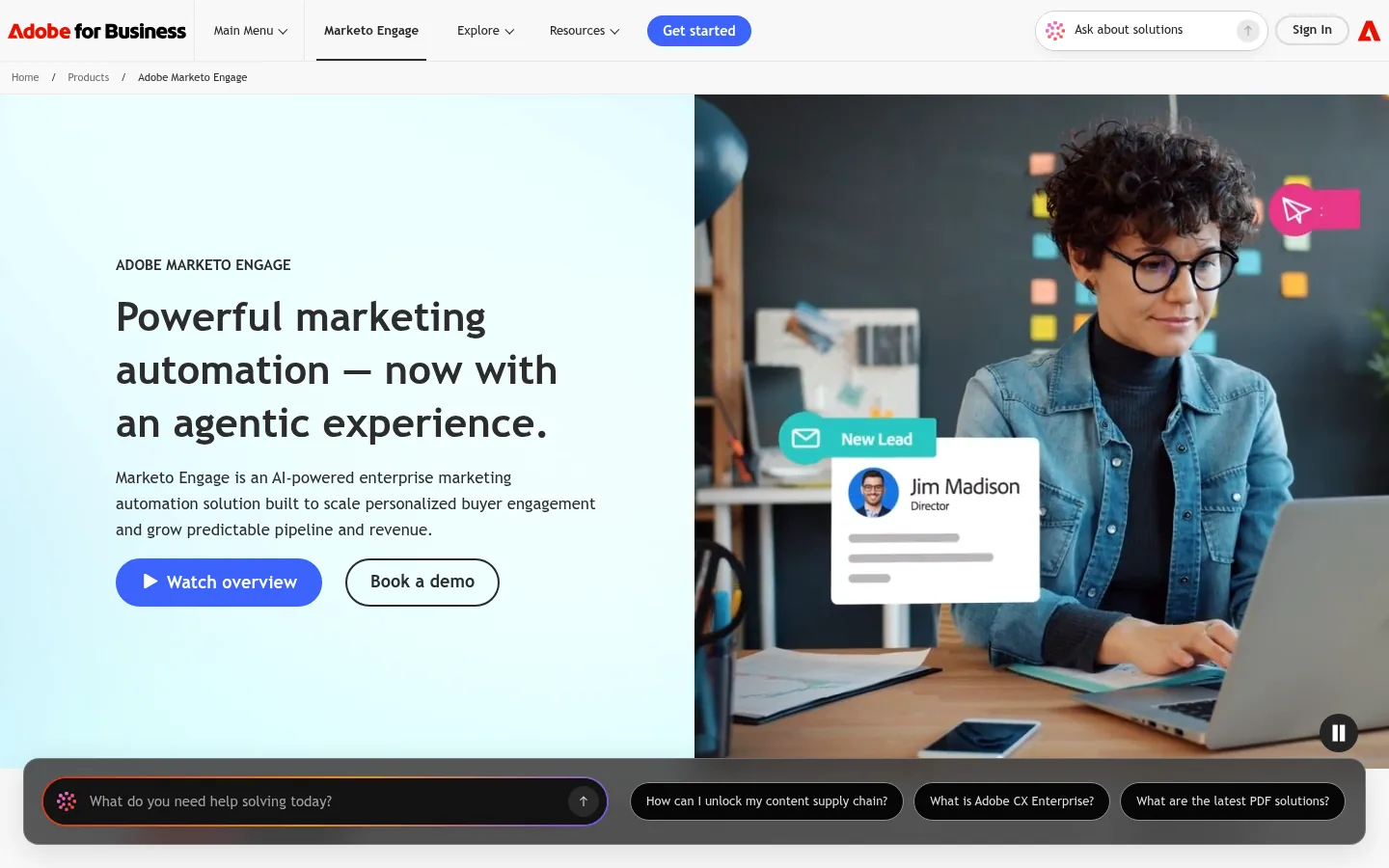
Screenshot: Adobe Marketo Engage website, October 2026.
Adobe Marketo Engage manages lead scoring, nurture journeys and account-based marketing across extended funnels. AI-assisted features help teams prioritise accounts and move prospects through multi-stakeholder buying journeys.
Core features:
- Lead and account scoring
- Nurture and lifecycle journeys
- Account-based marketing
- Governance for large marketing operations
What does Marketo Engage cost?
Adobe sells Marketo Engage in four packages, Growth, Select, Prime and Ultimate, all priced on request. Database size and features set the quote.
4. Braze
Braze suits apps, subscription services and digital businesses that engage customers in real time across mobile, web and messaging.
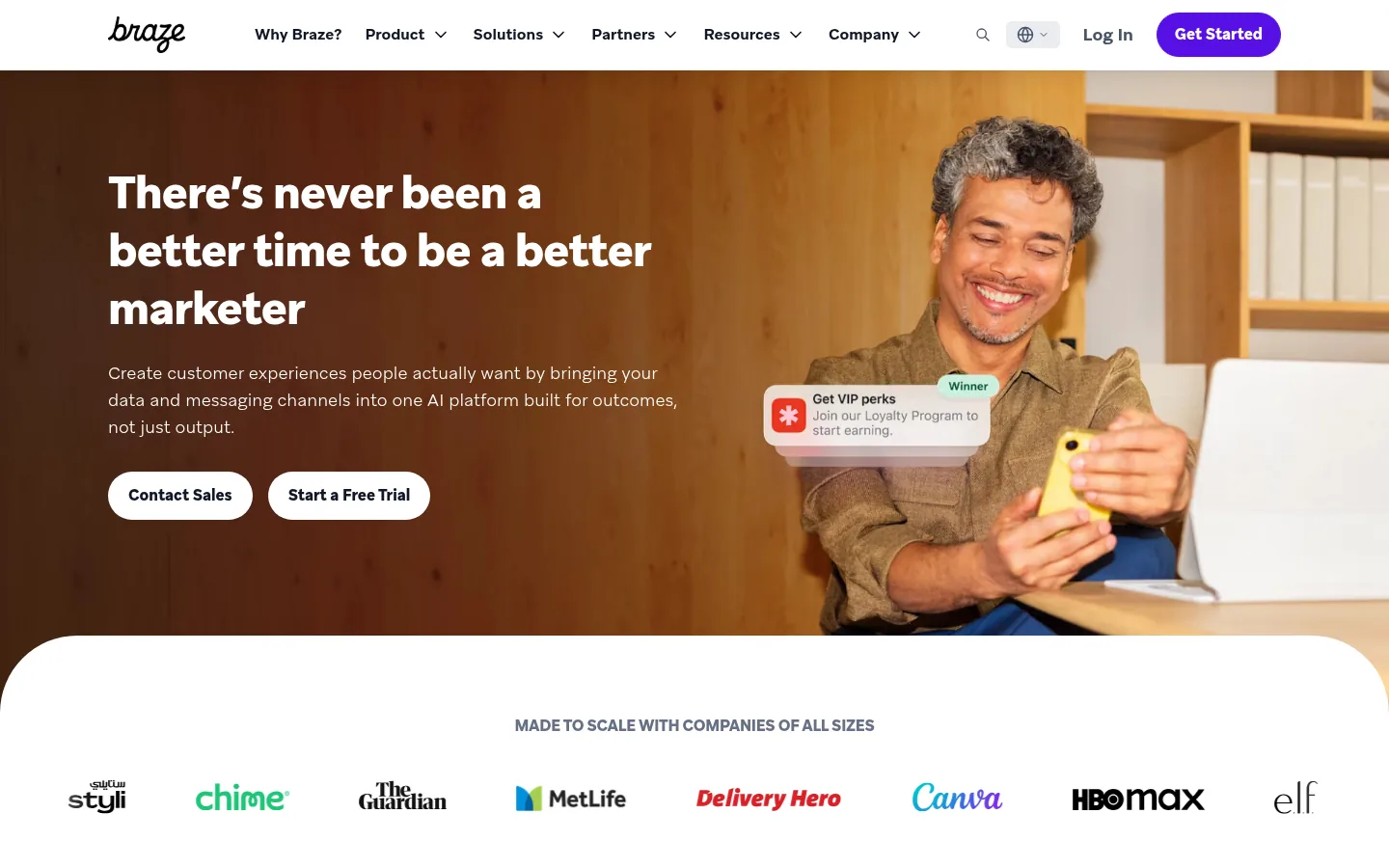
Screenshot: Braze website, October 2026.
Braze processes customer events as they happen and uses them to time messages, pick channels and adapt journeys. Teams use it where users generate frequent activity, such as in mobile apps and digital products.
Core features:
- Real-time event-driven journeys
- Cross-channel messaging
- AI features powered by Action Credits
- Analytics and experimentation
What does Braze cost?
Braze offers four editions, Go, Select, Pro and Enterprise, priced through sales and scaled by monthly active users. Contracts include an allotment of Action Credits for messaging and AI features.
5. Omnisend
Omnisend suits e-commerce stores that want email and SMS automation built around shopping behaviour.
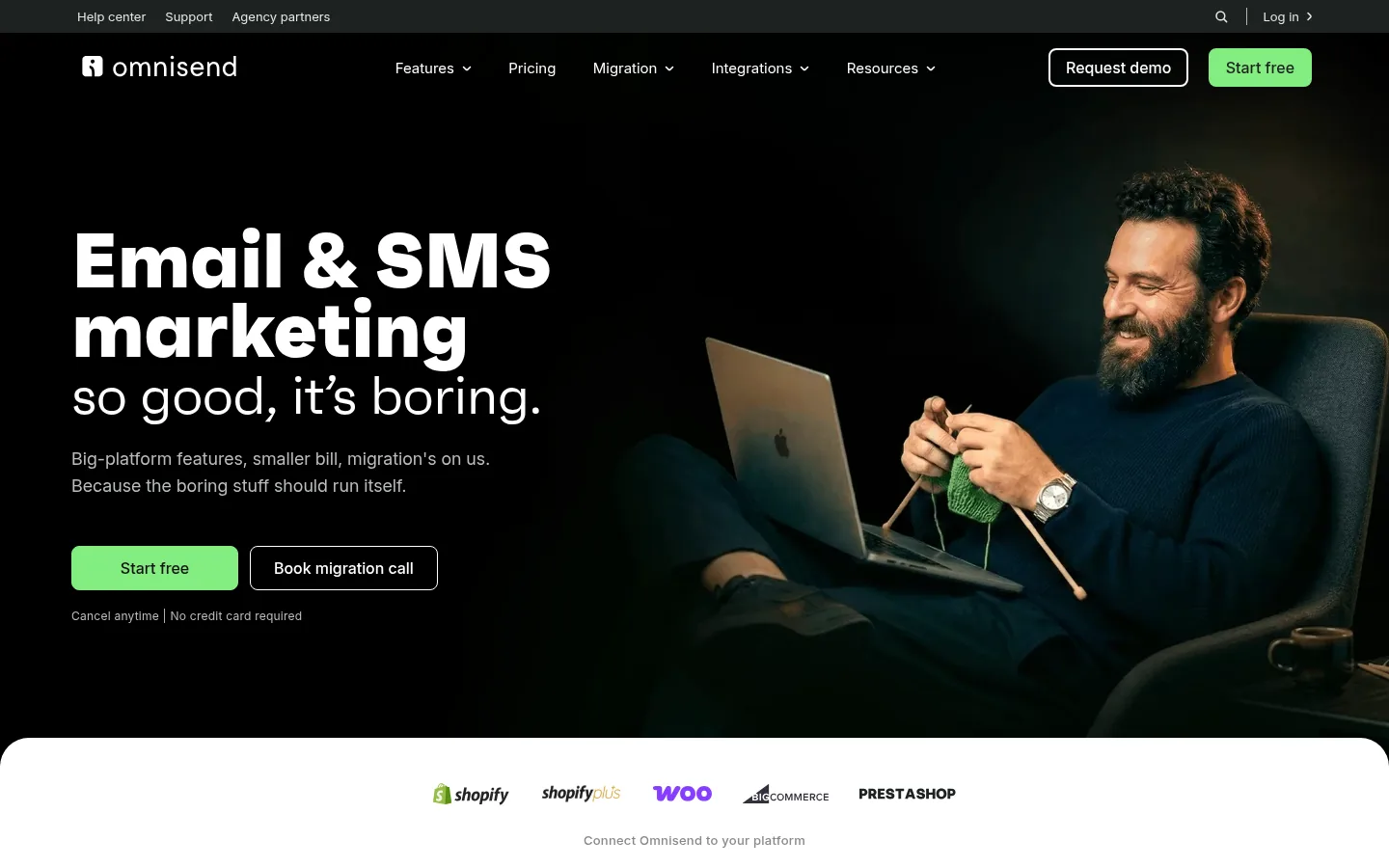
Screenshot: Omnisend website, October 2026.
Omnisend automates messages around browsing, cart and purchase events, from welcome series to abandoned cart and repeat-purchase journeys. It fits online retailers that want to grow revenue per customer without complex set-up.
Core features:
- Email and SMS automation
- Pre-built e-commerce journeys
- Segmentation by shopping behaviour
- Store platform integrations
What does Omnisend cost?
Omnisend is free for 250 contacts, and paid plans start from USD 16 a month, with Standard shown at USD 11.20 a month after the discount displayed in October 2026.
| Plan | Price shown | Billing | Contacts | Emails |
|---|---|---|---|---|
| Free | USD 0 | Free | 250 | 500 a month |
| Standard | USD 11.20 a month | Monthly | 500 | 6,000 a month |
| Pro | USD 41.30 a month | Monthly | 2,500 | Unlimited |
Source: Omnisend pricing, checked October 2026.
6. Customer.io
Customer.io suits SaaS and product-led businesses that trigger messages from product events and user behaviour.
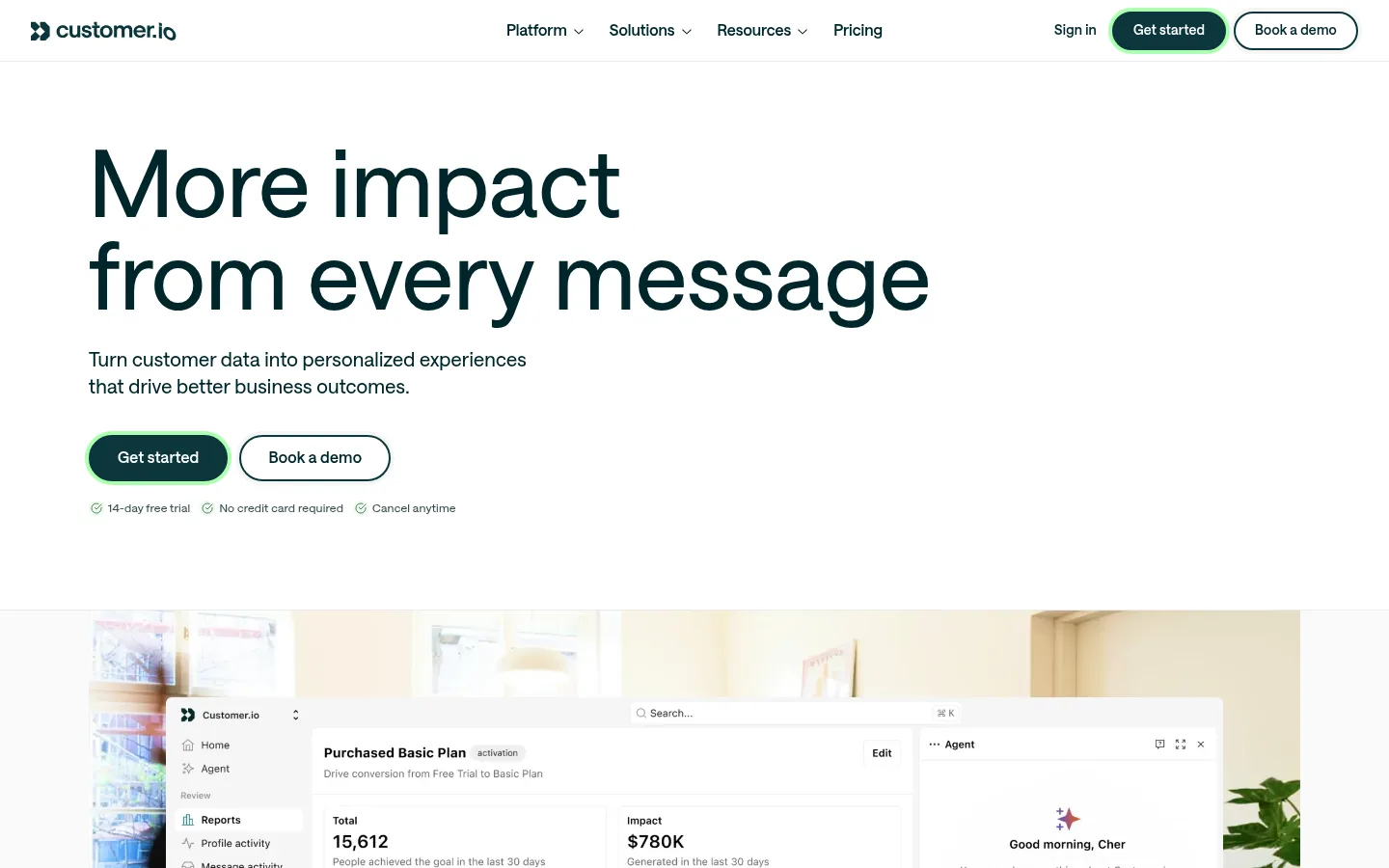
Screenshot: Customer.io website, October 2026.
Customer.io runs event-driven messaging based on actions such as sign-ups, feature use or inactivity. Technical and growth teams use it to guide users through onboarding, adoption and retention journeys tied to how they use the product.
Core features:
- Event-driven journeys
- Email, push, SMS and in-app messages
- Data pipelines and integrations
- Segmentation by product behaviour
What does Customer.io cost?
Customer.io Essentials starts at USD 100 a month for 5,000 profiles, and Premium starts at USD 1,000 a month billed yearly.
| Plan | Price | Billing | Suitable for | Profiles |
|---|---|---|---|---|
| Essentials | From USD 100 a month | Billed monthly | Growing product teams | 5,000 |
| Premium | From USD 1,000 a month | Billed yearly | Larger programmes | Custom volume |
| Enterprise | Contact sales | Contract | Large organisations | Custom volume |
Source: Customer.io pricing, checked October 2026.
7. Ortto
Ortto suits growing businesses that want customer data and lifecycle journeys in one platform.
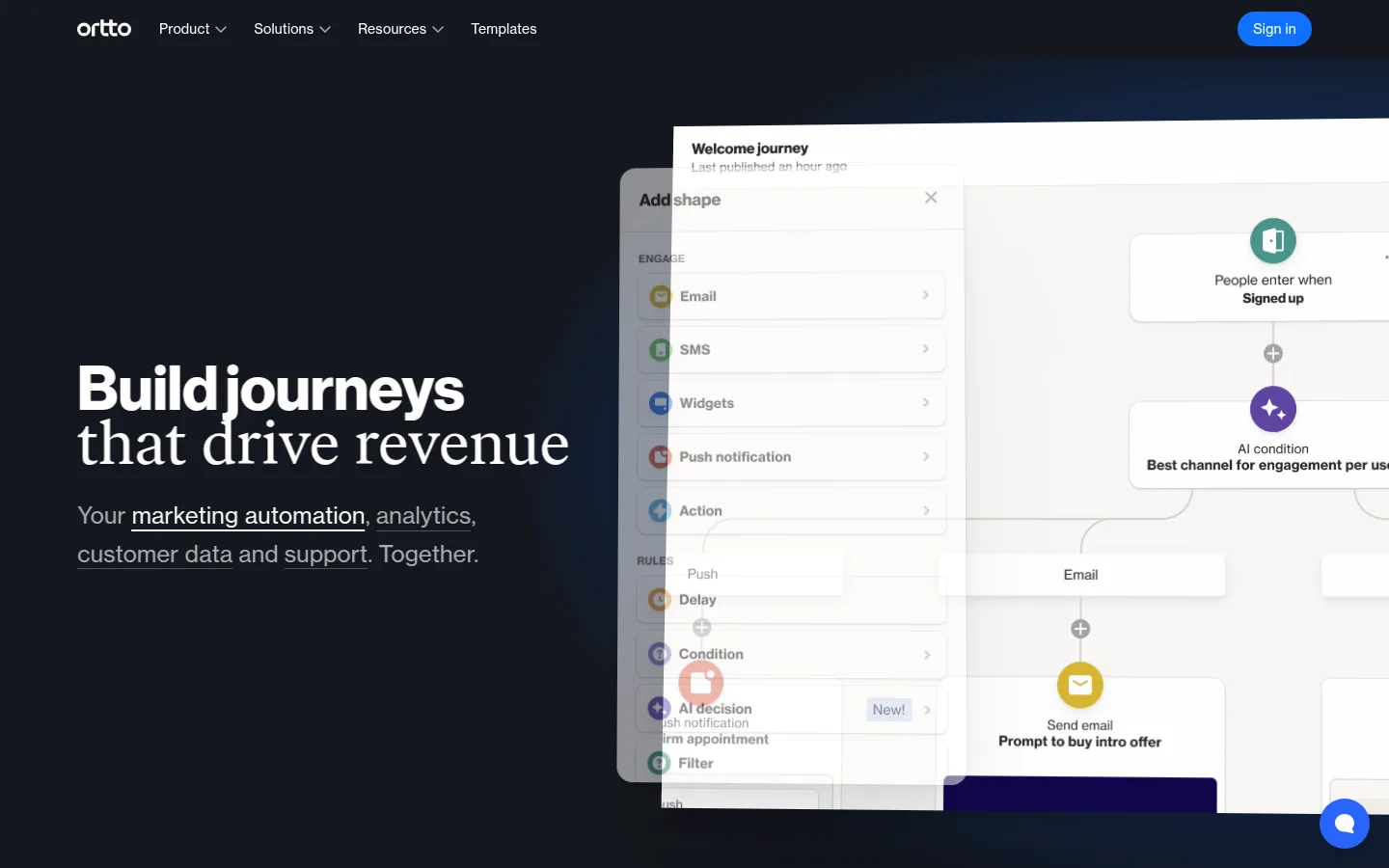
Screenshot: Ortto website, October 2026.
Ortto combines customer data management with journey automation across email, SMS and other channels. It unifies contact data into a single view, so teams plan, trigger and measure lifecycle campaigns without stitching tools together.
Core features:
- Unified customer data
- Journey automation
- Email and SMS campaigns
- Lifecycle analytics
What does Ortto cost?
Ortto's public pricing page was unavailable when checked in October 2026, so confirm current plans with Ortto directly. Its help centre describes contact-based plans with email allowances tied to contact count.
How to Choose the Right AI Marketing Automation Tool
Choose by your business model and data: e-commerce, B2B, app-based or enterprise programmes each need a different engine. Weigh four factors: the depth of your funnel, the quality of your customer data, the channels you use and the governance your team needs.
Which AI marketing automation tool fits which business?
Match the tool to its role in your marketing system.
| Tool | Role | Best for | Limitations | Pricing model |
|---|---|---|---|---|
| ActiveCampaign | Lifecycle automation | Small and growing businesses | Cost rises with contacts | By contacts, billed yearly |
| Salesforce Marketing Cloud | Enterprise marketing cloud | Salesforce organisations | High entry price | Per org, annual |
| Marketo Engage | B2B demand generation | Long sales cycles | Quote only | Quote |
| Braze | Real-time engagement | Apps and digital products | Quote only | By monthly active users |
| Omnisend | E-commerce automation | Online stores | Retail focus | By contacts |
| Customer.io | Product-led messaging | SaaS and apps | Needs event data | By profiles |
| Ortto | Customer data and journeys | Unified lifecycle marketing | Pricing not public at check | Contact-based |
Put Automation Behind Your Growth Plan
Automation scales what already works, so map your customer journey and segments first, then let AI handle timing and channel choice. Each tool above fits a different business model and data maturity. Define the groups you message with audience segmentation tools, add agent-led tasks with AI agent tools for marketing, and set the wider plan with the digital marketing guide.