SEM tools help you plan, run and measure paid search campaigns, so more of your ad budget reaches buyers who are ready to enquire and less goes on clicks that never convert. The eight tools below cover the full job: the ad platforms themselves, competitor research, bid and budget automation, and measurement after the click. Each entry says what the tool does and the kind of team it suits.
What SEM Tools Do for Your Paid Search
SEM tools fall into four jobs: running the ads, researching competitors, automating bids and budgets, and measuring what happens after the click. Most teams combine one ad platform with one or two tools from the other groups.
| Tool | Main job | Best for | Works with |
|---|---|---|---|
| Google Ads | Ad platform | Every advertiser on Google | Google Search, YouTube, Display Network |
| Microsoft Advertising | Ad platform | Reaching Bing and partner audiences | Bing, Yahoo, Microsoft partner sites |
| SpyFu | Competitor research | Learning from rivals' paid keywords | Google Ads data |
| Skai | Cross-channel management | Large budgets across many accounts | Search, social and retail media |
| Optmyzr | Optimisation and automation | PPC managers running many accounts | Google Ads, Microsoft Advertising |
| Adzooma | Audits and recommendations | Small teams and lean budgets | Google Ads, Microsoft Advertising |
| NinjaCat | Budget pacing and reporting | Agencies tracking spend across accounts | Multiple ad platforms |
| Google Analytics | Measurement | Tracking actions after the click | Your website and Google Ads |
1. Google Ads: The Core Platform for Pay-Per-Click Campaigns
Google Ads is the starting point for most paid search, because it places your ads on Google Search, YouTube and the Google Display Network. Google Ads suits every business from a single shop to a multinational, as long as someone manages the account closely.
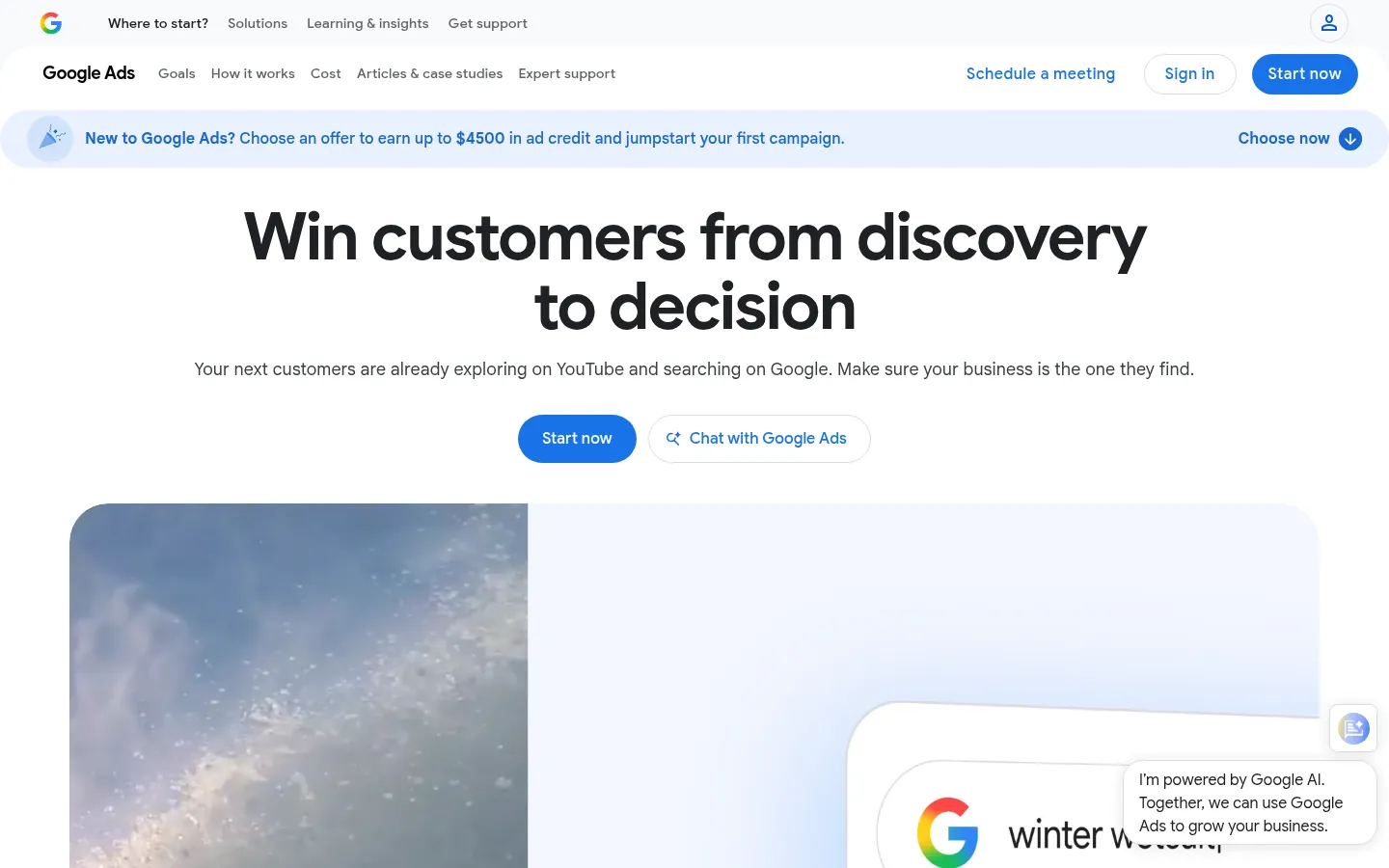
Screenshot: Google Ads website, October 2026.
- Targets the keywords you choose, with match types that control how closely a search has to match.
- Tracks performance as it happens, so you adjust bids and ads during a campaign.
- Sets what you pay for each click through manual or automated bidding.
- Adds assets such as phone numbers, sitelinks and locations to make your ads larger and more useful.
- Reports on clicks, conversions and cost, all in one account.
2. SpyFu: Research Your Competitors' Paid Keywords
SpyFu shows the keywords your competitors bid on and the ads they run, so you build your campaigns on what already works in your market. SpyFu suits teams entering a new market or reviewing a campaign that has stopped growing.
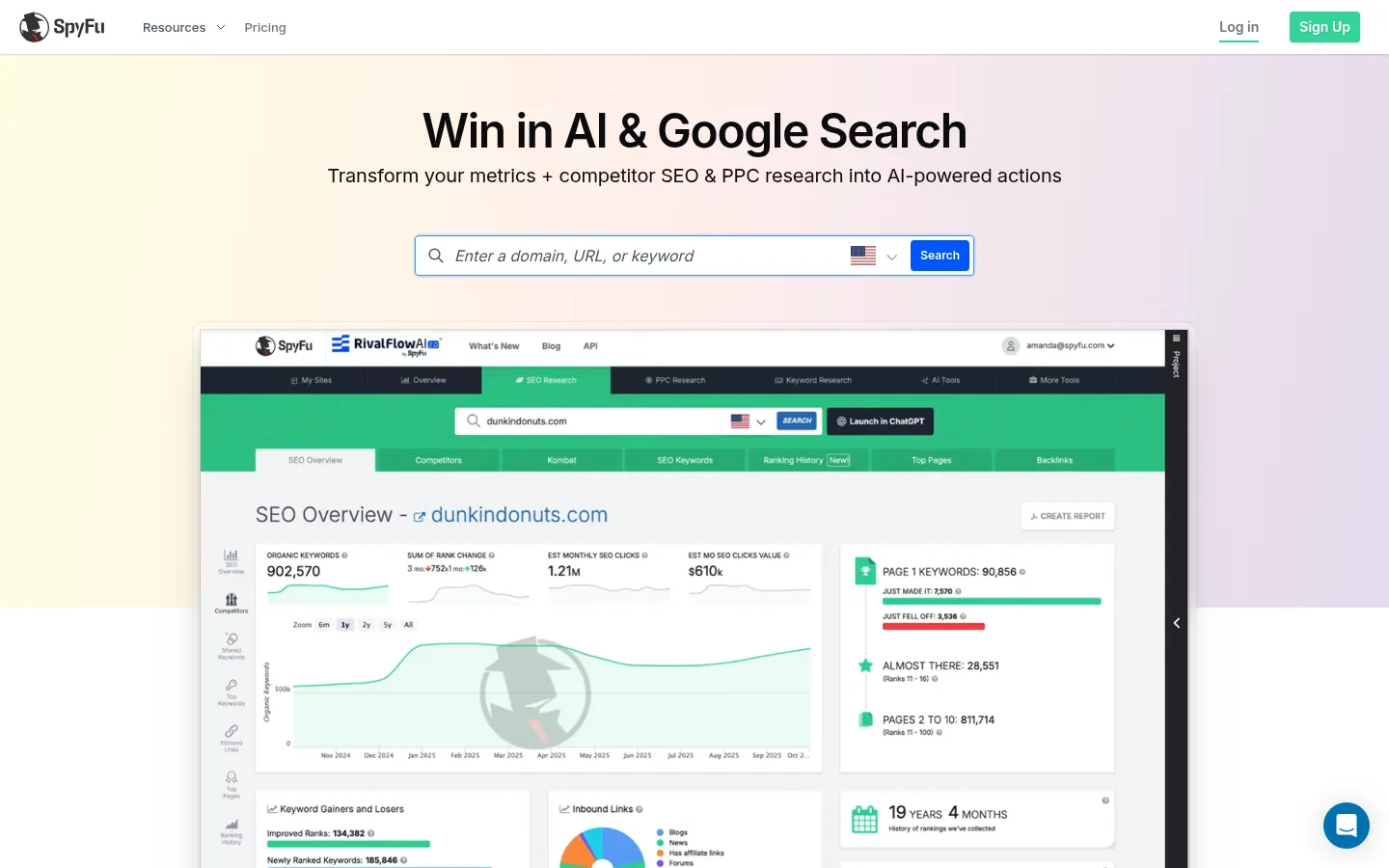
Screenshot: SpyFu website, October 2026.
- Lists the paid keywords each competitor buys, with estimated spend.
- Shows competitors' ad copy and how it has changed.
- Keeps historical paid search data, so you see trends over time.
- Finds gaps where competitors are absent and you are able to win clicks at a lower cost.
3. Skai: Manage and Automate Large Paid Media Programmes
Skai, formerly Kenshoo, suits advertisers with large budgets and complex campaigns across several networks. Skai brings search, social and retail media campaigns into one dashboard.
- Manages campaigns across several ad networks from one place.
- Automates bidding, scheduling and adjustments with rules you set.
- Breaks down performance so you track return on ad spend accurately.
- Applies custom bidding strategies matched to your business goals.
4. Optmyzr: Optimisation Tools for PPC Managers
Optmyzr automates the routine checks and changes in Google Ads and Microsoft Advertising, so PPC managers spend their time on strategy instead of spreadsheets. Optmyzr suits in-house teams and agencies running many accounts.
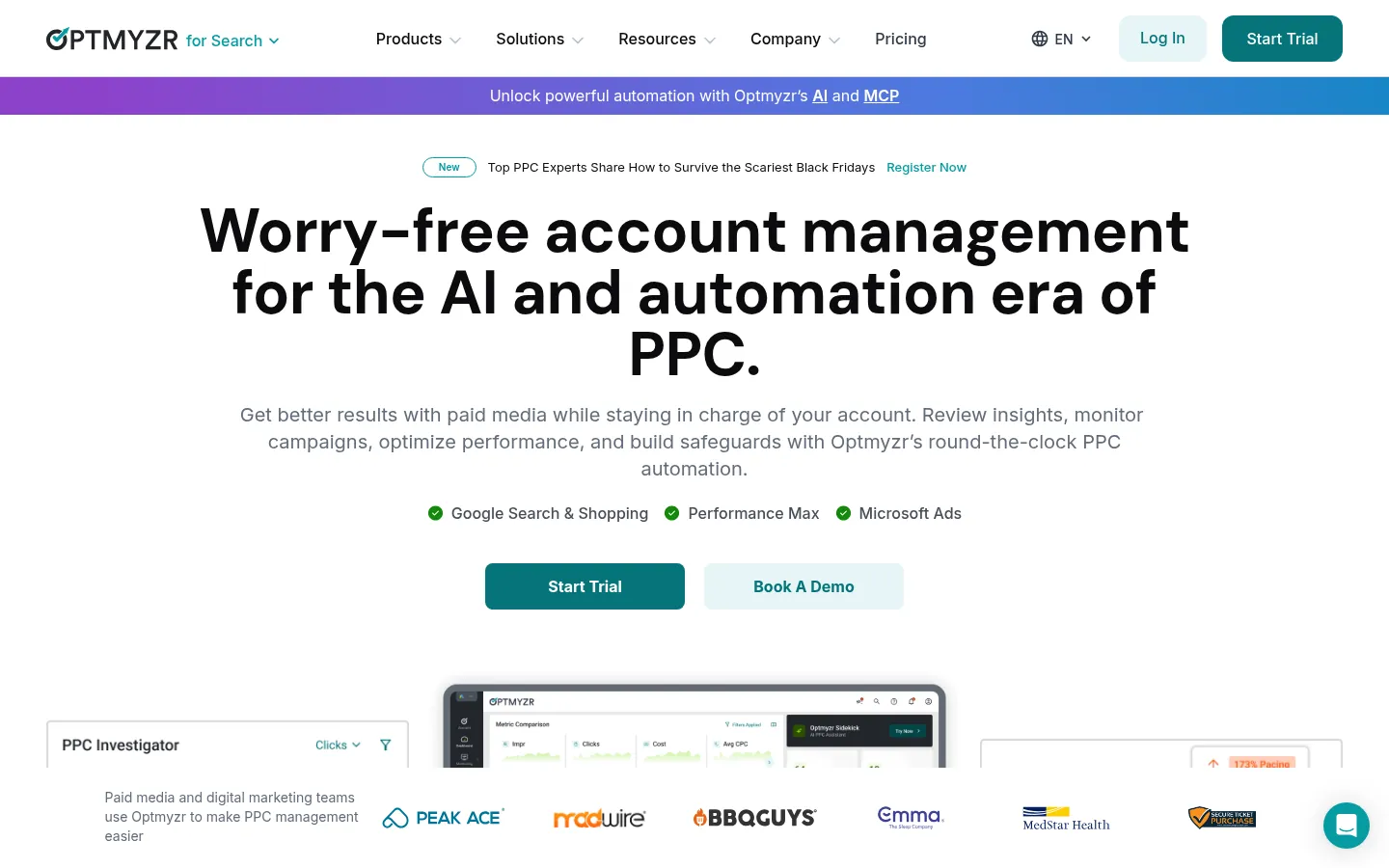
Screenshot: Optmyzr website, October 2026.
- Adjusts bids automatically based on performance.
- Sends scheduled reports without manual data pulls.
- Tests ad copy and shows which version performs better.
- Flags keywords, placements and budgets that need attention.
5. Microsoft Advertising: Reach Searchers Beyond Google
Microsoft Advertising, formerly Bing Ads, places your ads on Bing, Yahoo and Microsoft's partner sites, which reach a different audience from Google. Microsoft Advertising suits advertisers already running Google Ads who want more reach for the same keywords.
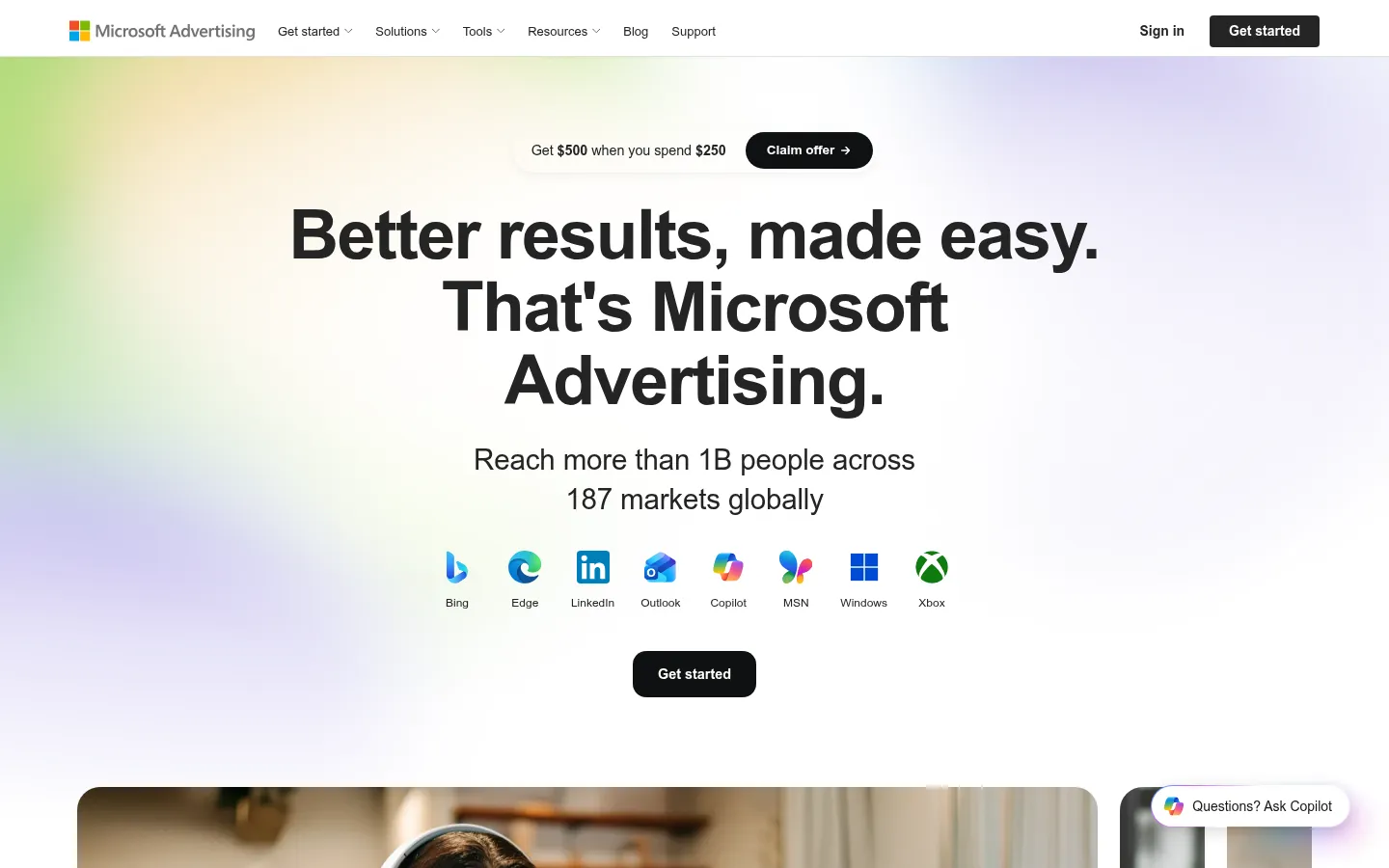
Screenshot: Microsoft Advertising website, October 2026.
- Reaches searchers on Bing, Yahoo and partner sites.
- Targets by keyword, location and demographics.
- Controls spend with daily budgets and bid adjustments.
- Imports existing Google Ads campaigns, so setup is quick.
6. Adzooma: Audits and Recommendations for Lean Teams
Adzooma audits your Google Ads account and suggests improvements you apply in a click, so a small team keeps campaigns healthy without a full-time PPC manager. Adzooma offers free PPC software with paid upgrades.
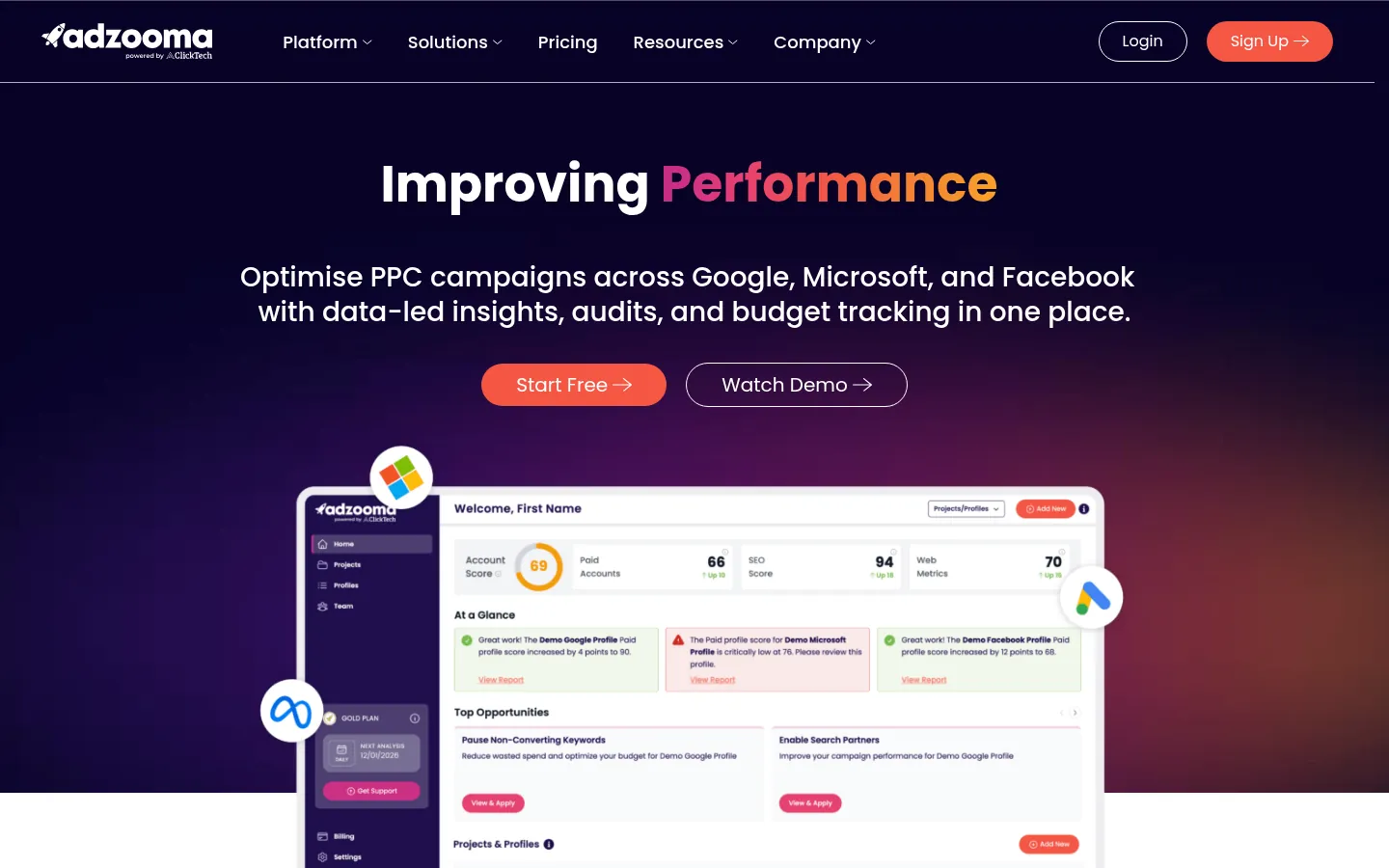
Screenshot: Adzooma website, October 2026.
- Alerts you when performance metrics change.
- Suggests optimisations that you apply in one click.
- Generates reports automatically.
- Tracks budgets across your accounts.
7. NinjaCat: Budget Pacing Across Ad Accounts
NinjaCat helps agencies and marketing teams keep spend on track across many ad accounts, so no campaign overspends or runs dry before the end of the month. NinjaCat's PPC budget management sits inside its wider marketing reporting platform.
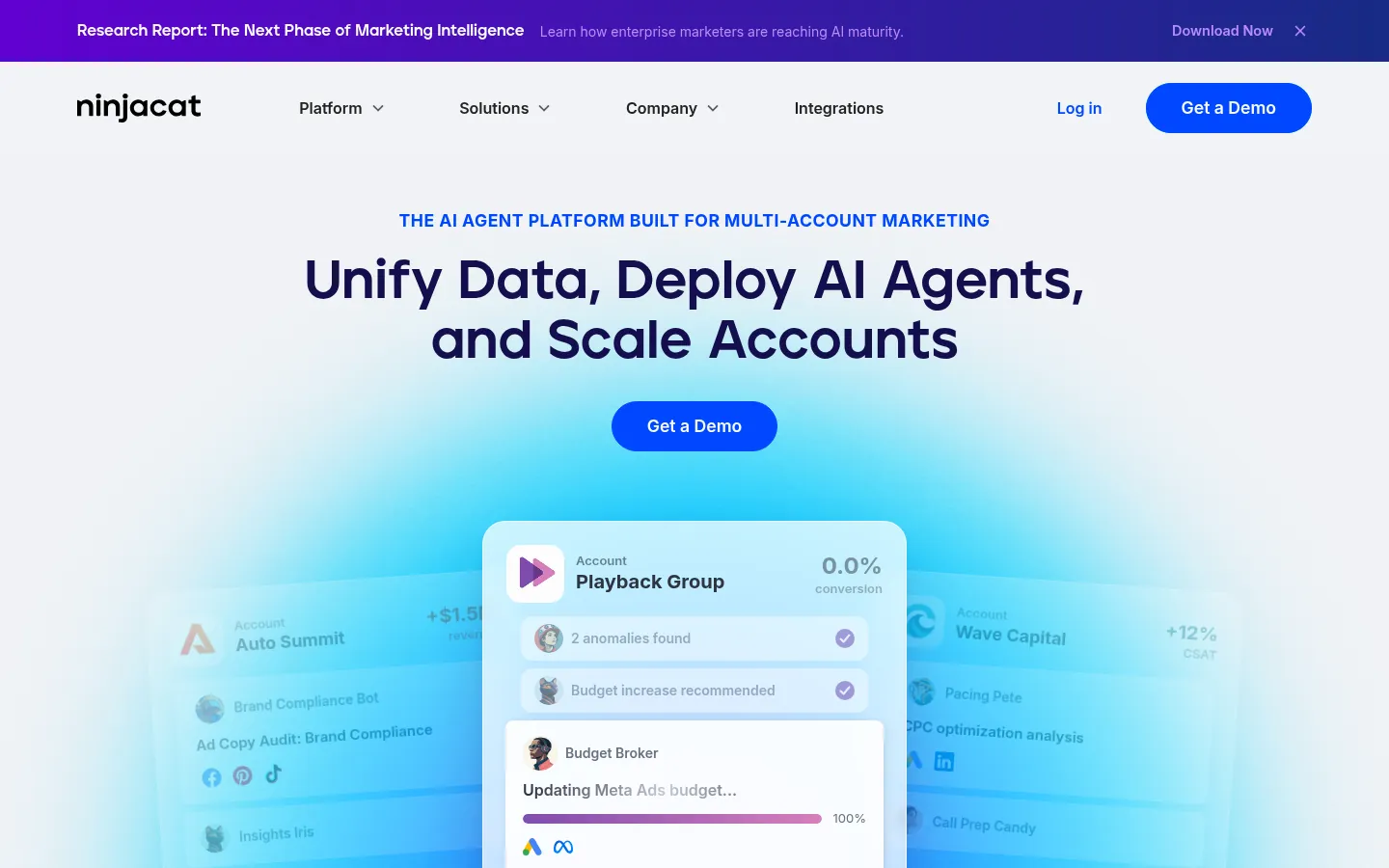
Screenshot: NinjaCat website, October 2026.
- Paces daily budgets so campaigns spend evenly across the month.
- Tracks spend across multiple ad accounts and platforms in one dashboard.
- Alerts you before a campaign overspends.
8. Google Analytics: Measure What Happens After the Click
Google Analytics shows what visitors do after they click your ad, so you judge campaigns by enquiries and sales, not clicks alone. Google Analytics is free and links directly to Google Ads.
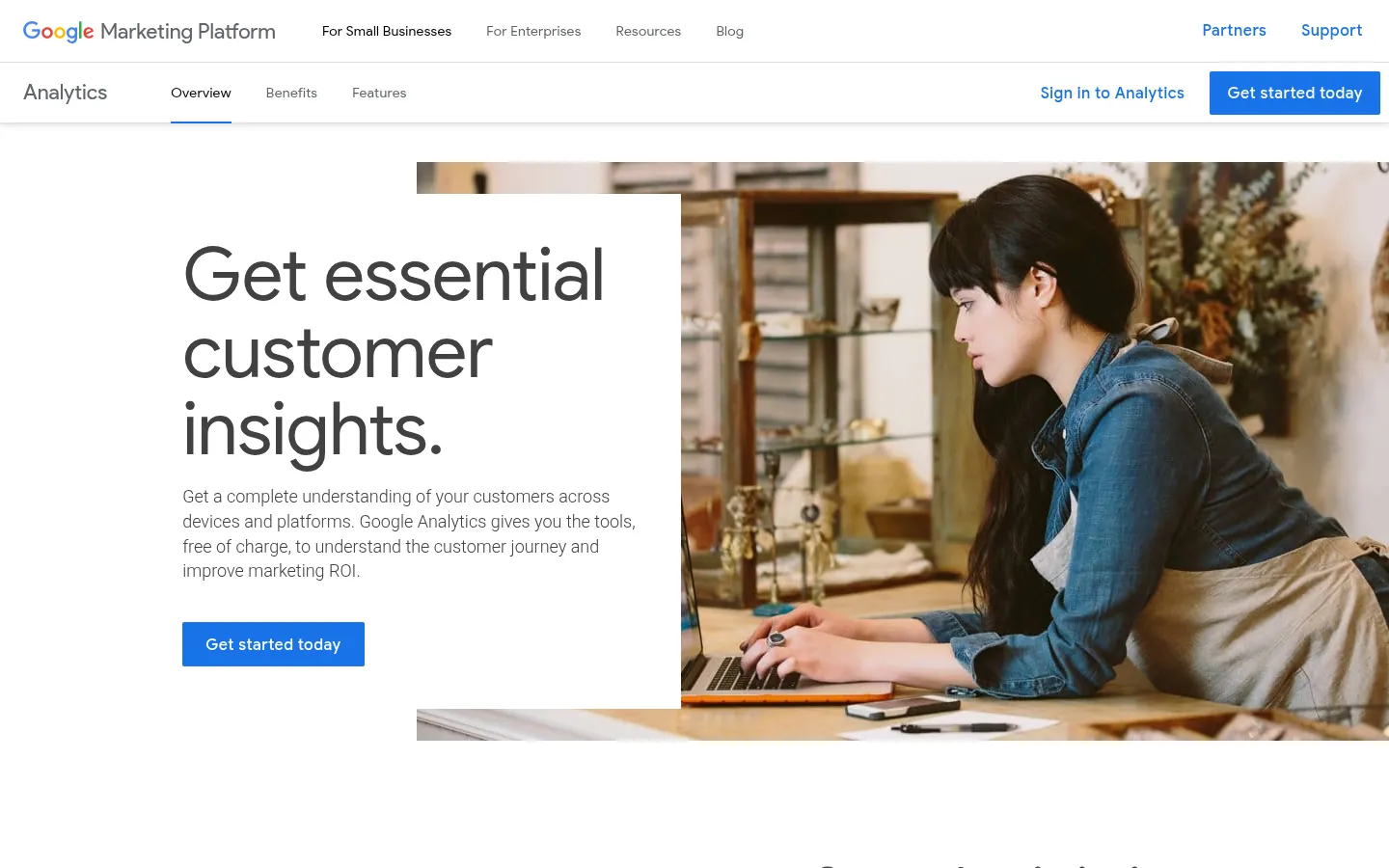
Screenshot: Google Analytics website, October 2026.
- Tracks what visitors do on your site and where they came from.
- Separates paid, organic and other traffic sources.
- Measures conversions such as purchases, sign-ups and enquiries.
- Shows the value your ads bring compared with their cost.
How SEM Tools Improve Your Campaigns
SEM tools turn paid search from guesswork into measured decisions: you see which keywords bring buyers, which ads convert and where budget leaks.
What is a search engine marketing tool?
A search engine marketing tool helps you research, run or measure paid search campaigns. Some run the ads, such as Google Ads and Microsoft Advertising. Others research competitors, automate bids or report on results after the click.
How does Google Analytics improve SEM and SEO?
Google Analytics shows how paid and organic visitors behave on your site, so you compare channels by the enquiries and sales they bring. Linked to Google Ads, it imports conversions into your campaigns, which gives automated bidding better data to work with.
How does keyword research improve paid search campaigns?
Keyword research shows which searches carry buying intent and which only cost you clicks, so your budget goes to terms that convert. It also finds negative keywords, the searches you exclude so your ads stop showing for them. The keyword research guide explains the method.
How does competitor analysis help paid search?
Competitor analysis shows the keywords and ads that already earn clicks in your market, so you start from proven ground and spot gaps your rivals leave open. Tools such as SpyFu show competitors' paid keywords, estimated spend and ad history.
How do SEM tools protect your advertising budget?
SEM tools track click-through rates, conversion rates and spend against targets, then alert you or adjust bids when a campaign drifts. Budget pacing tools such as NinjaCat stop campaigns overspending before the month ends.
Run Paid Search That Pays Back
The right tools help only when a clear plan sits behind them: targeted keywords, ads matched to landing pages and regular review. Learn what SEM is, read the full search engine marketing guide, or let Aemorph's SEM service plan and manage your campaigns.