An influencer discovery tool helps you find creators whose audiences match your buyers, check those audiences are real and track the sales each partnership drives, so your budget goes to creators who deliver. The seven tools below cover broad creator search, fraud detection, ecommerce and affiliate tracking, all-in-one campaign management, creator marketplaces and enterprise programmes. Each entry gives you current prices where the vendor publishes them and the kind of team it suits.
What Influencer Discovery Tools Do
Influencer discovery tools replace manual searching on Instagram, TikTok and YouTube with searchable creator databases, audience data and campaign tracking in one place. You filter creators by niche, audience demographics, engagement, location and platform, then check audience quality before you pay anyone. Many platforms also manage outreach, gifting, affiliate links, payments and ROI reporting. To automate parts of the workflow, see the AI agent tools for marketing roundup.
Why does your brand need an influencer discovery tool?
Influencer marketing is now judged on sales and leads, so you need audience data and fraud checks before you spend, and attribution after. Manual research across platforms is slow and gives unreliable audience insight. A discovery tool centralises creator data, fraud detection and campaign workflows. The main benefits:
- Finds relevant creators faster with detailed filters.
- Analyses audience demographics and engagement quality.
- Detects fake followers and suspicious engagement.
- Tracks affiliate sales and ecommerce conversions.
- Manages outreach and creator communication.
- Reports campaign ROI and creator performance.
1. Modash
Modash suits SMEs, agencies and ecommerce brands that want broad creator search across Instagram, TikTok and YouTube with a self-serve subscription.
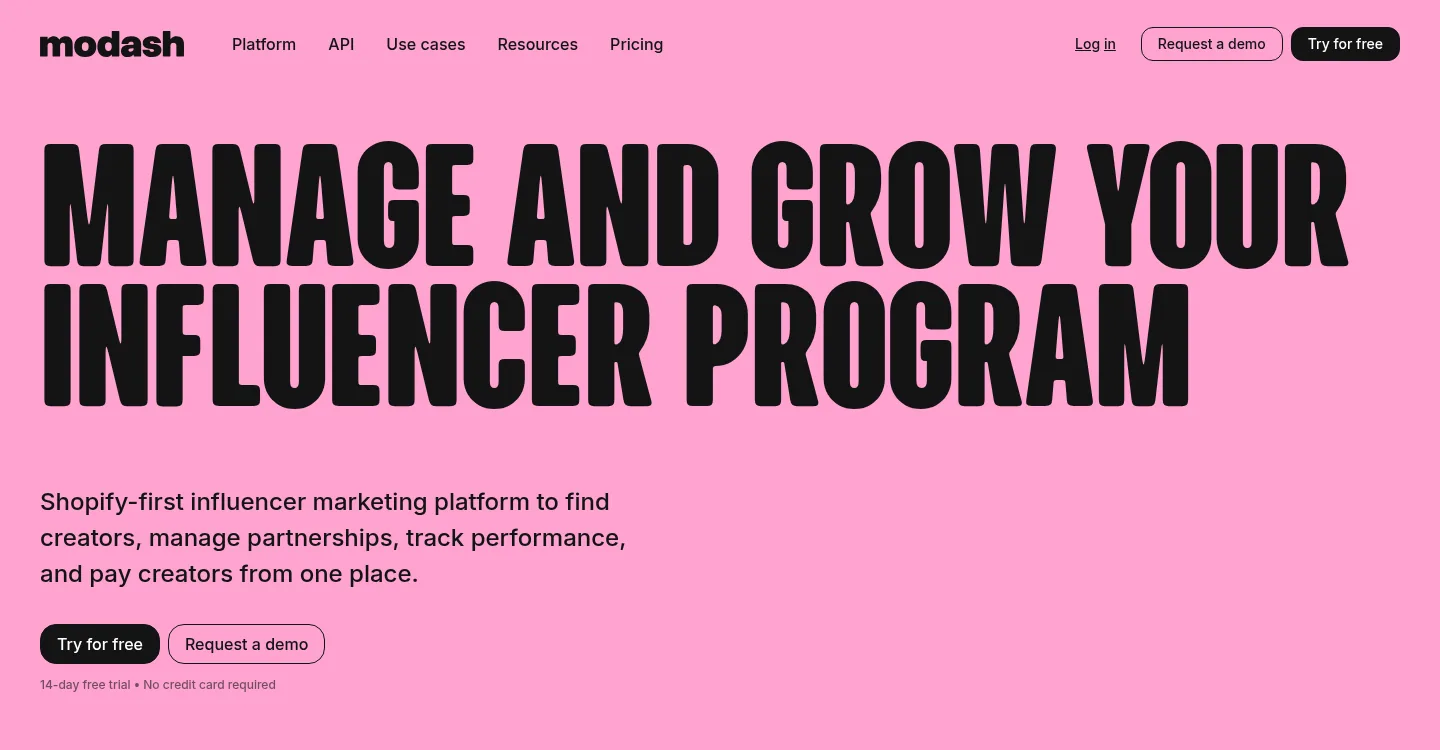
Screenshot: Modash website, October 2026.
Modash is known for a large creator database and detailed filters for engagement, audience demographics, keywords, location and niche. It also checks audience quality and tracks creator content for campaigns.
Core features:
- Large creator database across Instagram, TikTok and YouTube
- AI-assisted creator search
- Audience demographic and engagement analysis
- Fake follower detection
- Influencer tracking workflows
How is Modash priced?
Modash sells self-serve subscription plans priced in euros, with custom plans for larger teams. Current plan prices and limits are on the Modash pricing page.
2. HypeAuditor
HypeAuditor suits brands that put audience authenticity and brand safety first and want strong fraud scoring before they partner with a creator.
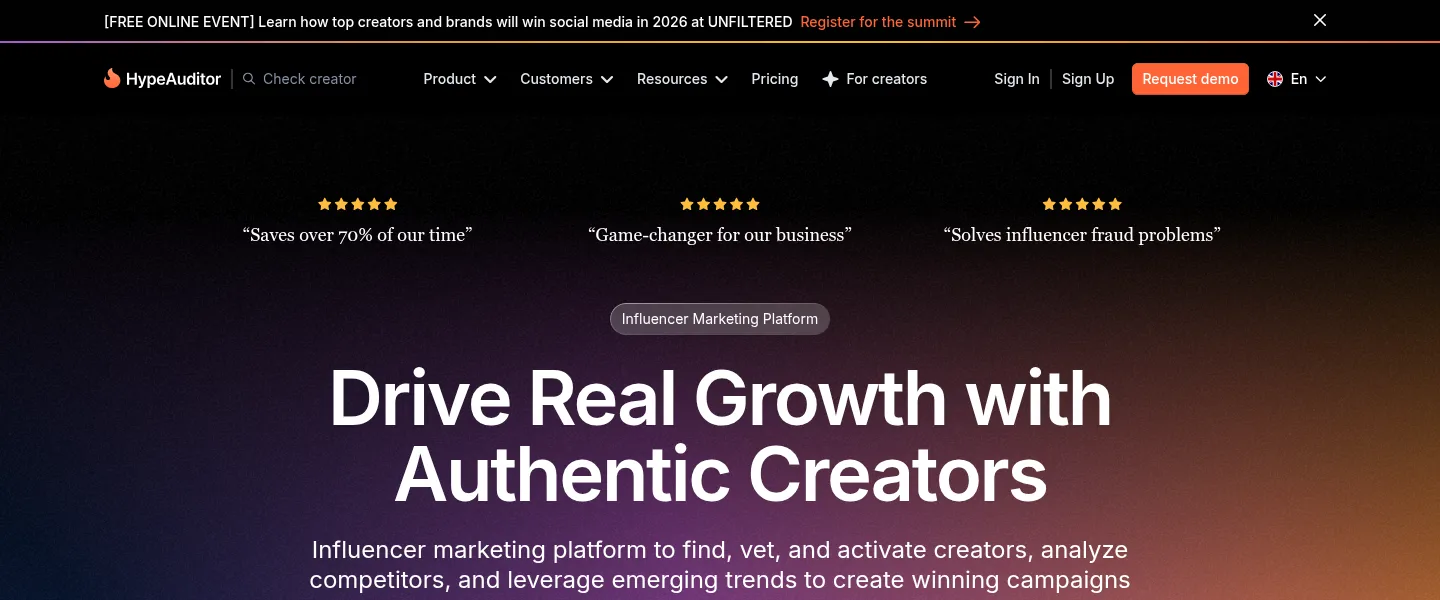
Screenshot: HypeAuditor website, October 2026.
HypeAuditor focuses on detecting fake followers and suspicious engagement, with audience quality scores, demographic analysis and competitor benchmarking. It also offers campaign management and creator performance analytics.
Core features:
- Audience authenticity analysis
- Fake follower detection and fraud scoring
- Audience demographic analysis
- Competitor benchmarking
- Campaign management and performance analytics
How is HypeAuditor priced?
HypeAuditor provides pricing on request through its sales team. Ask for a quote based on the platforms, report volume and seats you need.
3. GRIN
GRIN suits direct-to-consumer and Shopify brands that run long-term creator programmes with gifting and affiliate sales.
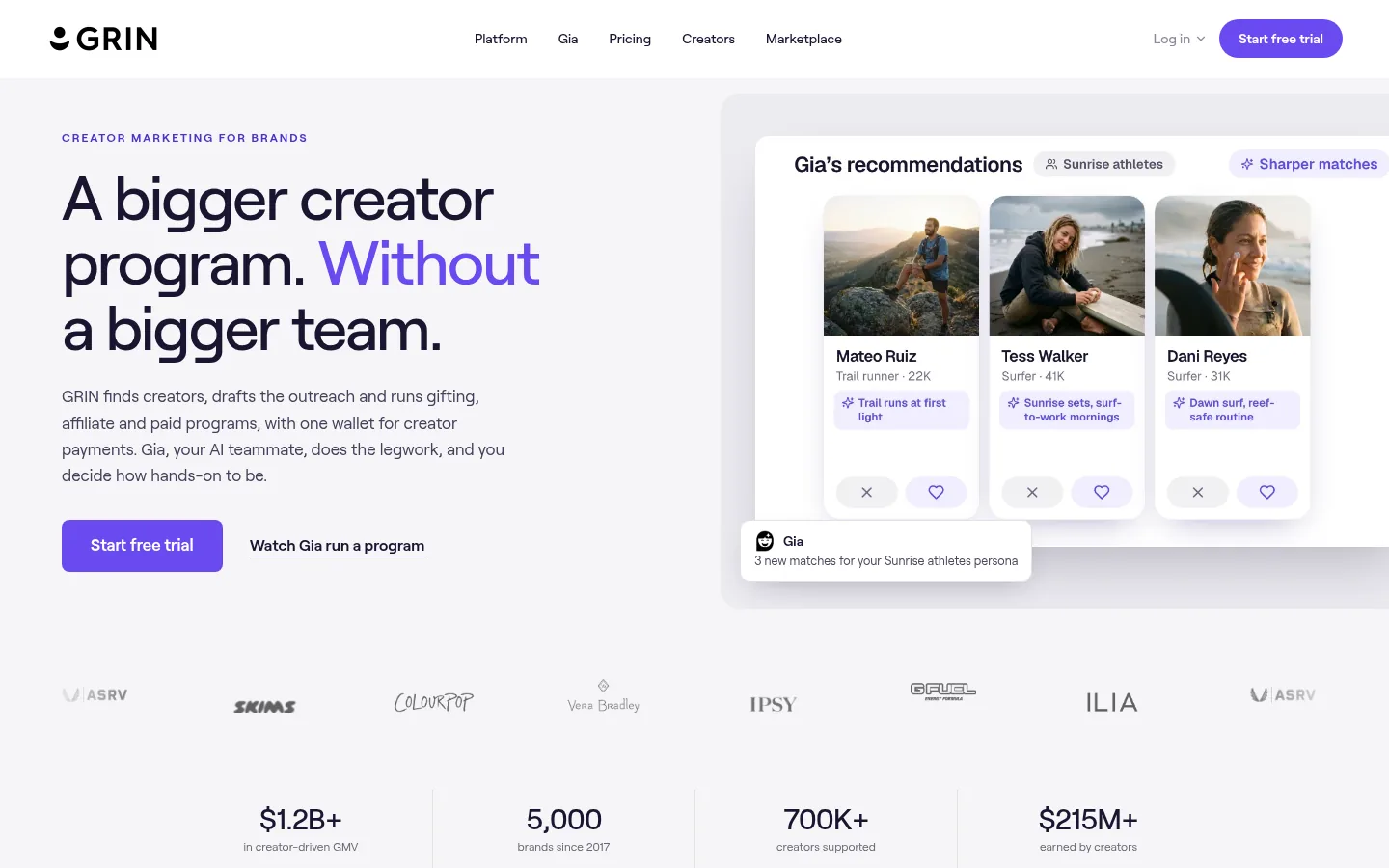
Screenshot: GRIN website, October 2026.
GRIN is a creator management platform built around ecommerce. It connects creator campaigns to store performance, with gifting, affiliate management, communication workflows and attribution reporting.
Core features:
- Shopify and ecommerce integrations
- Affiliate management
- Influencer gifting workflows
- ROI and conversion tracking
- Creator relationship management
How is GRIN priced?
GRIN sells through demos and custom annual contracts, with no public price list. It is built for established ecommerce brands with ongoing creator programmes.
4. Upfluence
Upfluence suits ecommerce brands that want influencer discovery connected to affiliate tracking and sales attribution.
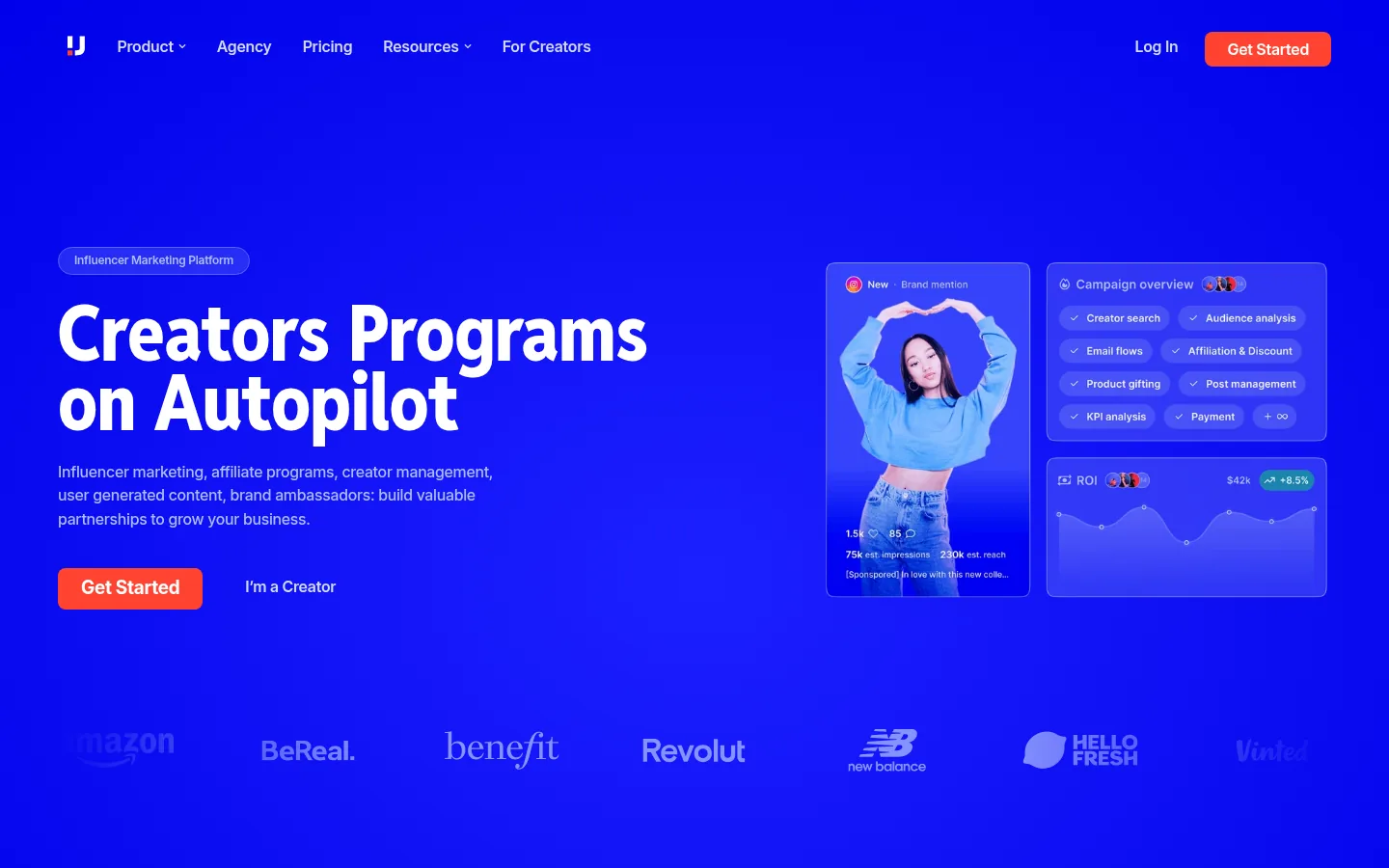
Screenshot: Upfluence website, October 2026.
Upfluence combines creator search with ecommerce integrations, so you track influencer-driven sales through affiliate links, discount codes and store data. It supports Shopify and WooCommerce.
Core features:
- Influencer discovery database
- Ecommerce integrations, including Shopify and WooCommerce
- Affiliate sales tracking
- Outreach management
- Campaign and ROI reporting
How is Upfluence priced?
Upfluence does not publish prices; plans are quoted after a demo. Compare the quote with the sales you expect to attribute to creators.
5. Influencer Hero
Influencer Hero suits agencies, SMBs and ecommerce brands that want discovery, outreach, a creator CRM and payments in one platform.
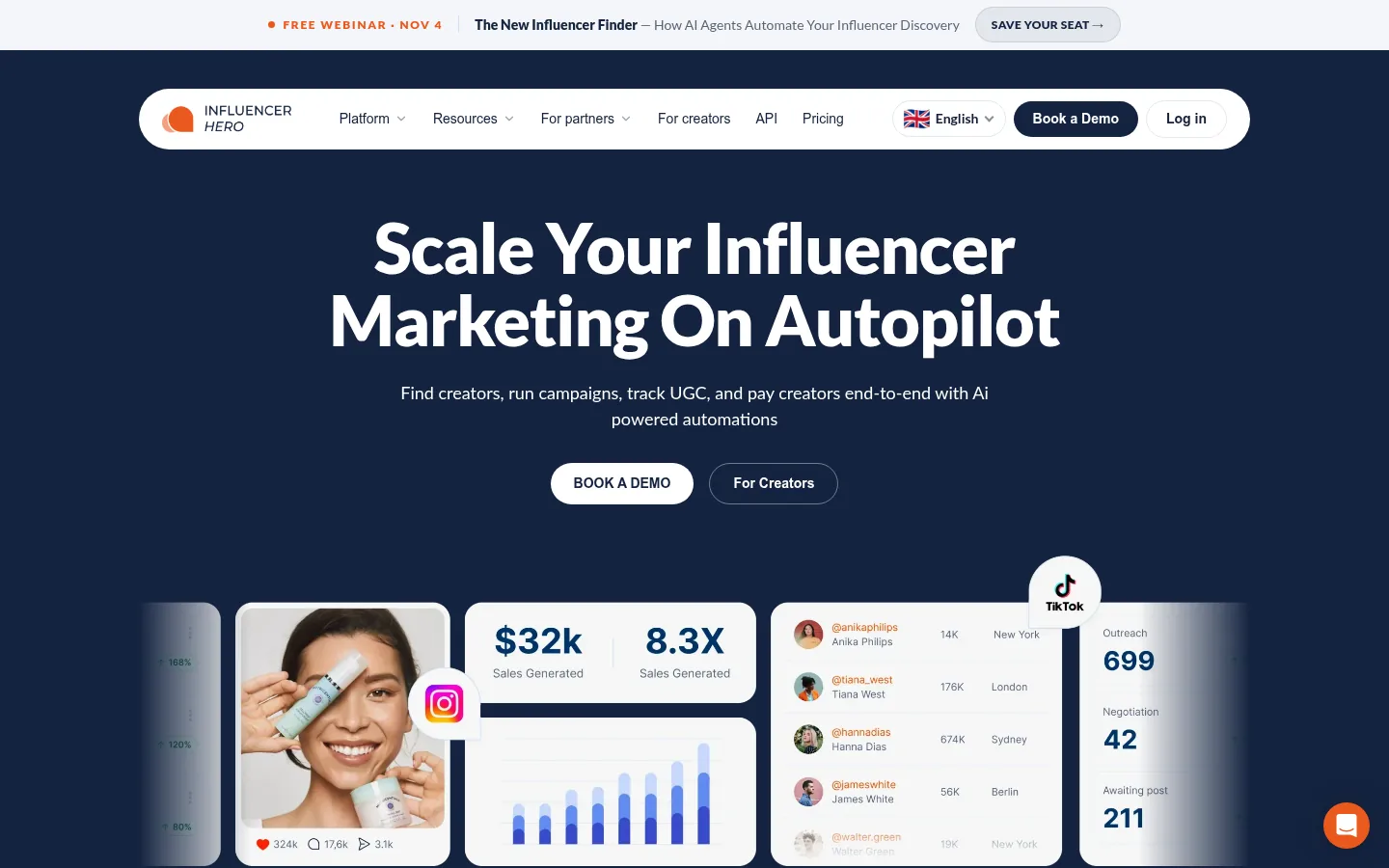
Screenshot: Influencer Hero website, October 2026.
Influencer Hero combines discovery, automated outreach, creator CRM, payments and UGC collection, so you run campaigns without stitching tools together.
Core features:
- Influencer discovery database
- Automated outreach workflows
- Creator CRM
- Shopify integration
- Influencer payments and UGC collection
How is Influencer Hero priced?
Influencer Hero publishes monthly prices, with lower effective rates on yearly billing.
| Plan | Billed monthly | Billed yearly | Suitable for | Notes |
|---|---|---|---|---|
| Standard | USD 649 a month | USD 454 a month | SMBs and agencies | Entry plan |
| Pro | USD 1,049 a month | USD 734 a month | Growing influencer teams | More capacity |
| Business | USD 2,490 a month | USD 1,743 a month | Large campaigns | Highest listed plan |
| Enterprise | Quote-based | Quote-based | Large organisations | Contact sales |
Source: Influencer Hero pricing, checked October 2026.
6. Collabstr
Collabstr suits startups and small brands that want to hire UGC creators and influencers quickly through a marketplace.
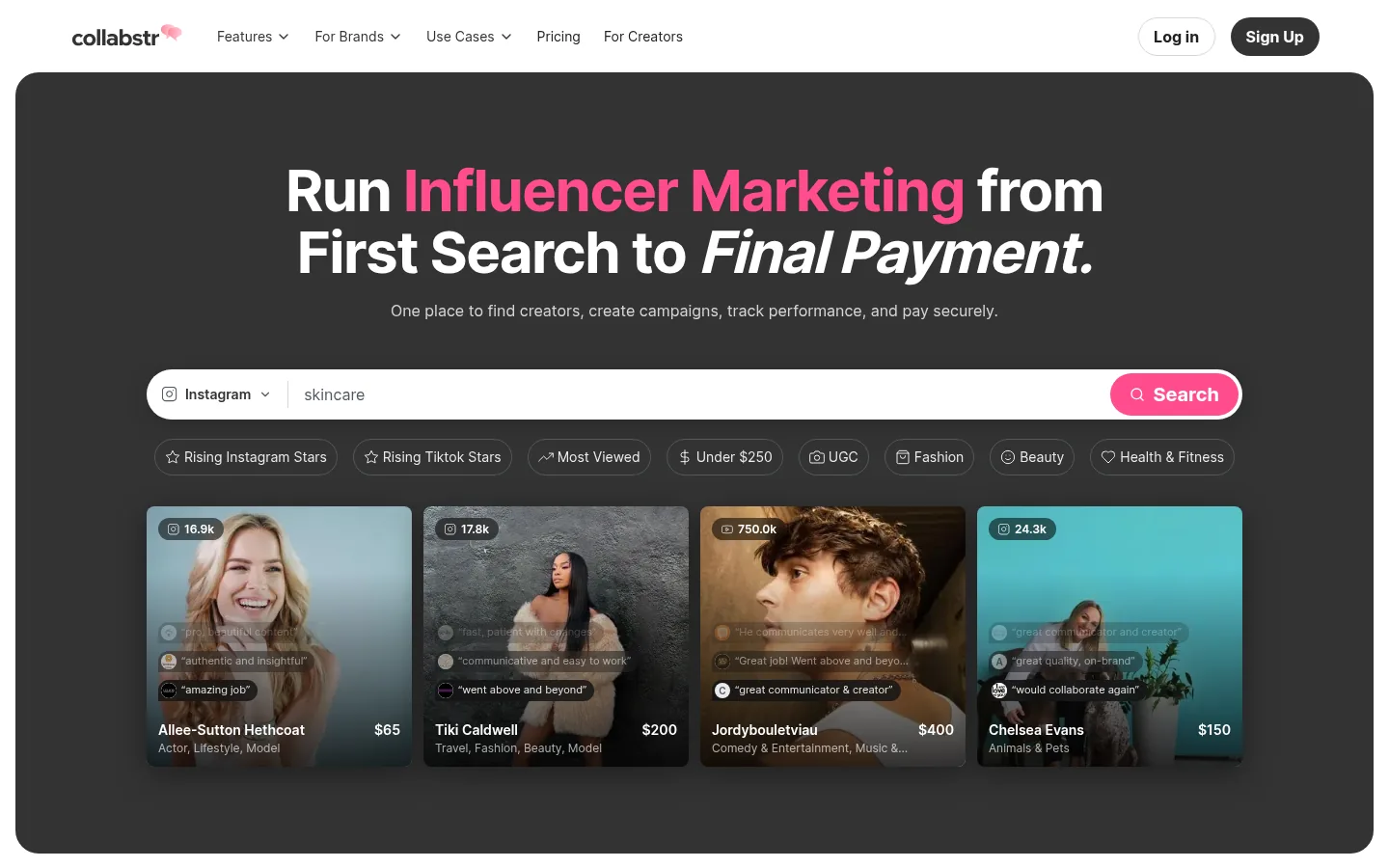
Screenshot: Collabstr website, October 2026.
Collabstr is a creator marketplace where you search creators, see their prices, hire them and manage collaborations and payments in one place. It focuses on Instagram, TikTok and UGC creators.
Core features:
- Creator marketplace with listed prices
- UGC creator discovery
- Campaign posting and hiring
- Creator messaging
- Marketplace payments
How is Collabstr priced?
Collabstr is free to use with a hiring fee, and paid plans lower the fee and add features.
| Plan | Price | Billing | Hiring fee | Suitable for |
|---|---|---|---|---|
| Free | USD 0 | Free | 10% | Occasional hires |
| Pro | USD 249 a month | Billed annually | 10% | Growing brands |
| Premium | USD 333 a month | Billed annually | 5% | Regular campaigns |
| Enterprise or Agency | USD 1,000 a month | Billed annually | Custom | Agencies and large brands |
Source: Collabstr pricing, checked October 2026.
7. CreatorIQ
CreatorIQ suits multinational brands and enterprise teams that run governed, global creator programmes across many teams.
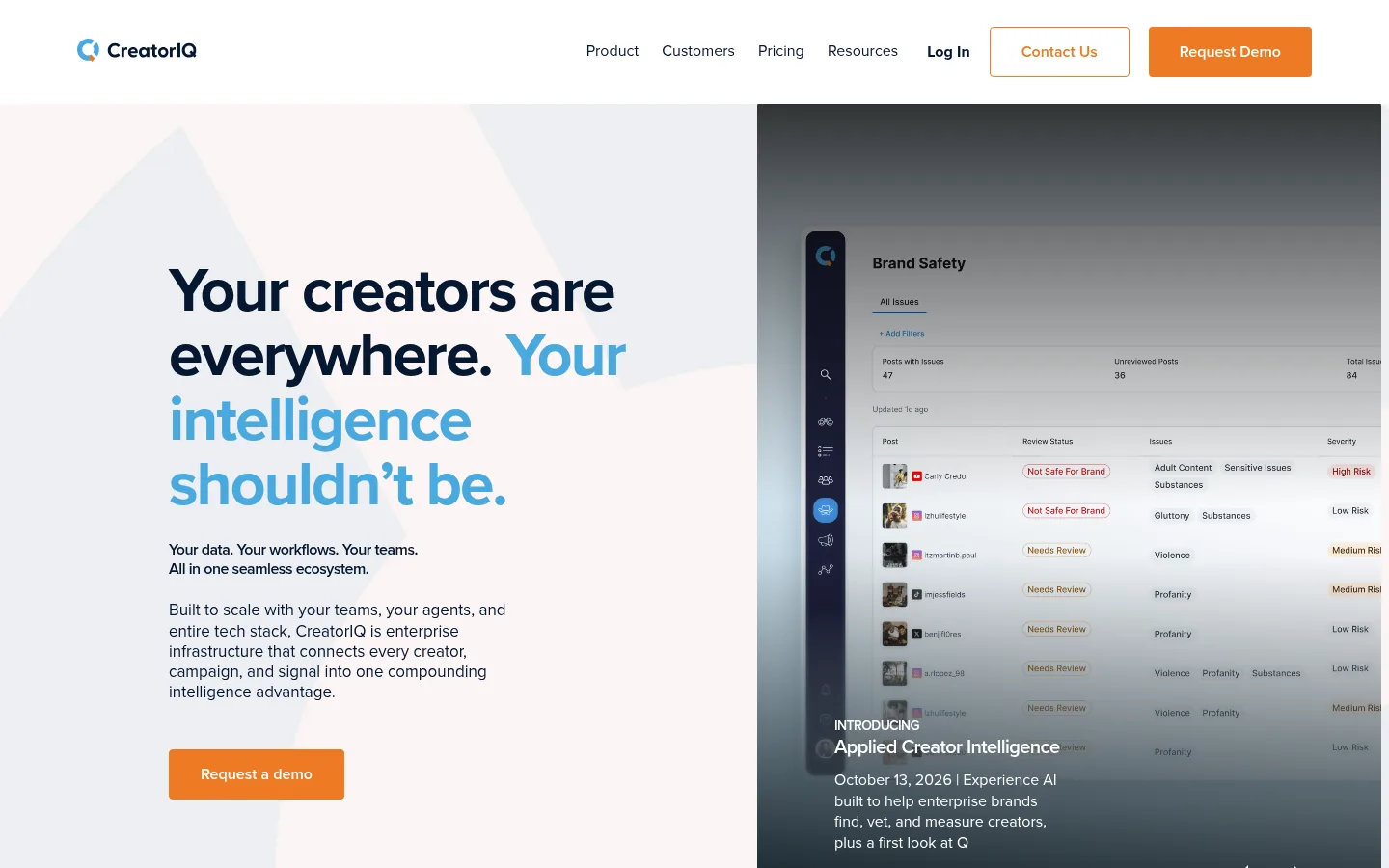
Screenshot: CreatorIQ website, October 2026.
CreatorIQ combines creator discovery, campaign workflows, fraud analysis, brand safety and enterprise integrations, with reporting for cross-team and multi-market programmes.
Core features:
- Enterprise creator discovery
- Campaign management workflows
- Fraud detection and brand safety analysis
- Enterprise reporting
- API integrations and multi-team collaboration
How is CreatorIQ priced?
CreatorIQ uses custom enterprise contracts with no public price list. It is built for large organisations, so expect a sales-led process.
How to Choose the Right Influencer Discovery Tool
Choose by goal: broad discovery, fraud checks, ecommerce attribution, all-in-one management, quick marketplace hiring or enterprise governance. Then check platform coverage, pricing transparency, integrations with your store and CRM, and the reporting you need to prove ROI.
Which influencer discovery tool fits which team?
Match the tool to how you run creator campaigns and how you measure them.
| Tool | Best for | Strengths | Limitations | Pricing model |
|---|---|---|---|---|
| Modash | SMEs and agencies | Large database, self-serve | Discovery focus | Subscription in euros |
| HypeAuditor | Brand safety | Fraud and audience checks | No public pricing | On request |
| GRIN | DTC and Shopify brands | Ecommerce creator management | Enterprise-level cost | Custom contract |
| Upfluence | Ecommerce attribution | Affiliate and sales tracking | No public pricing | Quote after demo |
| Influencer Hero | Agencies and SMBs | All-in-one workflow | Higher monthly cost | Monthly or yearly plans |
| Collabstr | Startups and UGC | Fast marketplace hiring | Fewer analytics | Free or plan, plus hiring fee |
| CreatorIQ | Enterprise programmes | Governance and reporting | Enterprise-only | Custom contract |
What practices make creator campaigns pay off?
Creator campaigns pay off when you vet audiences before you sign and measure sales after you post. Good practice:
- Check audience authenticity before you agree terms.
- Match creators to your buyers, not to follower counts.
- Track every partnership with its own link or code.
- Brief creators clearly and let them keep their own voice.
- Test micro-influencers before larger deals.
- Report sales and leads, not only reach and likes.
Spend Your Creator Budget on Results
The right discovery tool shows you which creators reach real buyers and which partnerships pay back. Each platform above serves a different stage of influencer marketing. Pair it with social ad management tools and TikTok tools, or browse more roundups on the SaaS tools hub.