The right ecommerce SaaS stack runs your store, automates your marketing, takes payments and answers customers, so you grow revenue without building custom infrastructure. No single tool covers the full customer journey, so most brands combine a store platform, an email and SMS tool, a CRM, a social tool, a payment provider and a helpdesk. The eight tools below cover each layer, with features, strengths and prices as of October 2026.
What Ecommerce Marketing Software and SaaS Tools Do
Ecommerce marketing software and SaaS tools are cloud systems that run your store's marketing, customer communication and sales operations, so you pay for features instead of maintaining servers. They let you run automated campaigns, personalise customer journeys, improve checkout and measure revenue in one scalable setup.
What do these tools help you manage?
They cover the whole journey from first visit to repeat purchase.
- Acquire and engage customers across email, SMS, social and paid channels.
- Automate lifecycle journeys such as welcome flows, cart recovery and repeat-purchase campaigns.
- Process checkout, payments and orders in ways that support higher conversion rates.
- Organise customer data, support conversations and retention workflows.
- Connect marketing actions to revenue with performance analytics.
Why do ecommerce brands depend on a SaaS stack?
Cloud tools cut development costs and let a lean team run the work of a larger one. A single tool cannot manage the full customer journey, so brands rely on a coordinated set of SaaS tools. Automation and data segmentation help SMEs operate with small marketing teams, and cloud plans let you add features as you grow. For SMEs and mid-size brands, including those in Southeast Asia, this stack is the backbone of scaling.
1. Shopify
Shopify suits brands that want reliable hosting, secure checkout and the largest app ecosystem in ecommerce.

Screenshot: Shopify website, October 2026.
Shopify gives you a complete set of tools to run product catalogues, manage orders, accept payments and operate basic marketing workflows. Many SMEs choose it for fast deployment and because it scales across multiple countries.
Shopify pricing
Shopify plans run from USD 29 to USD 359 a month on yearly billing, with Plus for enterprise stores from USD 2,300 a month. Higher plans lower your online card rates.
| Plan | Monthly billing | Yearly billing | Online card rate | Suitable for |
|---|---|---|---|---|
| Basic | USD 39 a month | USD 29 a month | 2.9% + 30¢ | New brands |
| Grow | USD 105 a month | USD 89 a month | 2.7% + 30¢ | Growing stores |
| Advanced | USD 399 a month | USD 359 a month | 2.5% + 30¢ | Scaling brands |
| Plus | From USD 2,300 a month | Custom | 2.25% + 30¢ | Enterprise and high-volume stores |
Source: Shopify pricing (US), checked October 2026.
2. BigCommerce
BigCommerce suits SMEs and mid-market brands that want more built-in features and fewer third-party apps.
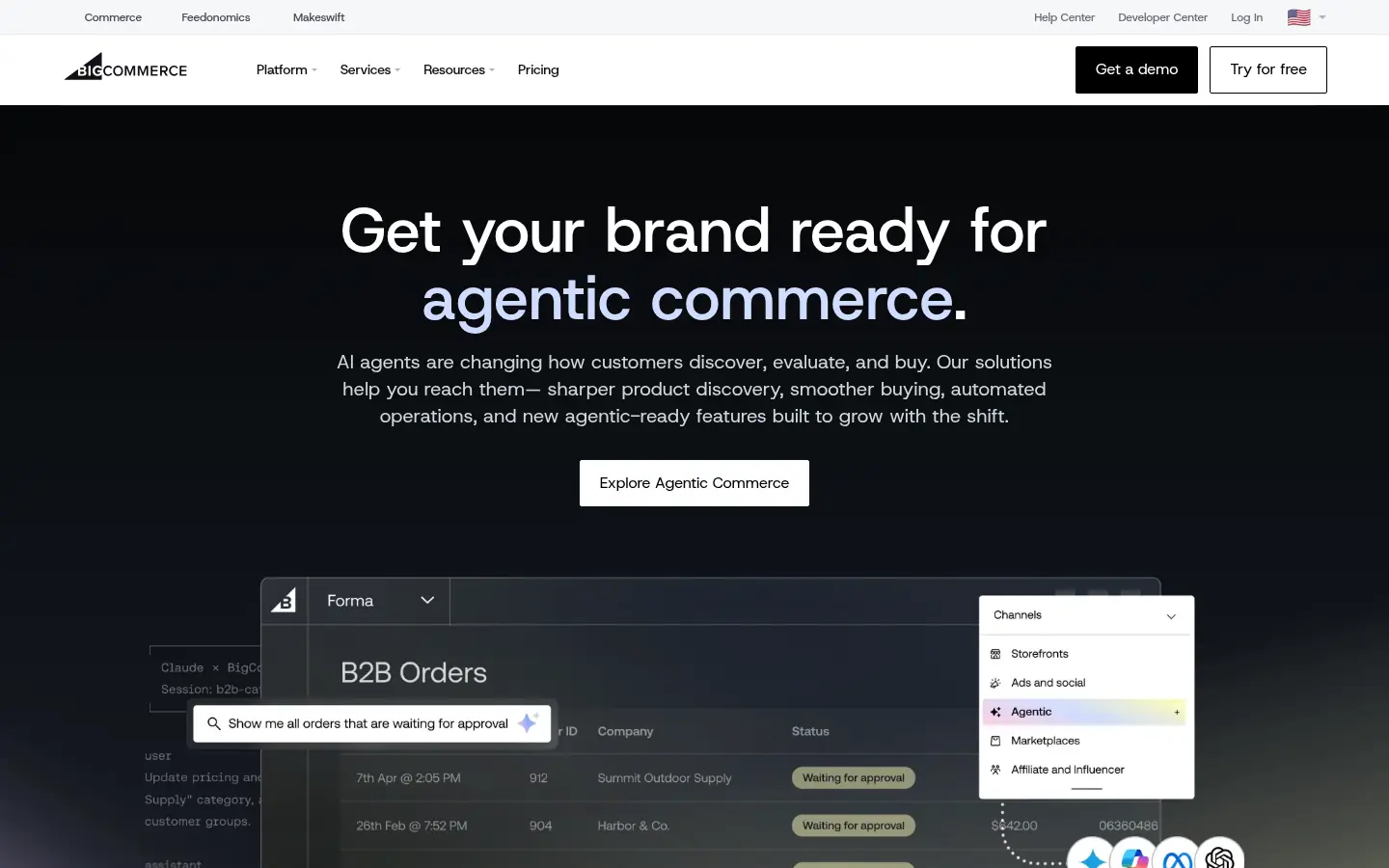
Screenshot: BigCommerce website, October 2026.
BigCommerce provides a flexible platform with API-driven development, multichannel selling and SEO-friendly store structures. It fits brands that prefer a structured back end and lower reliance on plugins.
BigCommerce pricing
BigCommerce plans run from USD 29 to USD 299 a month on annual billing, with Performance from USD 1,499 a month. A 15-day free trial is available.
| Plan | Monthly billing | Annual billing | Suitable for | Notes |
|---|---|---|---|---|
| Core | USD 39 a month | USD 29 a month | Small online stores | Entry plan |
| Growth | USD 105 a month | USD 79 a month | Growing stores | More marketing tools |
| Scale | USD 399 a month | USD 299 a month | Higher-revenue stores | Advanced features |
| Performance | Custom | From USD 1,499 a month | Large brands | Billed annually |
Source: BigCommerce pricing (US), checked October 2026.
3. Klaviyo
Klaviyo suits ecommerce brands that want email and SMS automation driven by purchase and browsing data.
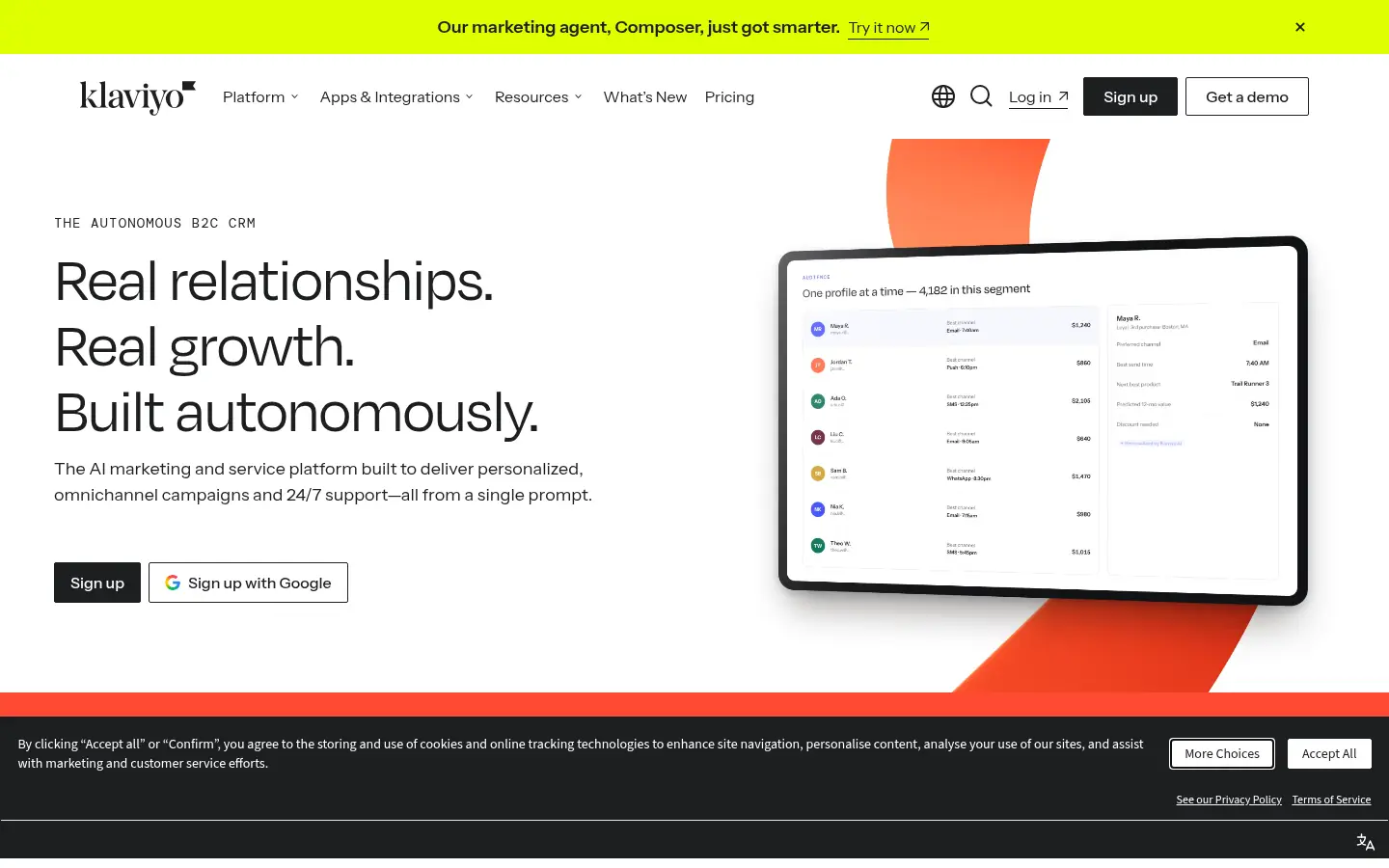
Screenshot: Klaviyo website, October 2026.
Klaviyo syncs customer data such as purchase history, browsing behaviour and lifecycle triggers. Brands use it for welcome flows, cart recovery, back-in-stock alerts and product recommendation messages that drive repeat orders, with revenue attribution for each campaign.
Klaviyo pricing
Klaviyo is free for up to 250 profiles and 500 emails a month, and paid plans scale with the number of profiles you store. The free plan also includes USD 5 of mobile messages a month. Check the pricing calculator for your list size, because cost rises as your list grows.
4. Omnisend
Omnisend suits small and mid-size stores that want affordable email, SMS and web push with fast setup.
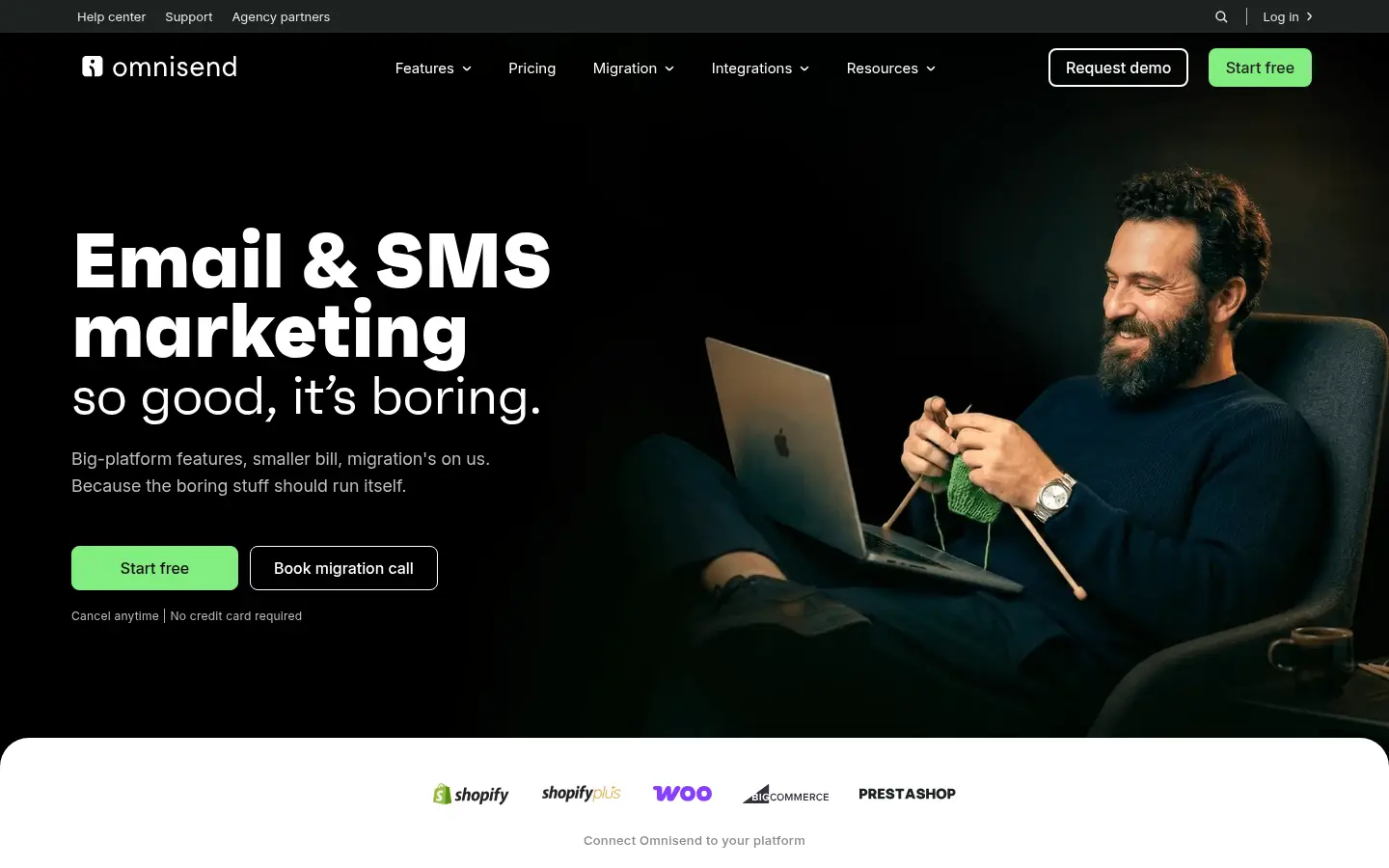
Screenshot: Omnisend website, October 2026.
Omnisend offers multichannel messaging built for ecommerce, without complicated workflows. It supports automation such as welcome sequences, cart recovery and product updates.
Omnisend pricing
Omnisend has a free plan for 250 contacts and 500 emails a month, and paid plans start from USD 16 a month, rising with your contact count. The free plan also includes 500 web push notifications and free migration.
| Plan | Price | Contacts | Suitable for | Notes |
|---|---|---|---|---|
| Free | USD 0 | 250 | Testing and small lists | 500 emails a month |
| Standard | From USD 16 a month | Scales with list | Growing stores | Email and SMS |
| Pro | Higher tier, scales with list | Scales with list | Active multichannel stores | Advanced automation and reporting |
Source: Omnisend pricing, checked October 2026.
5. HubSpot Marketing Hub
HubSpot Marketing Hub suits brands that want one CRM connecting customer profiles, email, ads and automation.
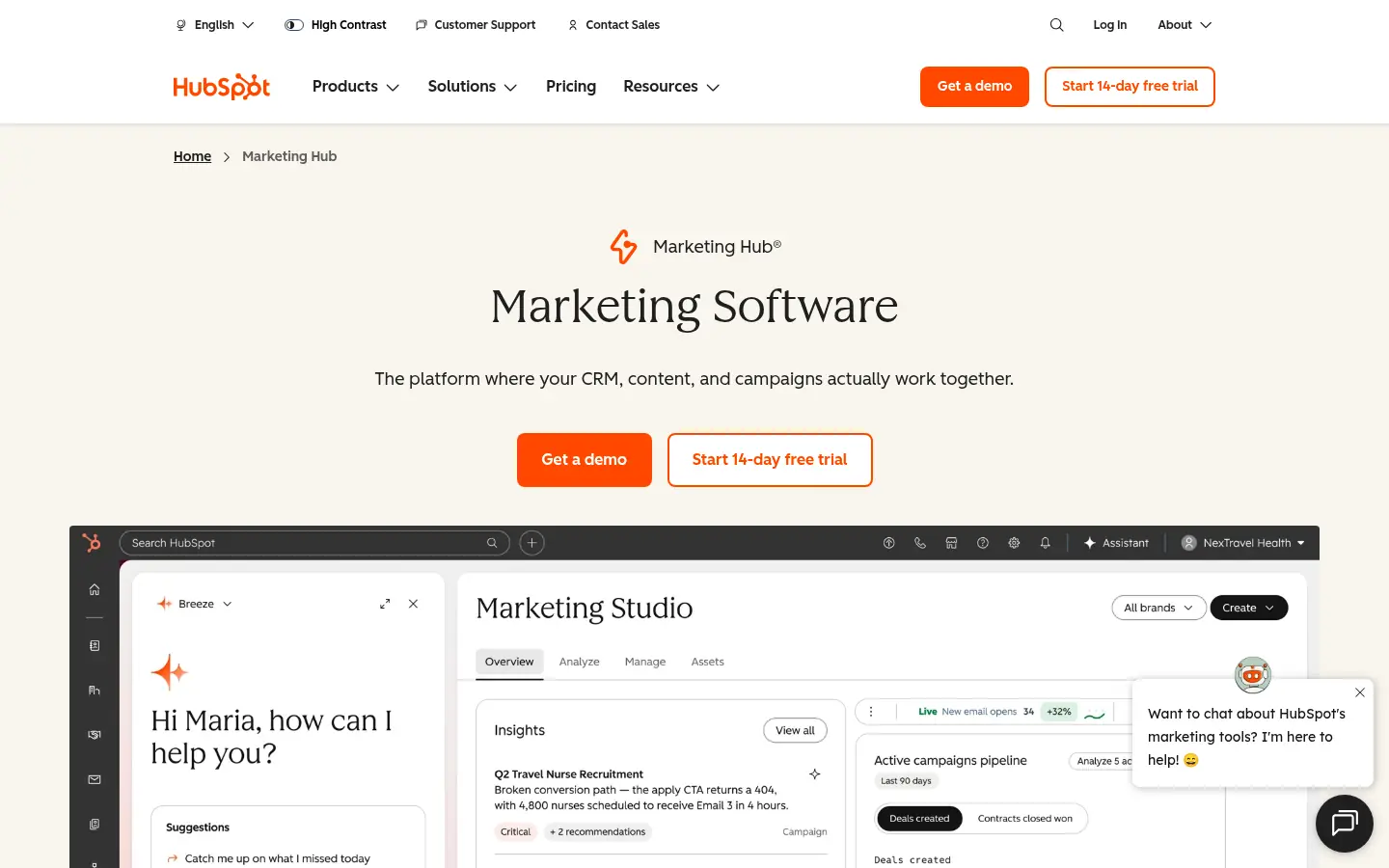
Screenshot: HubSpot Marketing Hub website, October 2026.
HubSpot Marketing Hub maps each customer's lifecycle stage and attributes revenue to specific actions. That gives you visibility across awareness, conversion and retention in one database.
HubSpot Marketing Hub pricing
HubSpot's marketing tools are free for up to two users, Starter is priced per seat, Professional starts at USD 800 a month and Enterprise at USD 3,600 a month. Professional includes three core seats and Enterprise includes five.
| Plan | Price | Seats included | Suitable for | Notes |
|---|---|---|---|---|
| Free | USD 0 | Up to 2 users | Trying the CRM | Basic tools |
| Starter | From USD 20 per seat a month (monthly billing) | Per seat | Small teams | Lower on annual billing |
| Professional | From USD 800 a month | 3 core seats | Advanced automation and reporting | Extra core seats from USD 45 a month |
| Enterprise | From USD 3,600 a month | 5 core seats | Large teams | Extra core seats from USD 75 a month |
Source: HubSpot Marketing Hub pricing, checked October 2026.
6. Hootsuite
Hootsuite suits brands that run several social channels and want scheduling, engagement and analytics in one dashboard.
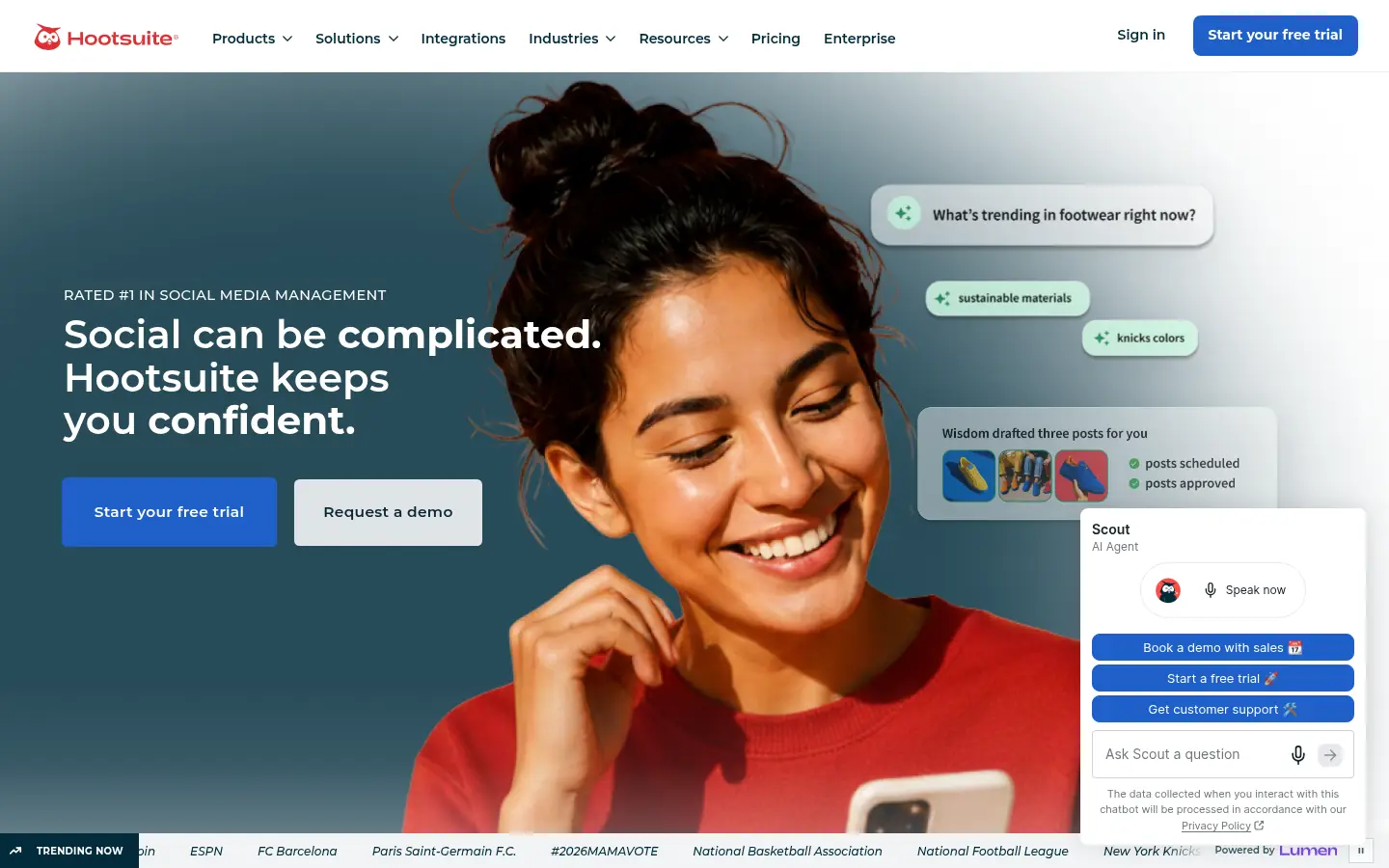
Screenshot: Hootsuite website, October 2026.
Hootsuite supports post creation, scheduling, team collaboration, engagement monitoring and performance analytics. It fits brands that rely on social content, influencer activity or paid social to drive traffic.
Hootsuite pricing
Hootsuite costs USD 99, USD 199 or USD 399 per user a month for Standard, Professional and Advanced, with custom Enterprise pricing. A free trial is available without a credit card.
| Plan | Price | Users | Suitable for | Notes |
|---|---|---|---|---|
| Standard | USD 99 per user a month | 1 or more | Solo marketers | Core scheduling and analytics |
| Professional | USD 199 per user a month | 1 or more | Growing teams | More features |
| Advanced | USD 399 per user a month | 1 or more | Larger teams | Advanced features |
| Enterprise | Custom | Custom | High-volume workflows | Through sales |
Source: Hootsuite plans, checked October 2026.
7. Stripe
Stripe suits brands that want usage-based payments, subscriptions and global checkout with no monthly fee.
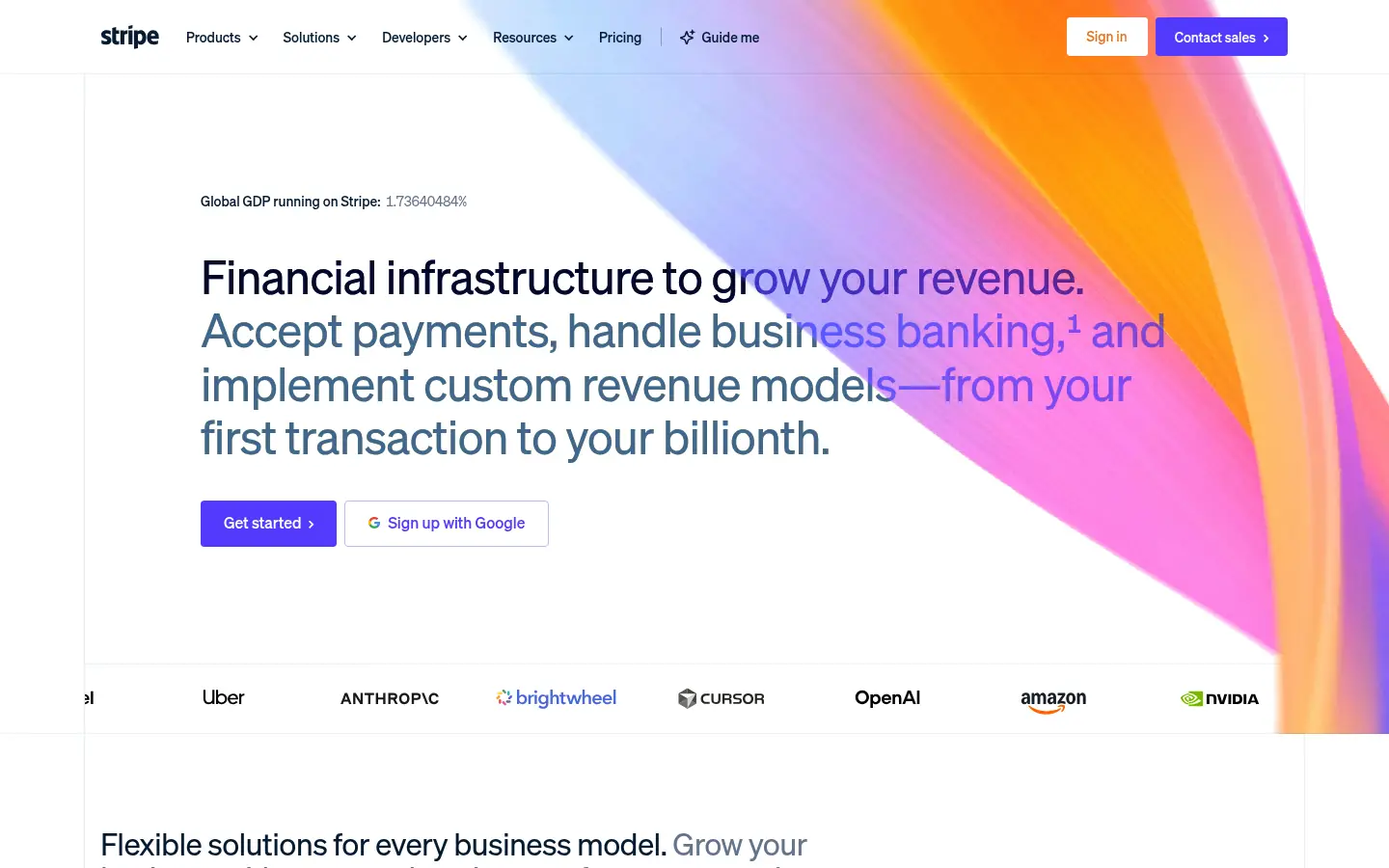
Screenshot: Stripe website, October 2026.
Stripe powers card, digital wallet and recurring payments, with fraud protection, currency conversion and integrations with ecommerce platforms. Because it charges per transaction, you pay based on usage.
Stripe pricing
Stripe charges 2.9% + 30¢ per successful domestic card payment in the US, and Stripe Billing costs 0.7% of billing volume on pay-as-you-go. Rates vary by country and payment method.
| Fee type | Price | Applies to | Model | Notes |
|---|---|---|---|---|
| Online card payments | 2.9% + 30¢ | US domestic cards | Per transaction | Varies by country |
| International cards | Additional 1.5% | Cards issued abroad | Per transaction | Added to the base rate |
| Currency conversion | Additional 1% | Converted payments | Per transaction | When conversion applies |
| Stripe Billing | 0.7% of billing volume | Subscriptions and invoicing | Pay as you go | Annual contracts from USD 620 a month |
| Custom | Negotiated | High-volume merchants | Contract | Through sales |
Source: Stripe pricing (US), checked October 2026.
8. Gorgias
Gorgias suits ecommerce support teams that want email, chat, social messages and order data in one helpdesk.
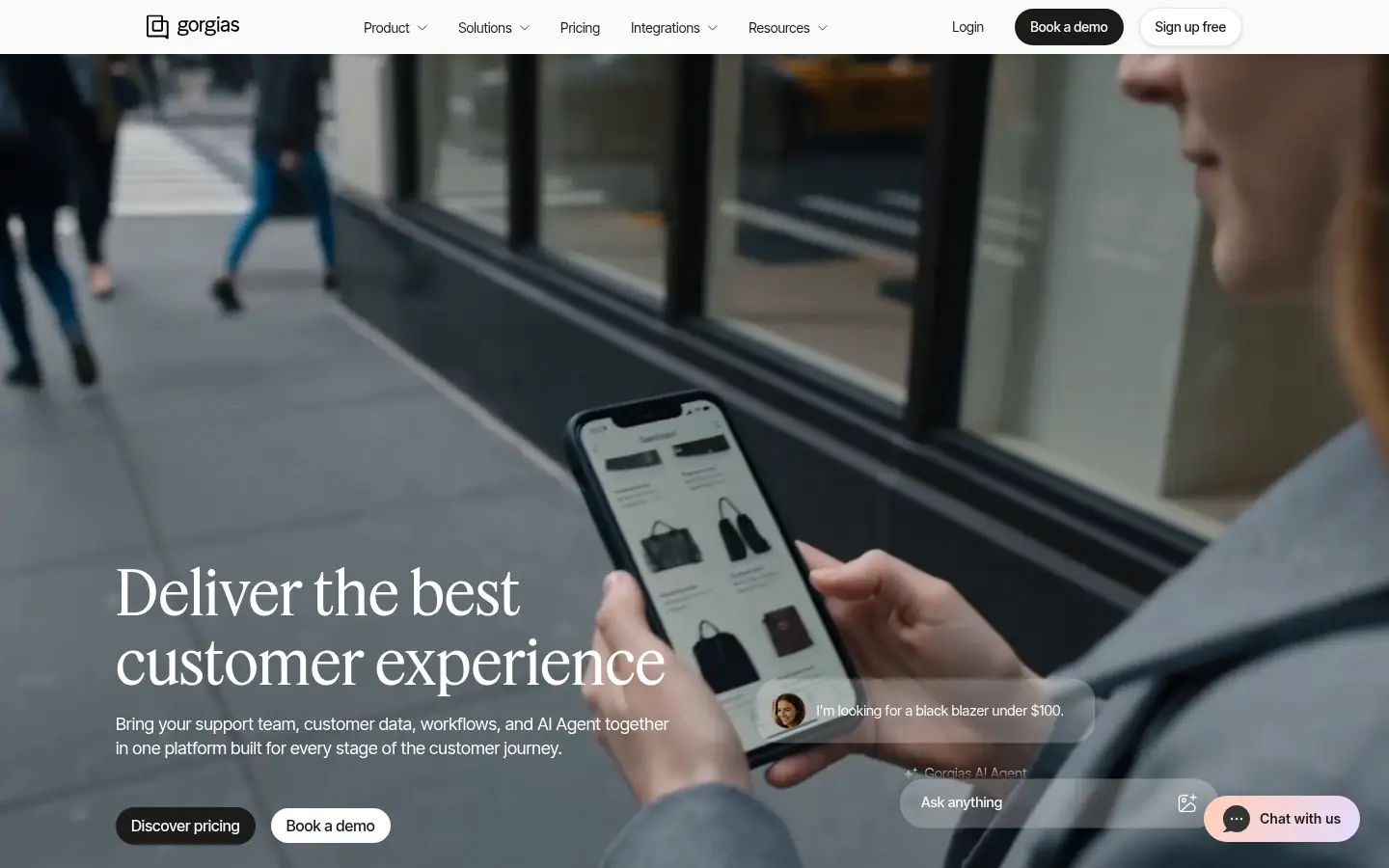
Screenshot: Gorgias website, October 2026.
Gorgias lets your support team view customer history, process refunds, answer product questions and manage pre-sale and post-sale enquiries in one place. Faster responses support stronger retention.
Gorgias pricing
Gorgias prices its helpdesk by monthly ticket volume, from 50 tickets on Starter to 5,000 on Advanced, with custom Enterprise plans. Prices rise with AI automation options, so check the calculator for your setup.
| Plan | Helpdesk price | Tickets a month | Suitable for | Notes |
|---|---|---|---|---|
| Starter | From USD 10 a month | 50 | Small stores | Monthly billing only |
| Basic | From USD 60 a month | 300 | Growing stores | Annual billing available |
| Pro | From USD 360 a month | 2,000 | Active stores | Annual billing available |
| Advanced | From USD 900 a month | 5,000 | High-volume support | Annual billing available |
Source: Gorgias pricing, checked October 2026.
How to Build Your Ecommerce SaaS Stack
Start with a store platform and an email tool, then add CRM, social, payments and support as your volume grows.
| Tool | Layer | Best for | Pricing model | Starting price |
|---|---|---|---|---|
| Shopify | Store platform | App ecosystem | Monthly plan plus card fees | USD 29 a month (yearly) |
| BigCommerce | Store platform | Built-in features | Monthly plan | USD 29 a month (annual) |
| Klaviyo | Email and SMS | Data-driven automation | By profiles | Free to 250 profiles |
| Omnisend | Email, SMS and push | Affordable multichannel | By contacts | Free to 250 contacts |
| HubSpot | CRM and marketing | Full-funnel visibility | Per seat and per tier | Free for 2 users |
| Hootsuite | Social media | Multi-channel scheduling | Per user | USD 99 per user a month |
| Stripe | Payments | Usage-based checkout | Per transaction | 2.9% + 30¢ (US) |
| Gorgias | Customer support | Ecommerce helpdesk | By tickets | From USD 10 a month |
How do you choose the right tools for your stage?
Match each tool to your team size, budget, channels and growth plans, and review the stack as customer needs change. Begin with a simple stack that fits your current resources, then add automation, payments, CRM and support tools as the business grows. Treat these tools as core infrastructure and measure their performance often.
Turn Your Store Into a Reliable Growth Engine
A well-chosen SaaS stack turns a small online store into a scalable business, so invest in tools that match your current stage and grow with you. Pair your stack with search visibility, so customers find your products before they find a competitor's. Ecommerce SEO services help your product and category pages rank in search and AI answers.