A B2B ecommerce platform lets your business customers order online at their own negotiated prices, with approvals and credit limits built in, so your sales team stops keying orders by hand and repeat revenue grows on its own. Unlike consumer ecommerce, B2B selling runs on repeat purchases, customer-level pricing, contract terms, bulk orders and connections to your ERP and CRM. This guide compares seven platforms used by manufacturers, distributors, wholesalers and enterprise sellers.
Why B2B Ecommerce Platforms Matter to Your Operations
A B2B ecommerce platform moves ordering out of email, spreadsheets and phone calls, which cuts pricing errors and frees your sales team to grow accounts instead of processing orders. Manual ordering slows purchasing cycles and creates stock and pricing mistakes. A platform puts ordering and account management in one system: buyers order on their own, inside your pricing rules, approval workflows and credit limits.
Your business buyers now expect the same self-service ordering they use as consumers. That makes a B2B ordering portal a core operating requirement, not an extra sales channel.
What does a B2B ecommerce platform give your business?
A B2B ecommerce platform gives you account-level control over pricing and ordering, with fewer manual steps and cleaner data flowing into your back office. The main benefits:
- Manages business customers and their accounts in one place.
- Applies customer-specific pricing, discounts and contract terms.
- Supports bulk orders, quick reorders and repeat purchases.
- Cuts manual order processing and pricing errors.
- Connects to ERP, CRM, inventory and finance systems.
- Scales workflows as customers and order complexity grow.
1. Shopify Plus
Shopify Plus suits brands that want to run wholesale and direct-to-consumer sales on one platform without a heavy build.
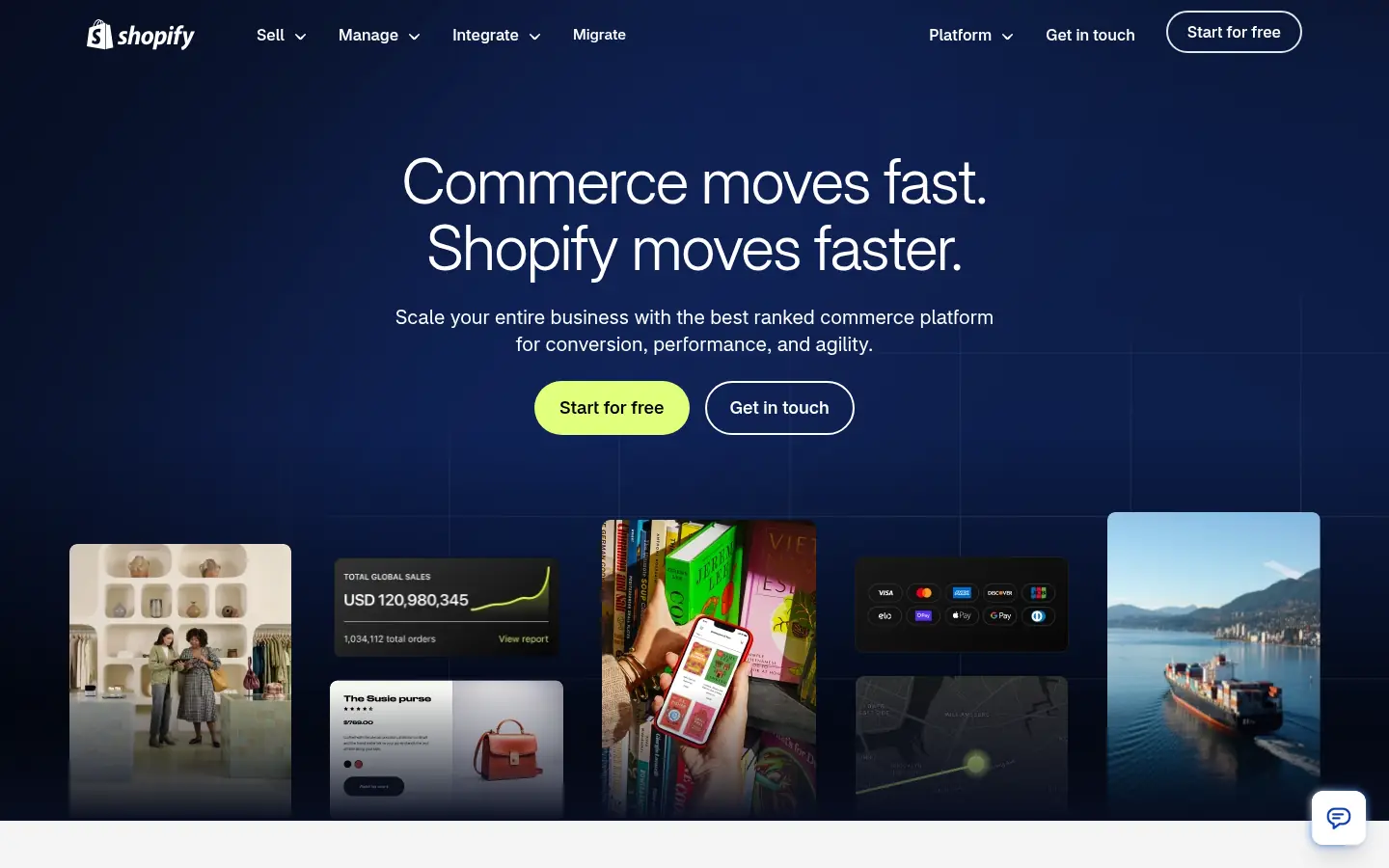
Screenshot: Shopify Plus website, October 2026.
Shopify Plus is Shopify's enterprise plan for high-volume merchants. Its B2B features include company profiles, customer-specific pricing and catalogues, and account-based purchasing. Its strengths are ease of use, a large app ecosystem and fast deployment rather than deep procurement complexity.
Core features:
- Company profiles and customer groups
- Custom pricing and B2B catalogues
- Bulk ordering and quick reorder
- Large app ecosystem for ERP and CRM connections
Shopify Plus pricing and suitability
Shopify Plus starts at USD 2,300 a month on a three-year term, and many B2B workflows add app or development costs on top. Treat it as a long-term operating investment rather than a low-cost entry option.
| Plan | Price | Term | Suitable for | Limits |
|---|---|---|---|---|
| Shopify Plus | From USD 2,500 a month | 1-year term | Brands running B2B and consumer sales | Advanced B2B workflows often need apps |
| Shopify Plus | From USD 2,300 a month | 3-year term | Brands committing long term | Longer commitment |
| Shopify Plus (complex structures) | Variable platform fee | Based on revenue and model | High-volume or complex businesses | Quoted |
Source: Shopify Plus pricing, checked October 2026.
2. BigCommerce B2B Edition
BigCommerce B2B Edition suits distributors and wholesalers that want strong built-in B2B features with lower overhead than a custom enterprise build.
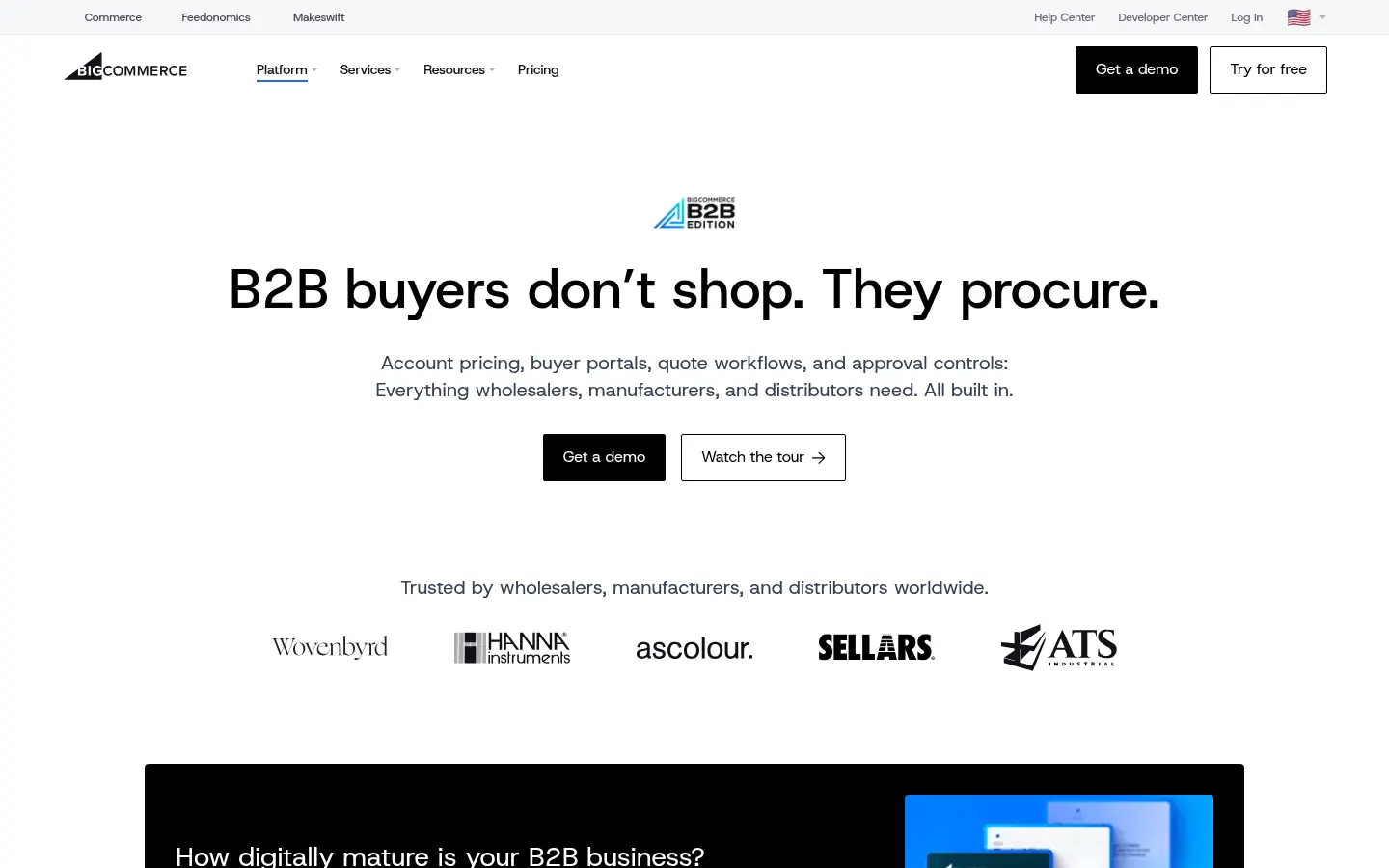
Screenshot: BigCommerce B2B Edition website, October 2026.
BigCommerce B2B Edition adds account-level pricing, quotes, purchase approvals and integration options, including headless builds. It covers more B2B needs natively than most general ecommerce tools.
Core features:
- Customer-specific pricing and catalogues
- Quote management and purchase approvals
- ERP and CRM integrations
- Headless commerce support
BigCommerce pricing and suitability
BigCommerce publishes its standard plan prices, while B2B Edition and Enterprise are quoted. The standard plans show the platform's price range; B2B buyers usually need the quoted tiers.
| Plan | Price (annual billing) | Monthly billing | Suitable for | Limits |
|---|---|---|---|---|
| Core | USD 29 a month | USD 39 a month | Small stores | Not B2B Edition |
| Growth | USD 79 a month | USD 105 a month | Growing stores | Not B2B Edition |
| Scale | USD 299 a month | USD 399 a month | Larger stores | Not B2B Edition |
| Performance | From USD 1,499 a month | Annual | High-volume sellers | Annual billing |
| B2B Edition and Enterprise | Quote-based | Quote-based | Distributors and wholesalers | Integrations often need partners |
Source: BigCommerce pricing, checked October 2026.
3. Adobe Commerce
Adobe Commerce suits enterprises with complex catalogues, pricing rules and customer hierarchies, and the engineering capacity to run them.
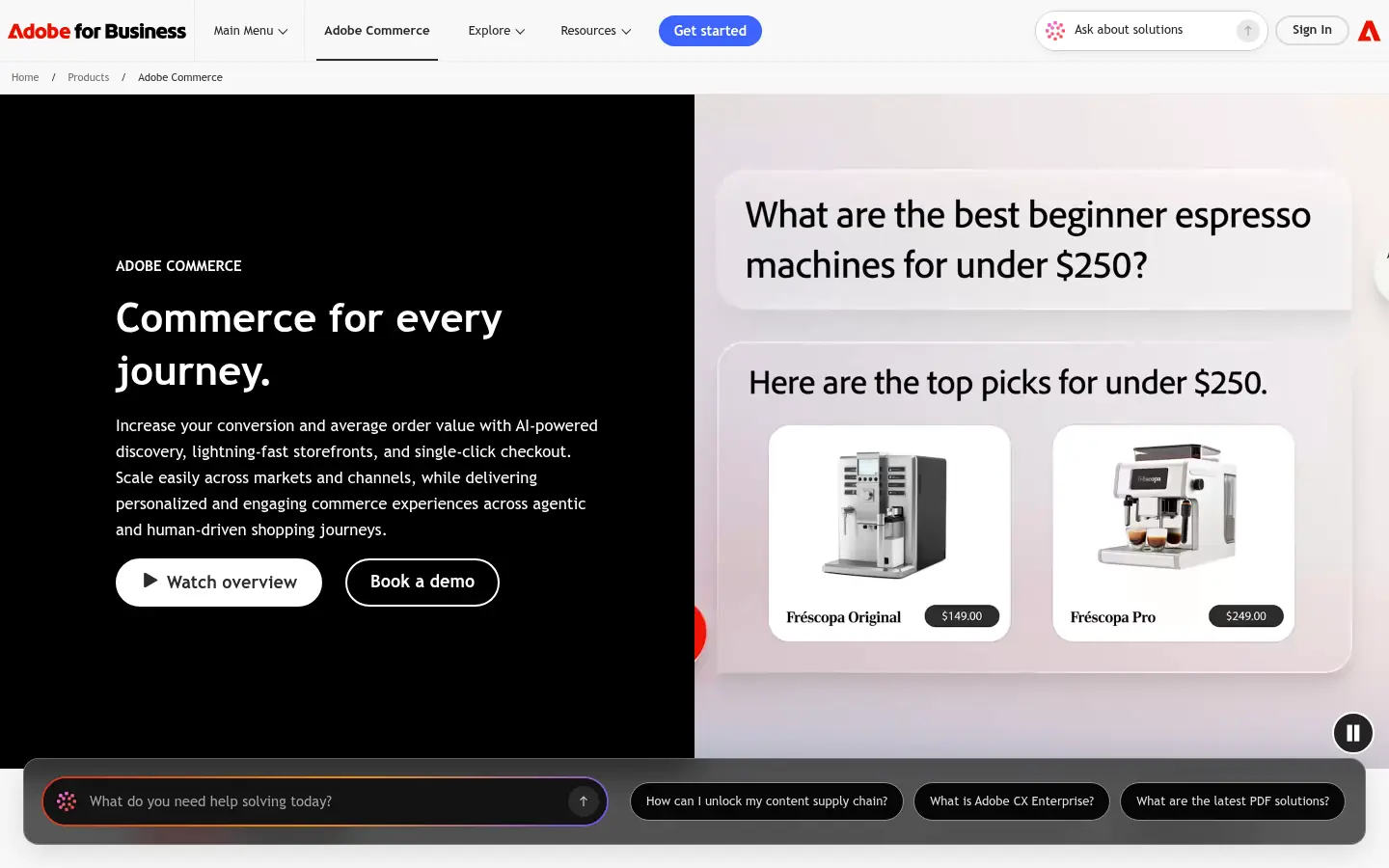
Screenshot: Adobe Commerce website, October 2026.
Adobe Commerce, formerly Magento Commerce, gives you full control over ecommerce logic. It handles advanced catalogues, role-based account permissions and quote-to-order workflows. It needs a dedicated engineering team or implementation partner.
Core features:
- Advanced catalogue and pricing management
- Role-based account permissions
- Quote-to-order workflows
- Extensive customisation
Adobe Commerce pricing and suitability
Adobe quotes Adobe Commerce for each customer and does not publish licence prices. It offers a SaaS edition (Adobe Commerce as a Cloud Service), a PaaS edition (Adobe Commerce on Cloud) and Adobe Commerce Optimizer. Budget for development, hosting and maintenance as well as the licence.
| Edition | Price | Delivery | Suitable for | Limits |
|---|---|---|---|---|
| Adobe Commerce as a Cloud Service | Quote-based | SaaS | Enterprises wanting managed infrastructure | Price not public |
| Adobe Commerce on Cloud | Quote-based | PaaS | Enterprises needing deep customisation | Development and upkeep costs |
| Adobe Commerce Optimizer | Quote-based | Add-on layer | Existing commerce stacks | Price not public |
Source: Adobe Commerce pricing, checked October 2026.
4. SAP Commerce Cloud
SAP Commerce Cloud suits large enterprises whose ecommerce has to run in step with SAP ERP and supply chain systems.
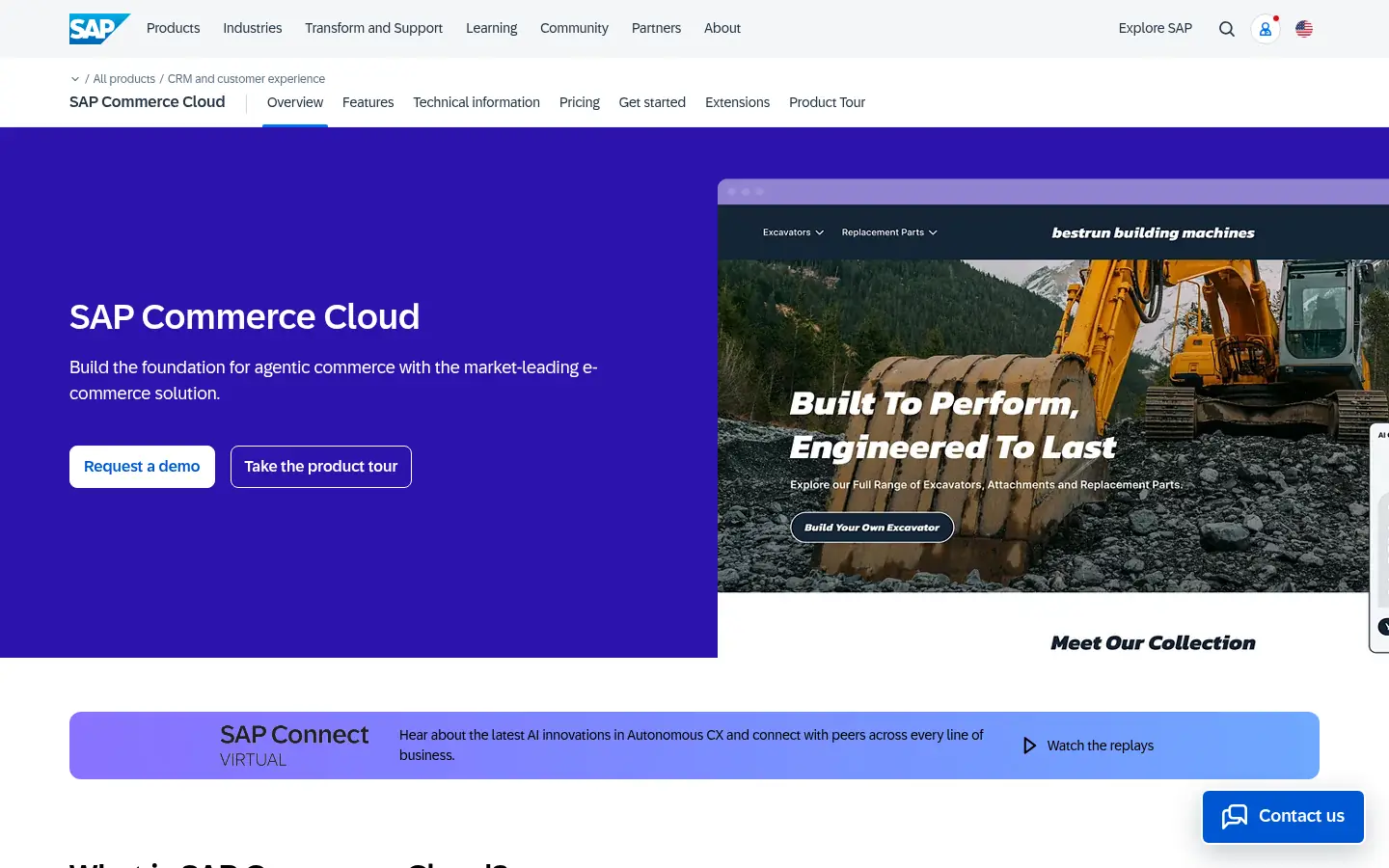
Screenshot: SAP Commerce Cloud website, October 2026.
SAP Commerce Cloud supports complex procurement workflows, large customer hierarchies and multi-region operations, with deep SAP integration.
Core features:
- Enterprise account and pricing management
- Deep SAP ERP integration
- Multi-region operations
- Workflow automation
SAP Commerce Cloud pricing and suitability
SAP sells Commerce Cloud through enterprise contracts, with cost driven by company size, transaction volume and SAP integration scope. Implementation and support form a large part of the total cost, so it rarely suits small or mid-size businesses.
| Plan | Price | Basis | Suitable for | Limits |
|---|---|---|---|---|
| SAP Commerce Cloud | Quote-based | Size, volume, integration scope | Large SAP enterprises | High cost and implementation effort |
Source: SAP Commerce Cloud, checked October 2026.
5. OroCommerce
OroCommerce suits manufacturers and distributors that want a platform designed around B2B workflows from the start.
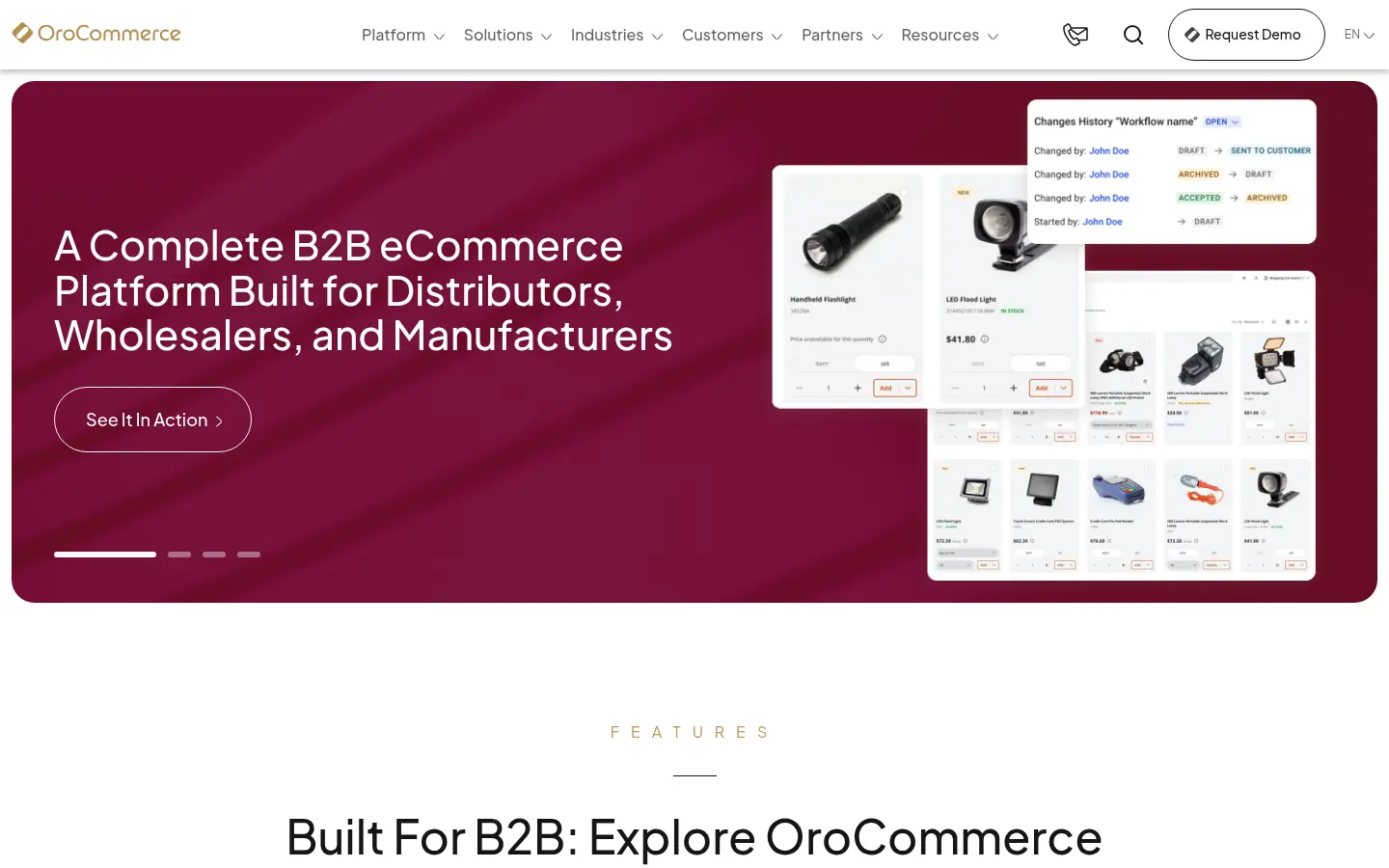
Screenshot: OroCommerce website, October 2026.
OroCommerce builds in quoting, contract pricing, account hierarchies and permissions instead of adapting a consumer store. Its strength is operational depth rather than consumer-style polish.
Core features:
- B2B quoting workflows
- Account hierarchies and permissions
- Custom catalogues and pricing rules
- ERP-friendly architecture
OroCommerce pricing and suitability
OroCommerce quotes each deployment on its type, features and the customisation your quoting and pricing workflows need. There is no low-cost entry tier, and ERP-heavy integrations add to the total.
| Plan | Price | Basis | Suitable for | Limits |
|---|---|---|---|---|
| OroCommerce | Quote-based | Deployment, features, customisation | Manufacturers and distributors | Smaller ecosystem than the largest platforms |
Source: OroCommerce, checked October 2026.
6. Salesforce B2B Commerce
Salesforce B2B Commerce suits sales-led organisations that want ordering, customer data and CRM in one Salesforce workflow.
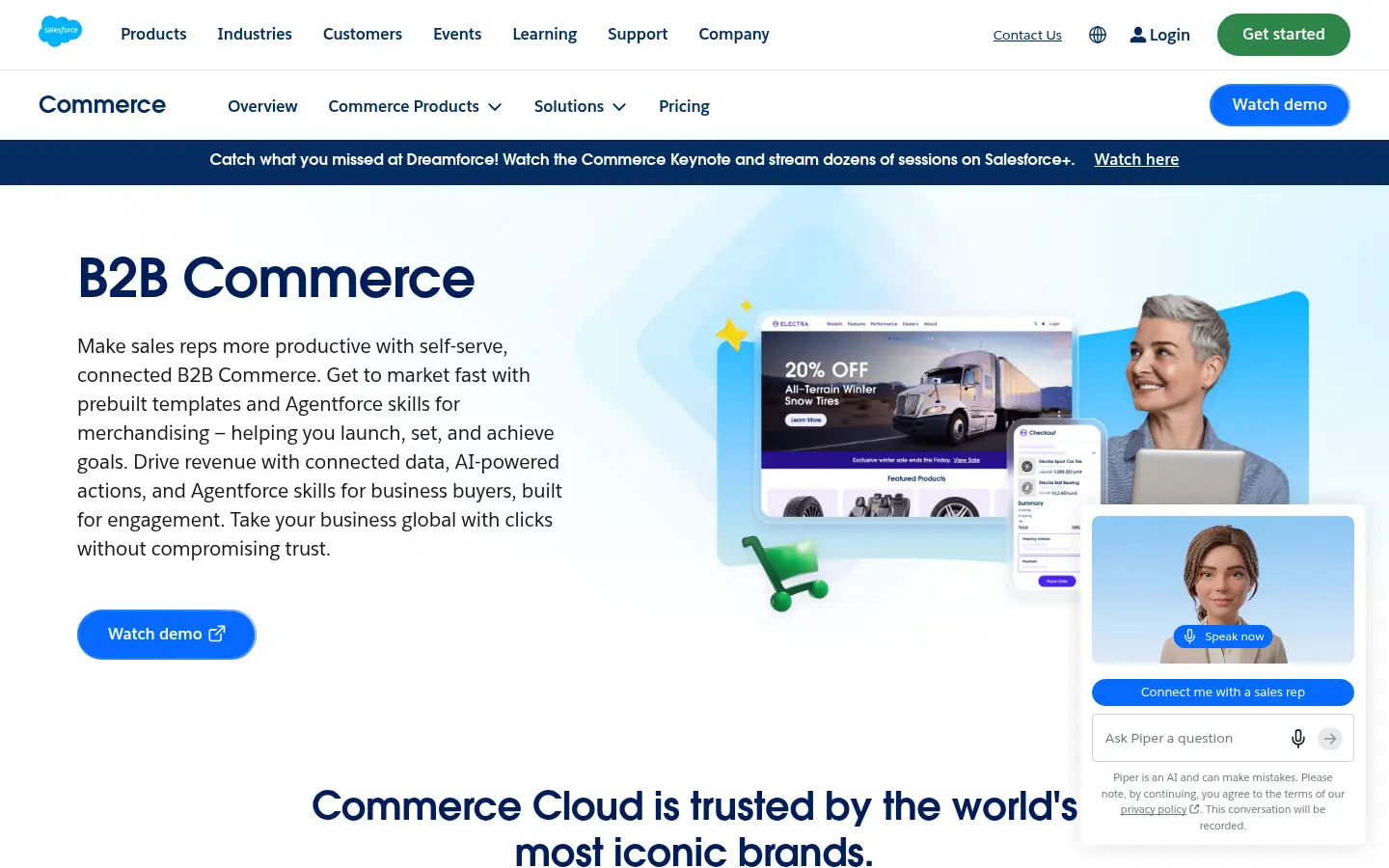
Screenshot: Salesforce B2B Commerce website, October 2026.
Salesforce B2B Commerce runs ecommerce inside the Salesforce platform, with account-based pricing, role-based purchasing and shared customer data.
Core features:
- Native Salesforce CRM integration
- Account-based pricing and ordering
- Role-based purchasing workflows
- Unified customer data
Salesforce B2B Commerce pricing and suitability
Salesforce quotes B2B Commerce within its Commerce Cloud agreements, scaled by users, order volume and integration scope. Its value depends on how much you already run on Salesforce CRM.
| Plan | Price | Basis | Suitable for | Limits |
|---|---|---|---|---|
| Salesforce B2B Commerce | Quote-based | Users, orders, integration scope | Salesforce-centred enterprises | Cost and platform lock-in |
Source: Salesforce B2B Commerce, checked October 2026.
7. commercetools
commercetools suits engineering-led teams that want to assemble a custom, headless commerce stack from modular services.
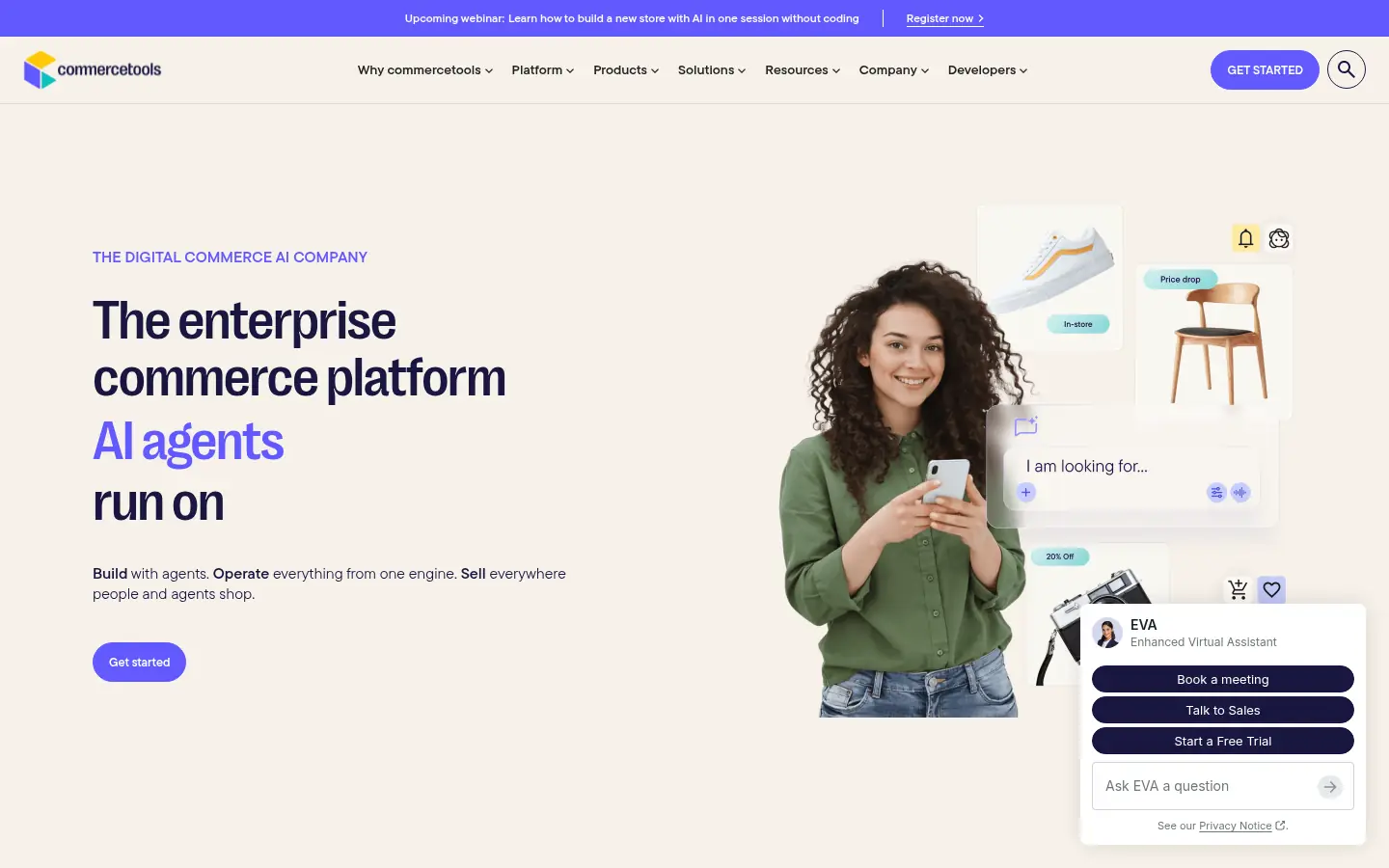
Screenshot: commercetools website, October 2026.
commercetools is an API-first, composable commerce platform. You choose the services you need and build your own front end, which gives maximum flexibility and demands strong technical capability.
Core features:
- API-first, composable architecture
- Scalable pricing and catalogue services
- Integration-friendly design
- Custom front ends
commercetools pricing and suitability
commercetools quotes on usage and enabled services rather than fixed plans, which makes budgeting harder than with a SaaS subscription. Front-end development and hosting sit outside the platform fee.
| Plan | Price | Basis | Suitable for | Limits |
|---|---|---|---|---|
| commercetools | Quote-based | Usage and enabled services | Engineering-led teams | Needs in-house technical capability |
Source: commercetools, checked October 2026.
How to Choose the Right B2B Ecommerce Platform
Choose the platform that fits how you sell, fulfil and support your customers, because the best fit with your operations beats the longest feature list. Manufacturers and distributors usually put ERP alignment and bulk ordering first. Brands often want B2B and consumer sales in one system. Enterprises also weigh long-term running costs, implementation timelines and change management.
Which B2B ecommerce platform fits which business?
Match the platform to your business type, integration needs and technical capacity.
| Platform | Best for | Main strength | Main limitation | Pricing model |
|---|---|---|---|---|
| Shopify Plus | Brands selling B2B and to consumers | Ease of use and ecosystem | Advanced B2B often needs apps | Published monthly fee |
| BigCommerce B2B Edition | Distributors and wholesalers | Native B2B features | Partners for complex integrations | Quote-based for B2B Edition |
| Adobe Commerce | Complex enterprises | Customisation depth | Cost and complexity | Quote-based |
| SAP Commerce Cloud | SAP enterprises | ERP alignment | Cost and implementation | Quote-based |
| OroCommerce | Manufacturers | B2B-first workflows | Smaller ecosystem | Quote-based |
| Salesforce B2B Commerce | Salesforce users | CRM and ordering in one platform | Platform lock-in | Quote-based |
| commercetools | Engineering-led teams | Composable flexibility | Technical demands | Usage-based quote |
Bring Buyers to Your B2B Store
An ordering portal only pays back when buyers find your products in the first place, so plan how search and AI answers lead them to your catalogue. See how ecommerce SEO gets your product and category pages found, and browse the other B2B tool guides.