Competitor research tools show you which keywords, content, ads, social posts, prices and technologies are working for your competitors, so you find the gaps worth taking instead of guessing. The 14 tools below fall into five groups: search and traffic intelligence, content and audience research, social listening, competitive intelligence platforms and technology lookups. Most teams need one search tool plus one tool for the channel they compete on hardest.
Why Competitor Research Tools Matter to Your Marketing
Competitor data turns your next marketing decision into an evidence-based one: the keywords rivals win, the content that earns shares, the ads they keep paying for and the changes they make. Without it, you plan in the dark. With it, you prioritise the opportunities competitors have missed and avoid the battles they have already won.
What can competitor research tools show you?
They show search, content, advertising, social and company changes across your market. The main uses:
- Reveals the keywords competitors rank for and the traffic they earn.
- Finds content gaps and the articles and posts that perform best.
- Tracks the ads competitors run and how long they keep them.
- Monitors brand mentions, sentiment and social performance.
- Alerts you to pricing, messaging, hiring and technology changes.
1. Semrush
Semrush suits marketing teams that want keyword, traffic, backlink and advertising data on competitors in one platform.
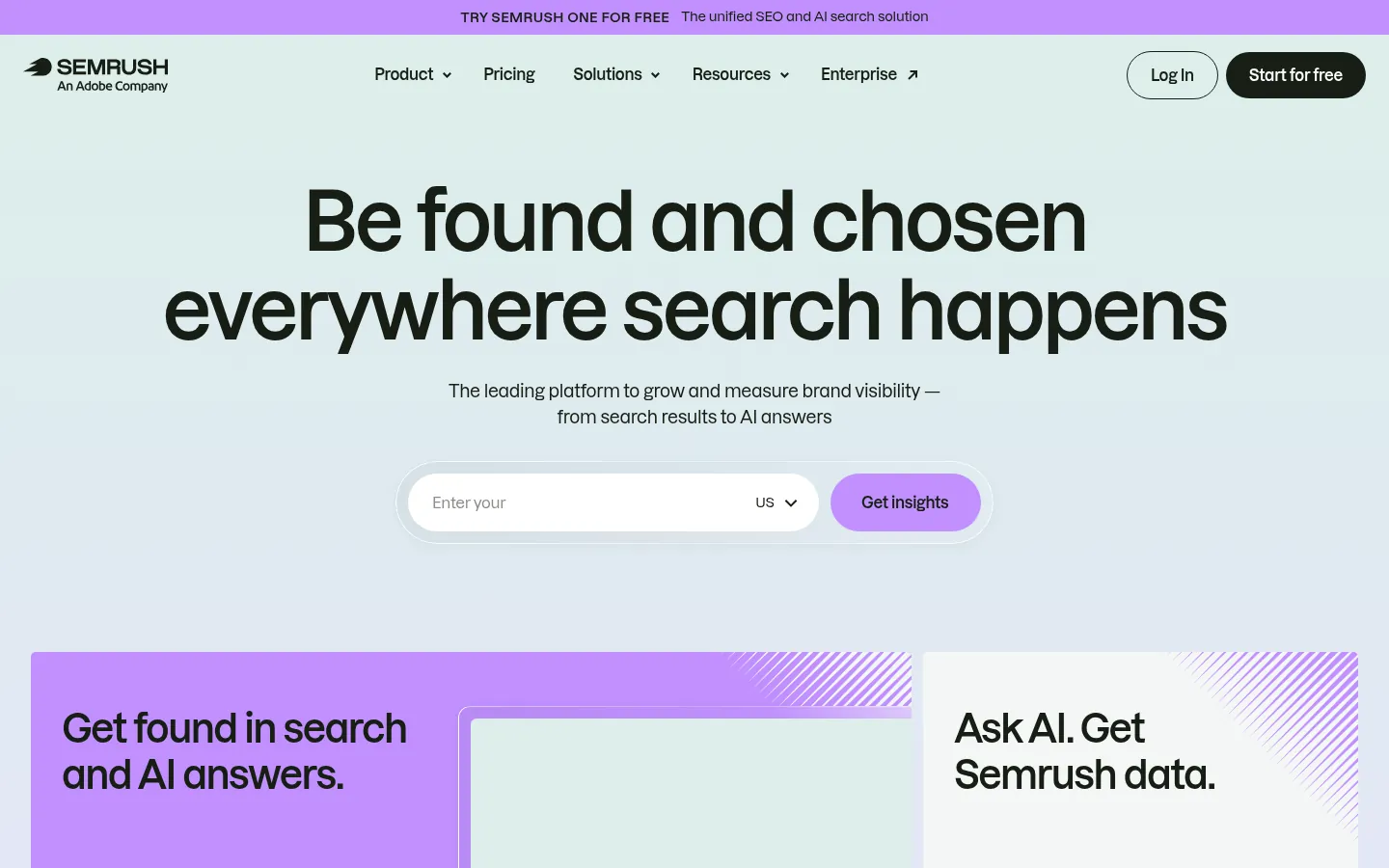
Screenshot: Semrush website, October 2026.
Semrush shows which search terms bring competitors visitors, how their rankings change, which sites link to them and which search ads they run.
Core features:
- Keyword gap and organic ranking analysis
- Traffic and market share estimates
- Backlink profiles
- Search advertising research
- Content and topic research
2. Ahrefs
Ahrefs suits SEO teams that need deep backlink data and content gap analysis against competitors.
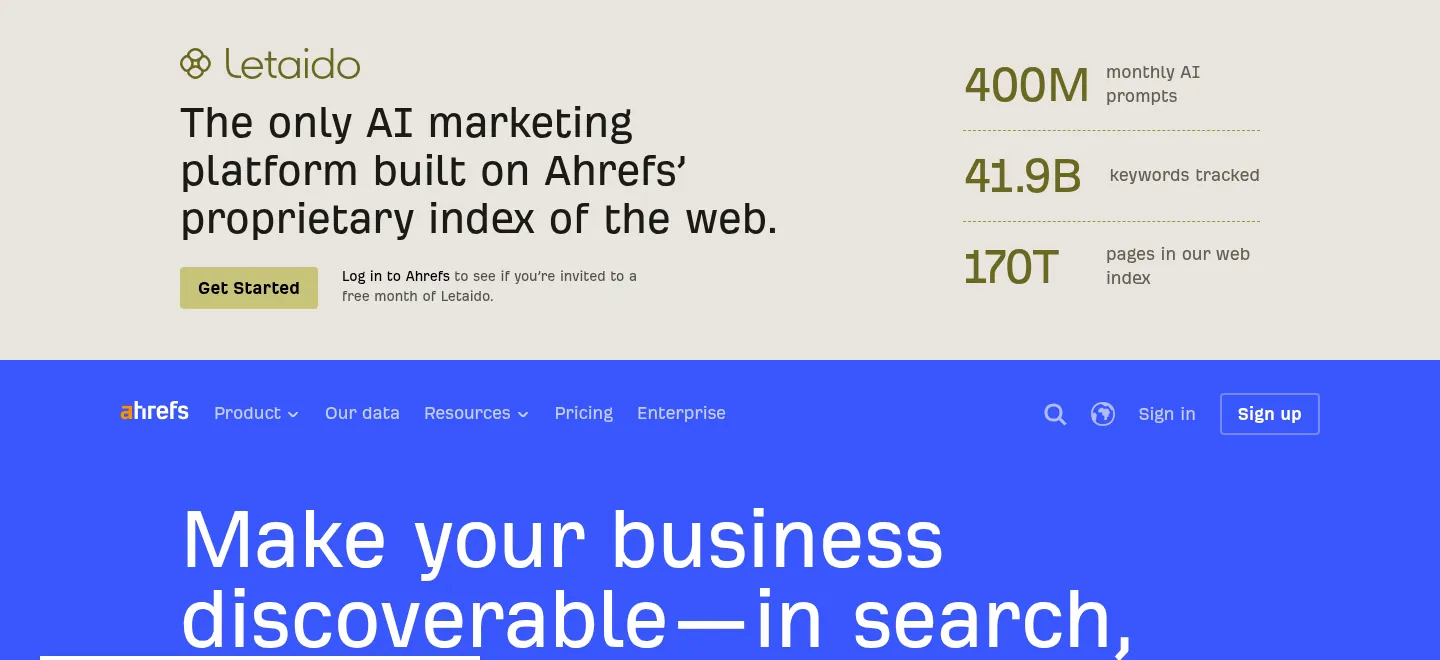
Screenshot: Ahrefs website, October 2026.
Ahrefs is best known for its backlink index. Its Content Gap feature lists keywords competitors rank for and your site does not.
Core features:
- Backlink profiles and new and lost links
- Organic keyword and traffic estimates
- Content Gap analysis
- Top pages by traffic and links
- Rank tracking
3. Similarweb
Similarweb suits businesses that want to compare total website traffic, channels and audience behaviour across competitors.
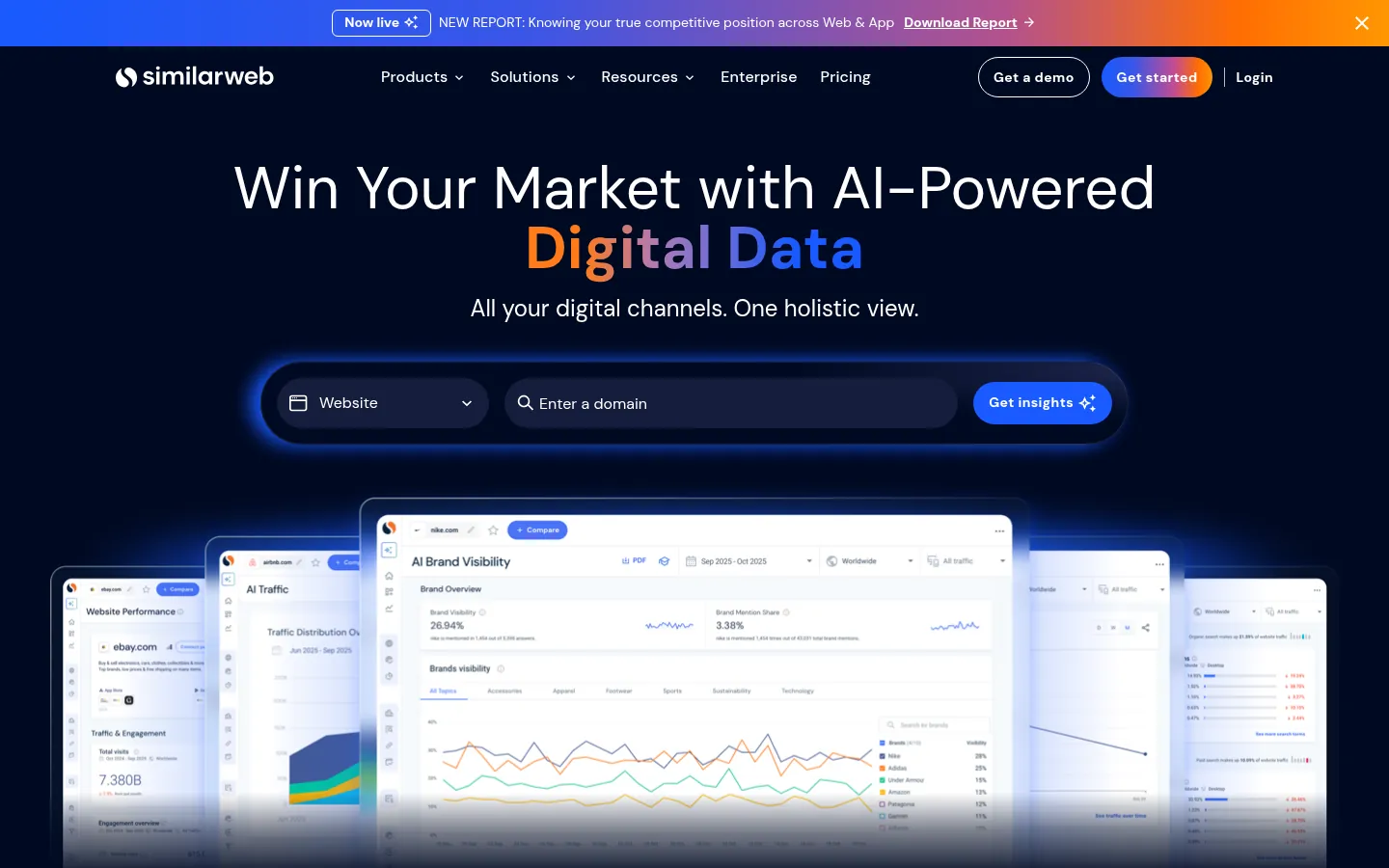
Screenshot: Similarweb website, October 2026.
Similarweb estimates traffic volume, sources, engagement and audience demographics for any website, so you see where competitors get visitors and how well they keep them.
Core features:
- Website traffic and engagement estimates
- Traffic channel breakdown
- Audience demographics and interests
- Referral and keyword sources
- Industry benchmarks
4. BuzzSumo
BuzzSumo suits content marketers and PR teams that want to see which competitor content earns the most engagement.
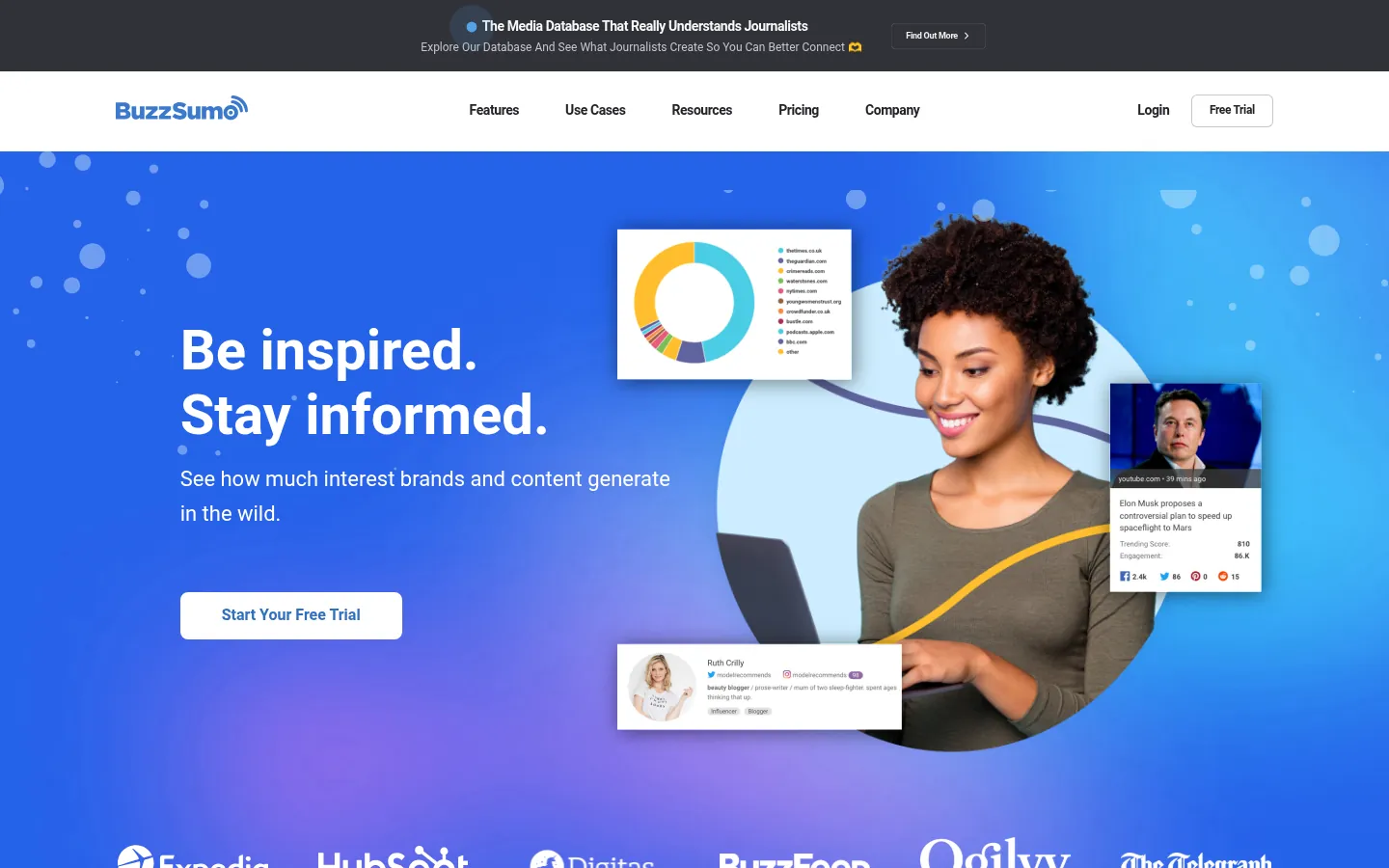
Screenshot: BuzzSumo website, October 2026.
BuzzSumo analyses content performance across social platforms, identifies trending topics and finds journalists and influencers in your space.
Core features:
- Top content by social engagement
- Trend and topic discovery
- Competitor content comparison
- Journalist and influencer search
- Content alerts
5. SparkToro
SparkToro suits marketers who want to know where their audience spends time online and what it follows.
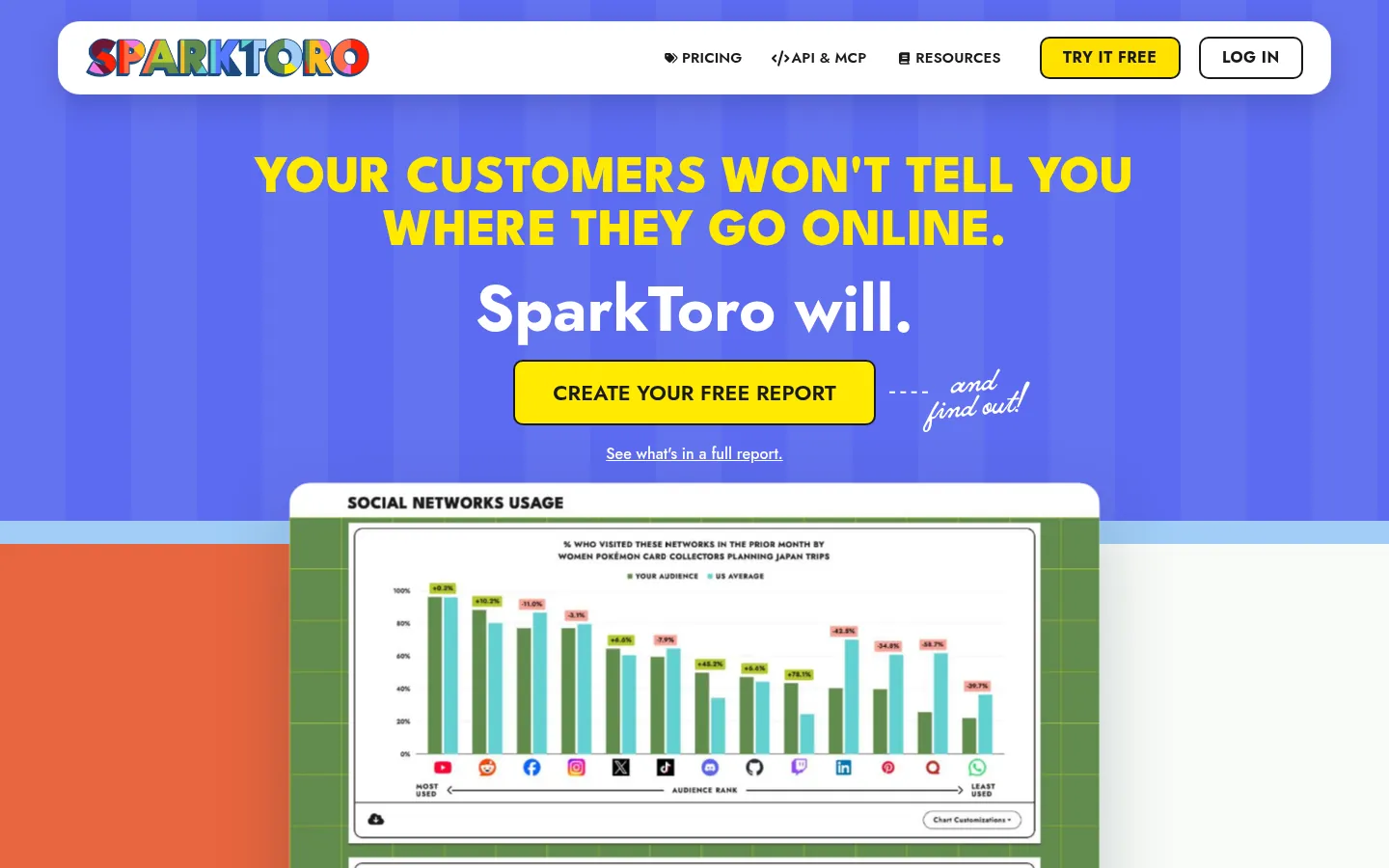
Screenshot: SparkToro website, October 2026.
SparkToro is an audience research tool. It shows the websites, podcasts, social accounts and keywords a given audience engages with, which points you to the channels competitors reach.
Core features:
- Audience research by keyword, website or social account
- Websites, podcasts and channels the audience follows
- Social accounts with audience overlap
- Audience demographics and keywords
6. Rival IQ
Rival IQ suits social media teams that benchmark their performance against competitors.
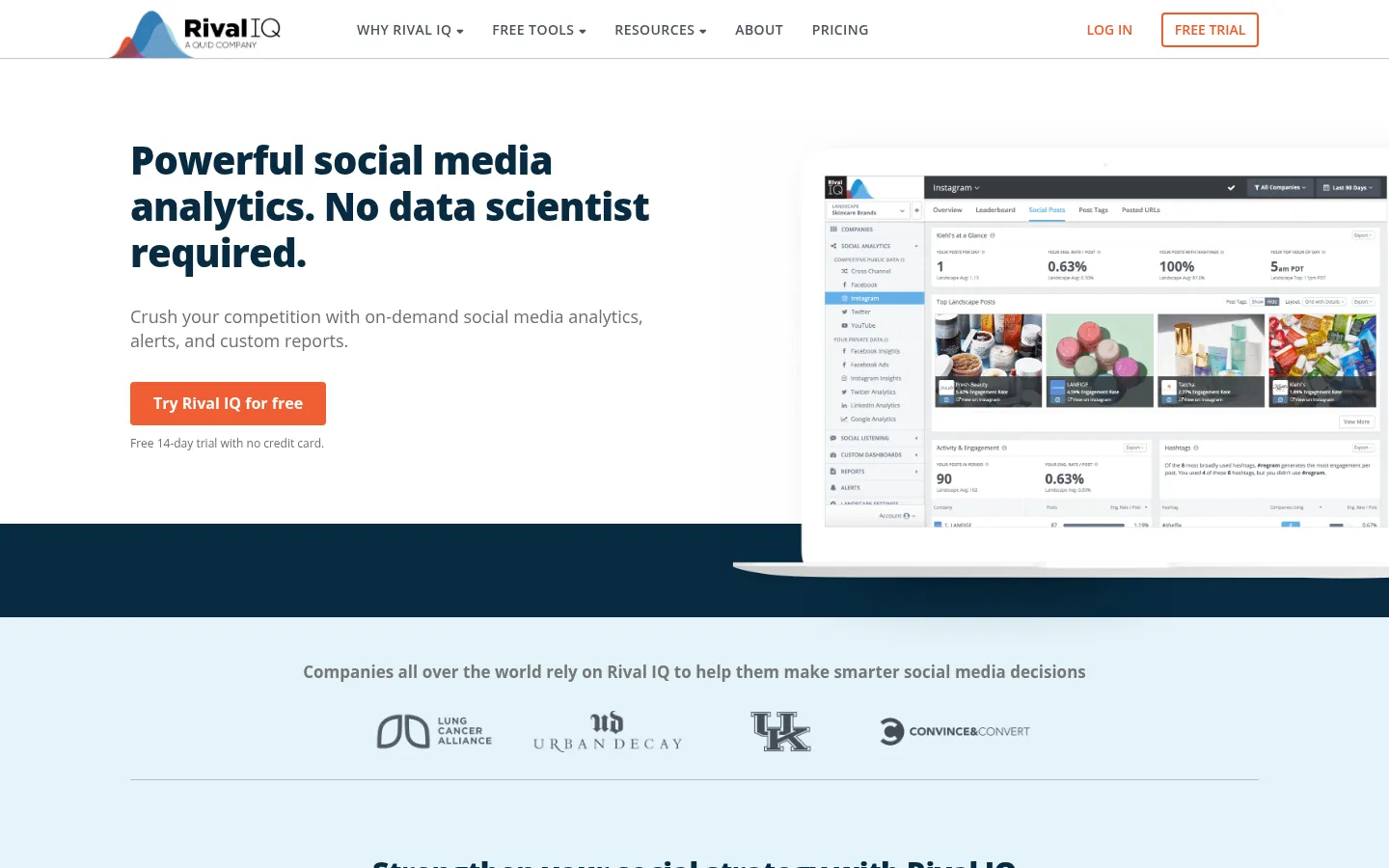
Screenshot: Rival IQ website, October 2026.
Rival IQ compares engagement, posting frequency and top posts across social platforms for you and your competitors.
Core features:
- Social engagement benchmarks
- Competitor post analysis
- Hashtag and content performance
- Social share of voice
- Custom reports
7. Brand24
Brand24 suits teams that track brand mentions and sentiment for themselves and their competitors.
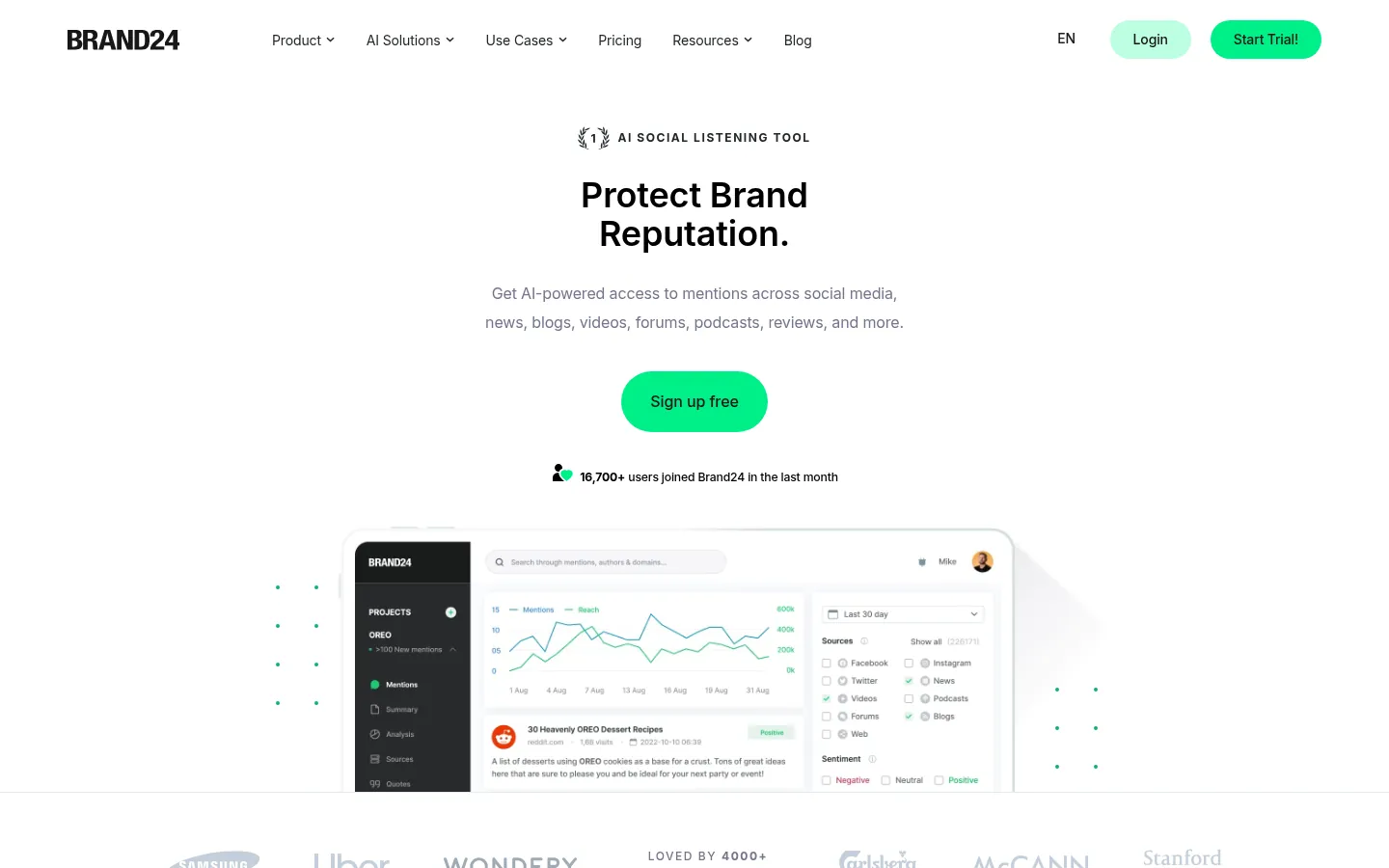
Screenshot: Brand24 website, October 2026.
Brand24 monitors mentions across social media, news, blogs, forums and review sites, then scores sentiment and reach.
Core features:
- Mention monitoring across the web
- Sentiment analysis
- Share of voice against competitors
- Influencer identification
- Alerts and reports
8. Kompyte
Kompyte suits product marketing and sales teams that want automated alerts on competitor changes and battlecards to act on them.
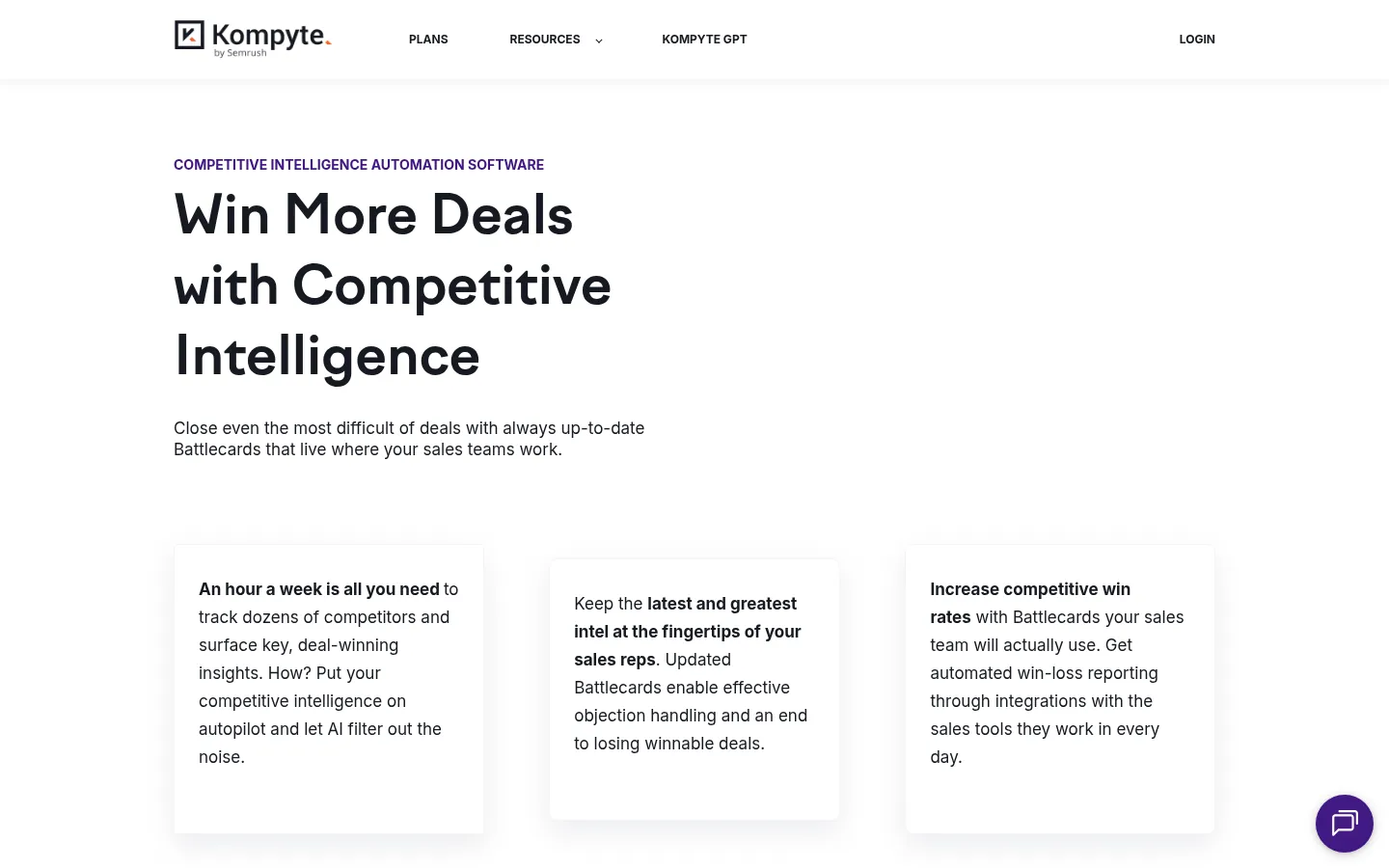
Screenshot: Kompyte website, October 2026.
Kompyte, owned by Semrush, tracks competitor websites, pricing pages, ads, content and reviews, then summarises the changes with AI.
Core features:
- Automated competitor website and pricing tracking
- Ad and content change alerts
- AI summaries of competitor updates
- Sales battlecards
- CRM and chat integrations
9. Crayon
Crayon suits companies running a structured competitive intelligence programme across marketing and sales.
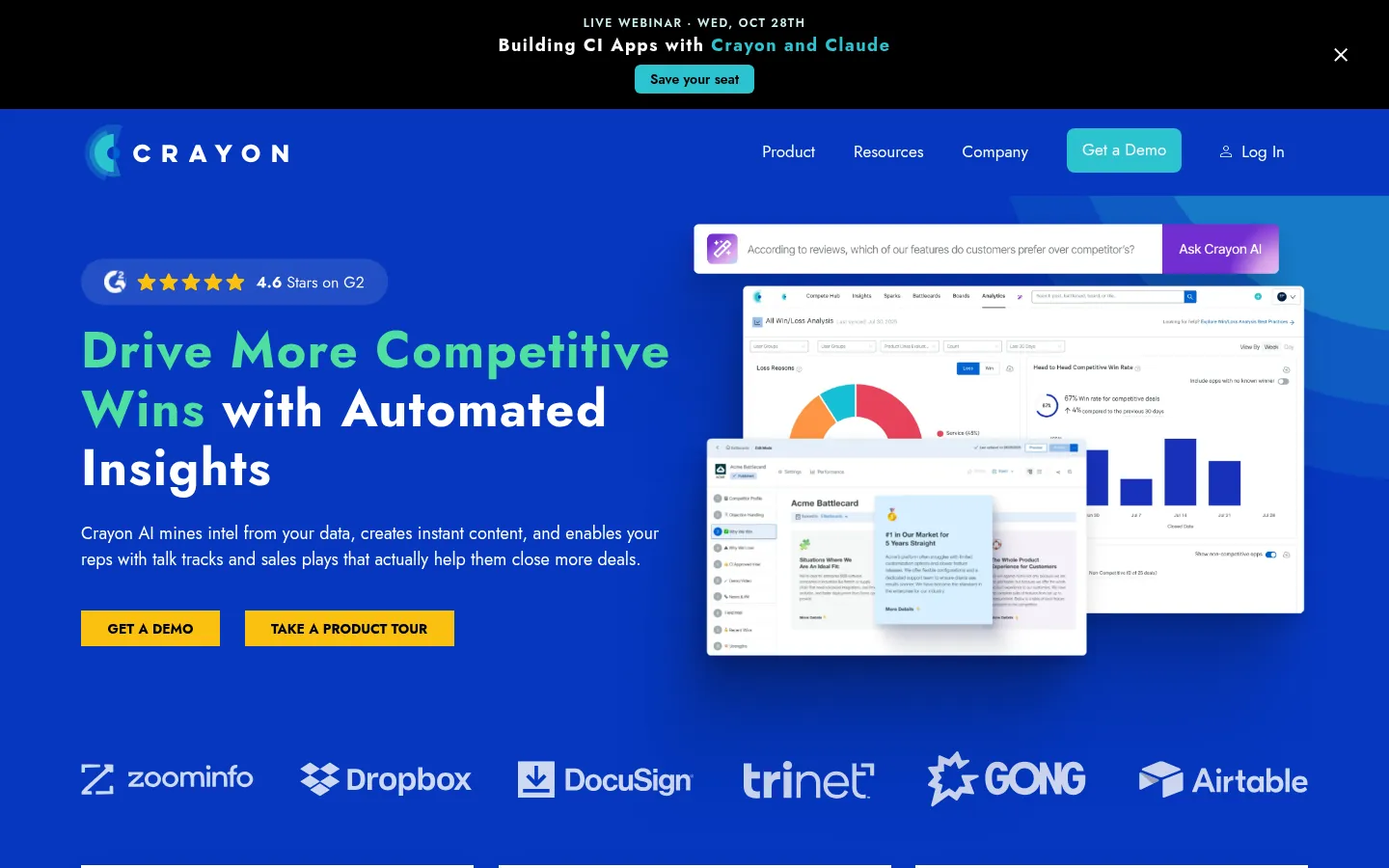
Screenshot: Crayon website, October 2026.
Crayon captures competitor changes across websites, news, reviews and job postings, then turns them into battlecards and briefings.
Core features:
- Competitor change monitoring
- News, review and job posting tracking
- Battlecards for sales teams
- Intelligence newsletters
- CRM and chat integrations
10. Klue
Klue suits B2B teams that combine competitive intelligence with win-loss analysis.
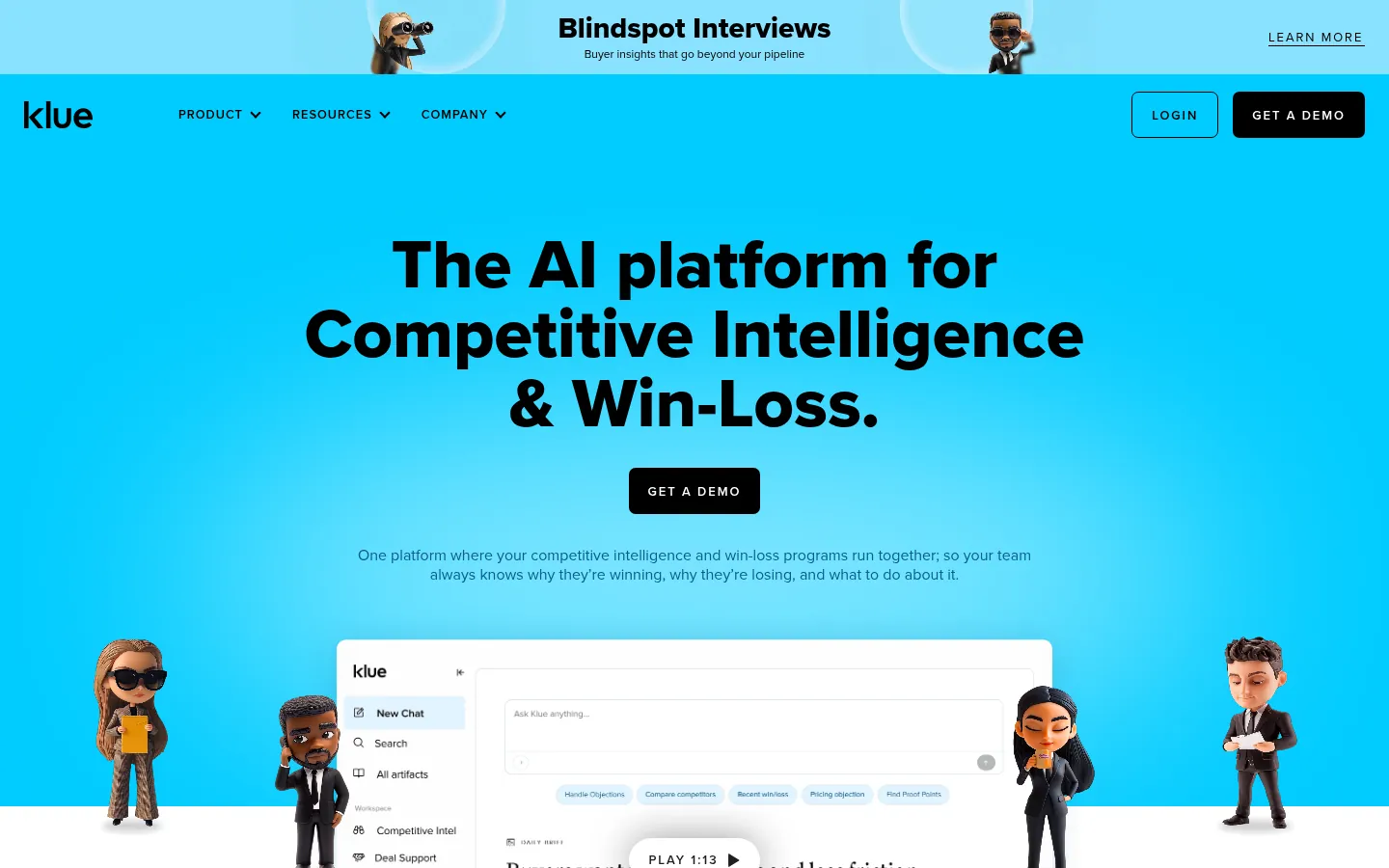
Screenshot: Klue website, October 2026.
Klue collects competitor research into one platform, builds battlecards and runs win-loss programmes to show why buyers choose you or a rival.
Core features:
- Competitive intelligence collection
- Battlecards
- Win-loss interviews and analysis
- AI summaries
- CRM integrations
11. SpyFu
SpyFu suits businesses that invest in Google Ads and want to see competitors' paid and organic keywords.
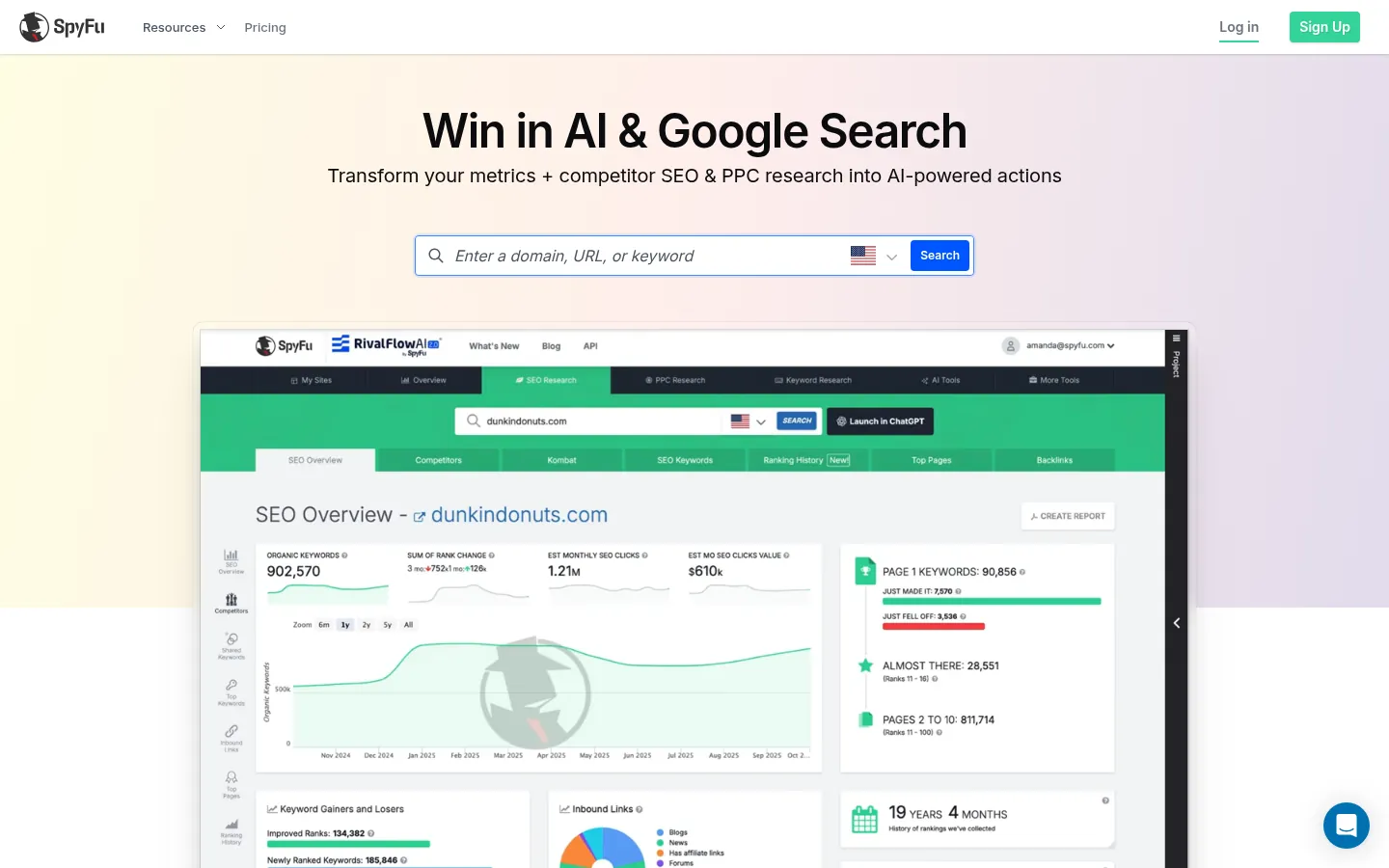
Screenshot: SpyFu website, October 2026.
SpyFu shows the keywords competitors buy on Google Ads, their ad history and the organic keywords they rank for.
Core features:
- Competitor paid keyword research
- Google Ads history
- Organic keyword research
- Keyword overlap between domains
- Rank tracking
12. Lumen by Talkwalker (formerly Talkwalker)
Lumen by Talkwalker suits enterprise brands that need large-scale social listening and media monitoring.
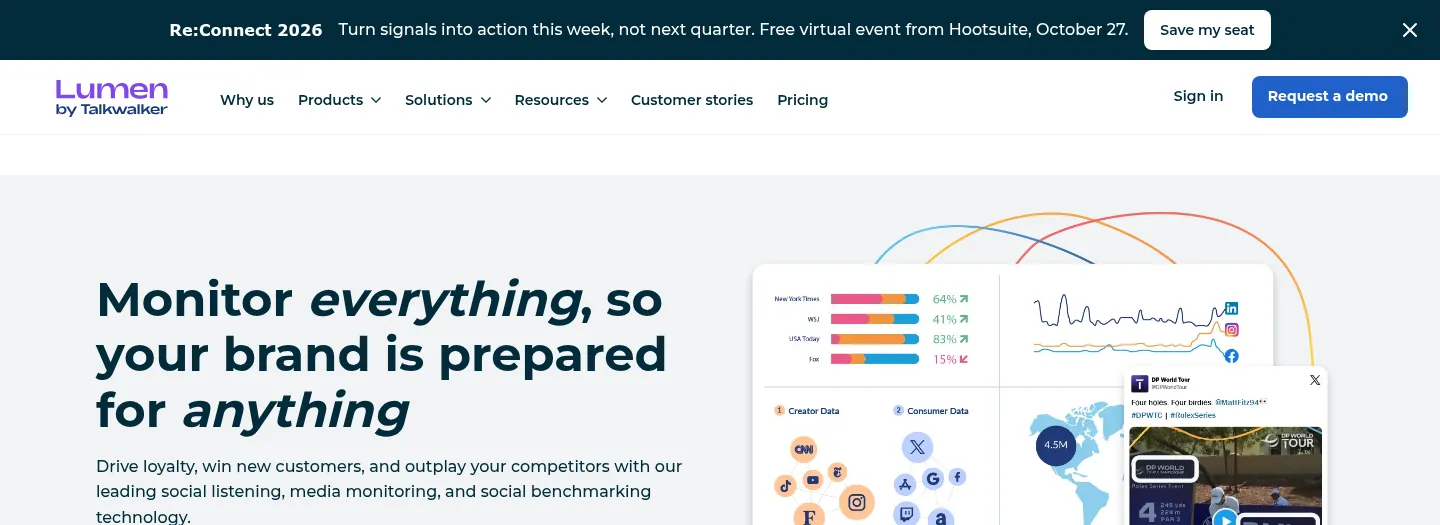
Screenshot: Lumen by Talkwalker website, October 2026.
Lumen by Talkwalker, formerly Talkwalker and part of Hootsuite since April 2024, monitors social, news, blogs and broadcast media, with image recognition and AI analysis.
Core features:
- Social listening across platforms
- News and broadcast monitoring
- Image and logo recognition
- Sentiment and trend analysis
- Competitive benchmarks
13. Competitors App
Competitors App suits small teams that want one feed of competitor changes across websites, social, ads and email.
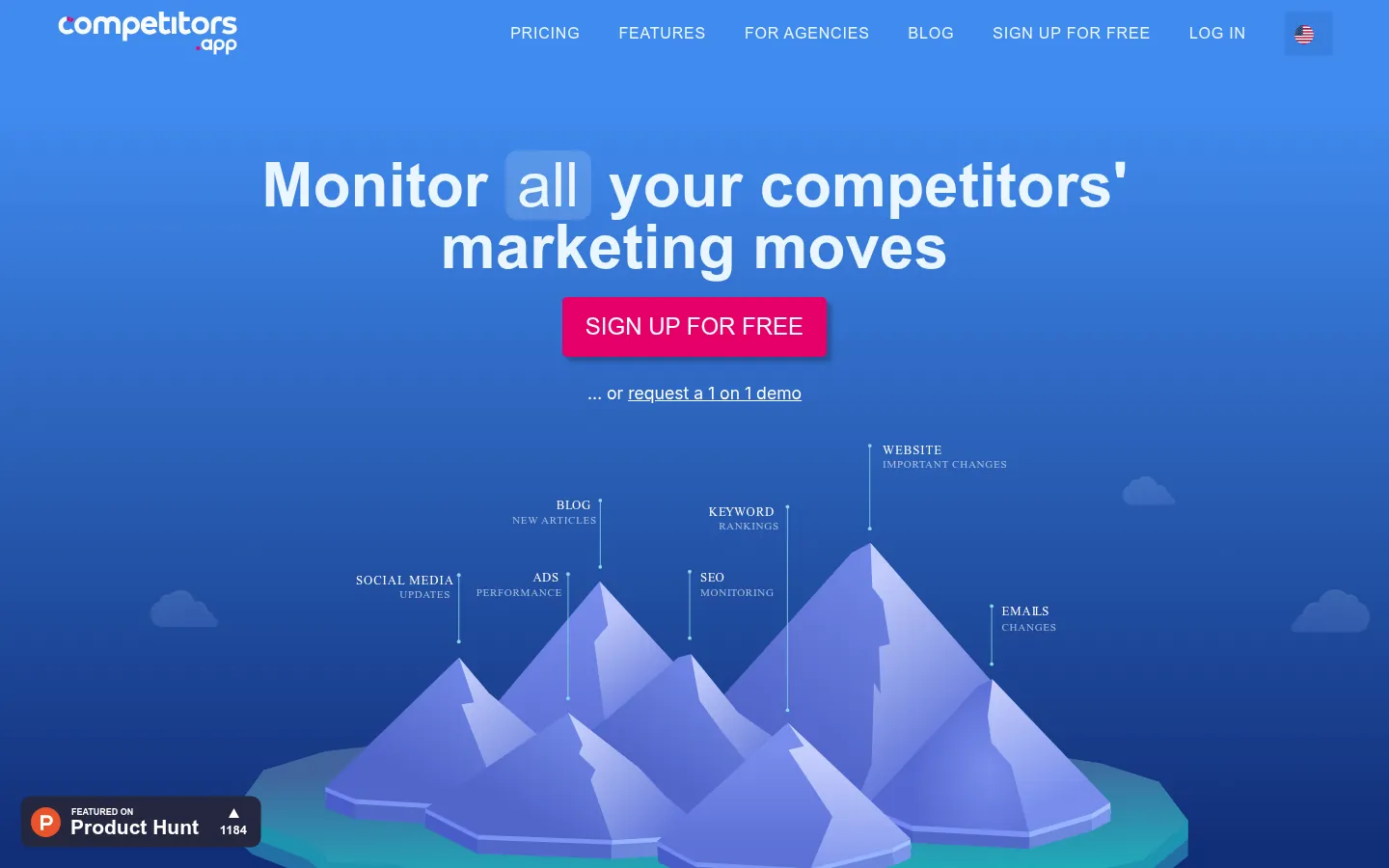
Screenshot: Competitors App website, October 2026.
Competitors App monitors each competitor's website changes, social posts, ads, email newsletters and SEO signals.
Core features:
- Website change tracking
- Social media and ad monitoring
- Email newsletter tracking
- SEO and traffic signals
- Reports per competitor
14. BuiltWith
BuiltWith suits marketers, sales teams and developers who want to know which technologies competitors use.
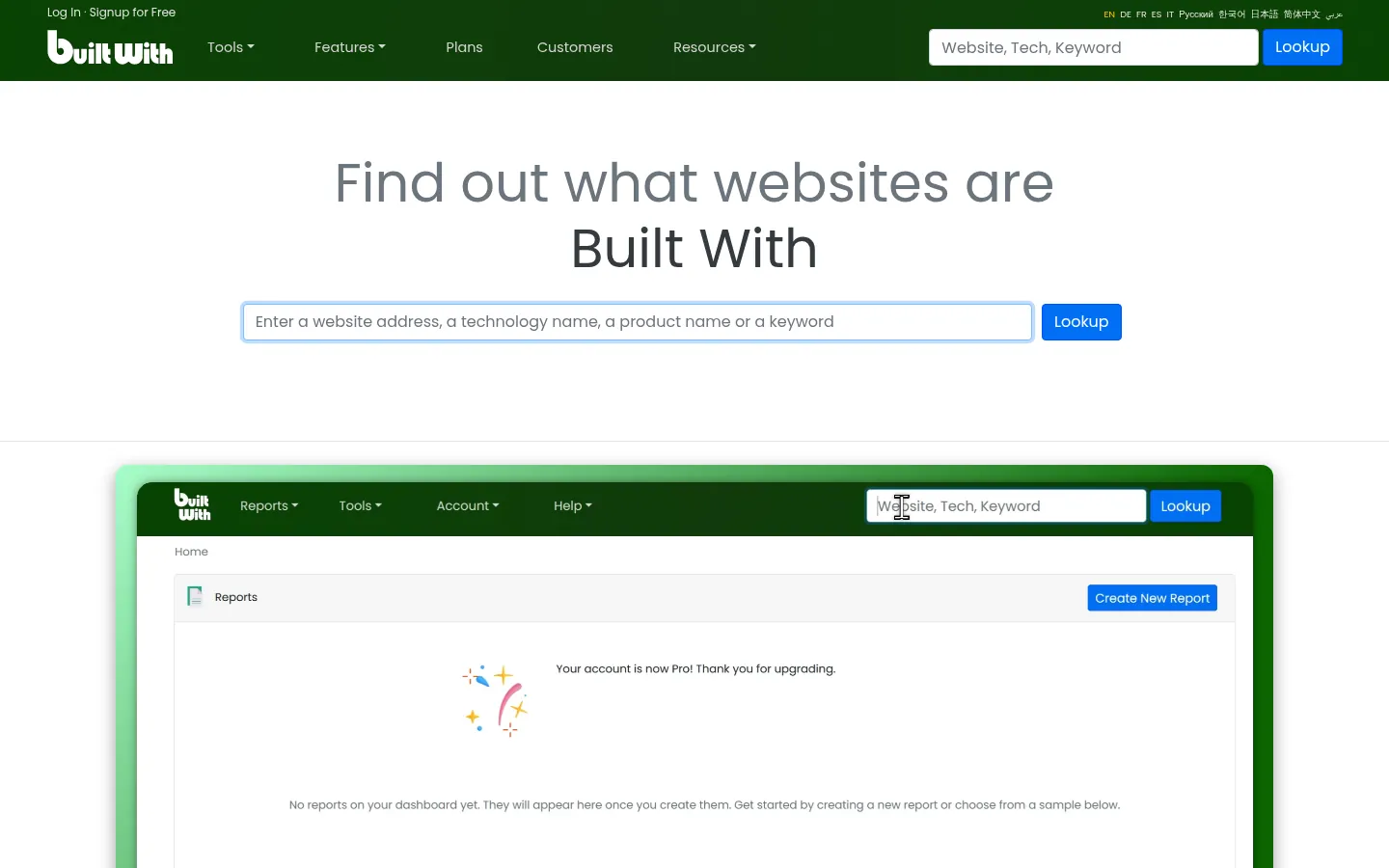
Screenshot: BuiltWith website, October 2026.
BuiltWith detects the analytics, advertising, ecommerce, hosting and other technologies running on a website, and builds lead lists of sites using a given technology.
Core features:
- Technology lookup for any website
- Technology usage history
- Lead lists by technology
- Market share reports by technology
- Alerts when sites adopt or drop a technology
Competitor Research Tool Pricing at a Glance
Pricing ranges from free lookups to quote-only enterprise contracts, so check the entry point before you shortlist.
| Tool | Free option | Entry price | Billing | Notes |
|---|---|---|---|---|
| Semrush | Free plan | USD 139 a month (SEO plan) | Monthly or annual | Semrush pricing |
| Ahrefs | No | USD 29 a month (Starter) | Monthly or annual | Ahrefs pricing |
| Similarweb | Free trial | From USD 125 a month | Self-service plans | Similarweb pricing |
| BuzzSumo | Free trial | See pricing page | Subscription | BuzzSumo pricing |
| SparkToro | Free plan | USD 38 a month | Billed yearly (USD 450 a year) | SparkToro pricing |
| Rival IQ | 14-day free trial | From USD 239 a month | Monthly or annual (annual saves 15%) | Rival IQ pricing |
| Brand24 | 14-day free trial | USD 249 a month | Monthly (USD 199 a month billed annually) | Brand24 pricing |
| Kompyte | Demo | Quote-based | Contract | Kompyte |
| Crayon | Demo | Quote-based | Contract | Crayon pricing |
| Klue | Demo | Quote-based | Contract | Klue |
| SpyFu | Limited free searches | USD 39 a month (Basic) | Monthly | SpyFu pricing |
| Lumen by Talkwalker | Demo | Quote-based, three plans | Contract | Talkwalker pricing |
| Competitors App | Free trial | USD 19.90 per competitor a month | Monthly | Competitors App pricing |
| BuiltWith | Free single-site lookups | USD 295 a month (Basic) | Monthly or annual | BuiltWith plans |
Source: vendor pricing pages linked above, checked October 2026.
How Competitor Research Supports Your Strategy
The value comes from acting on what the tools reveal: pricing moves, hiring signals, content gaps, ad patterns and a steady monitoring rhythm. The questions below cover the most common uses.
How do competitor research tools help with pricing decisions?
They watch competitor pricing pages and alert you when prices, discounts or plans change. Tools such as Kompyte and Competitors App send alerts on these updates. When a rival cuts prices, check first whether it is a time-limited sale or a permanent change: a sale suggests a short promotion of your own, while a permanent cut suggests competing on features and value rather than price.
Why track competitor job postings?
Hiring patterns reveal plans months before launch. A wave of engineering roles points to a product build, new advertising roles point to more paid spend, and extra support staff point to expected customer growth. Crayon tracks job postings alongside other competitor changes.
How do you find content gaps with these tools?
Compare the keywords and topics competitors rank for against your own pages. Ahrefs' Content Gap and Semrush's Keyword Gap list terms competitors rank for and you do not. If several competitors rank for "best email marketing tools" and you have no page on it, that is a gap worth a better, more useful page.
Can you see competitors' ads?
Yes: search ad tools and public ad libraries show what competitors pay to promote. SpyFu and Semrush show competitors' Google search ads, and Meta's Ad Library shows active ads on Facebook and Instagram. An ad that runs for months is probably profitable, so study its message and offer, and look for channels where competitors do not advertise.
How often do you need to check competitor data?
Match the rhythm to how fast your market moves. Fast-moving sectors such as technology or fashion benefit from daily alerts, while others check weekly or monthly. A practical rhythm: review search rankings and content gaps weekly, social trends every few days, and paid search data before each new campaign. The US Small Business Administration's guide to competitive analysis covers the wider research process.
How to Choose the Right Competitor Research Tool
Choose by the channel where you compete hardest, then add tools only for gaps. Search-led businesses start with Semrush or Ahrefs, content teams add BuzzSumo or SparkToro, social teams add Rival IQ or Brand24, and B2B sales-led companies add Kompyte, Crayon or Klue. Most tools offer a free plan, trial or demo, so test before you commit.
Which competitor research tool fits which team?
Match each tool to the question you need answered.
| Tool | Best for | Strengths | Limitations | Pricing model |
|---|---|---|---|---|
| Semrush | Search and ads | Broad all-in-one data | Higher tiers costly | Tiered subscription |
| Ahrefs | Backlinks and content gaps | Link index depth | Limited social data | Tiered subscription |
| Similarweb | Traffic and channels | Market-wide view | Estimates, not exact figures | Subscription |
| BuzzSumo | Content performance | Engagement data | Less search depth | Subscription |
| SparkToro | Audience research | Where audiences spend time | Not a monitoring tool | Free, then subscription |
| Rival IQ | Social benchmarks | Competitor social comparison | Social only | Subscription |
| Brand24 | Mentions and sentiment | Wide source coverage | Costs rise with volume | Subscription |
| Kompyte | Automated change alerts | Battlecards, AI summaries | Quote-only pricing | Quote |
| Crayon | Structured CI programmes | Broad change capture | Quote-only pricing | Quote |
| Klue | CI plus win-loss | Buyer insight | Quote-only pricing | Quote |
| SpyFu | Google Ads research | Long ad history | Google-focused | Subscription |
| Lumen by Talkwalker | Enterprise listening | Scale, image recognition | Enterprise pricing | Quote |
| Competitors App | One feed per competitor | Multi-channel tracking | Cost per competitor | Per competitor |
| BuiltWith | Technology stacks | Technology detection | Narrow focus | Free lookups, then subscription |
Turn Competitor Insight Into Rankings and Revenue
Research only pays off when it changes what you publish, promote and price. Build on the findings with SEO tools, measure campaign results with marketing analytics software, and browse more research options in research tools.