


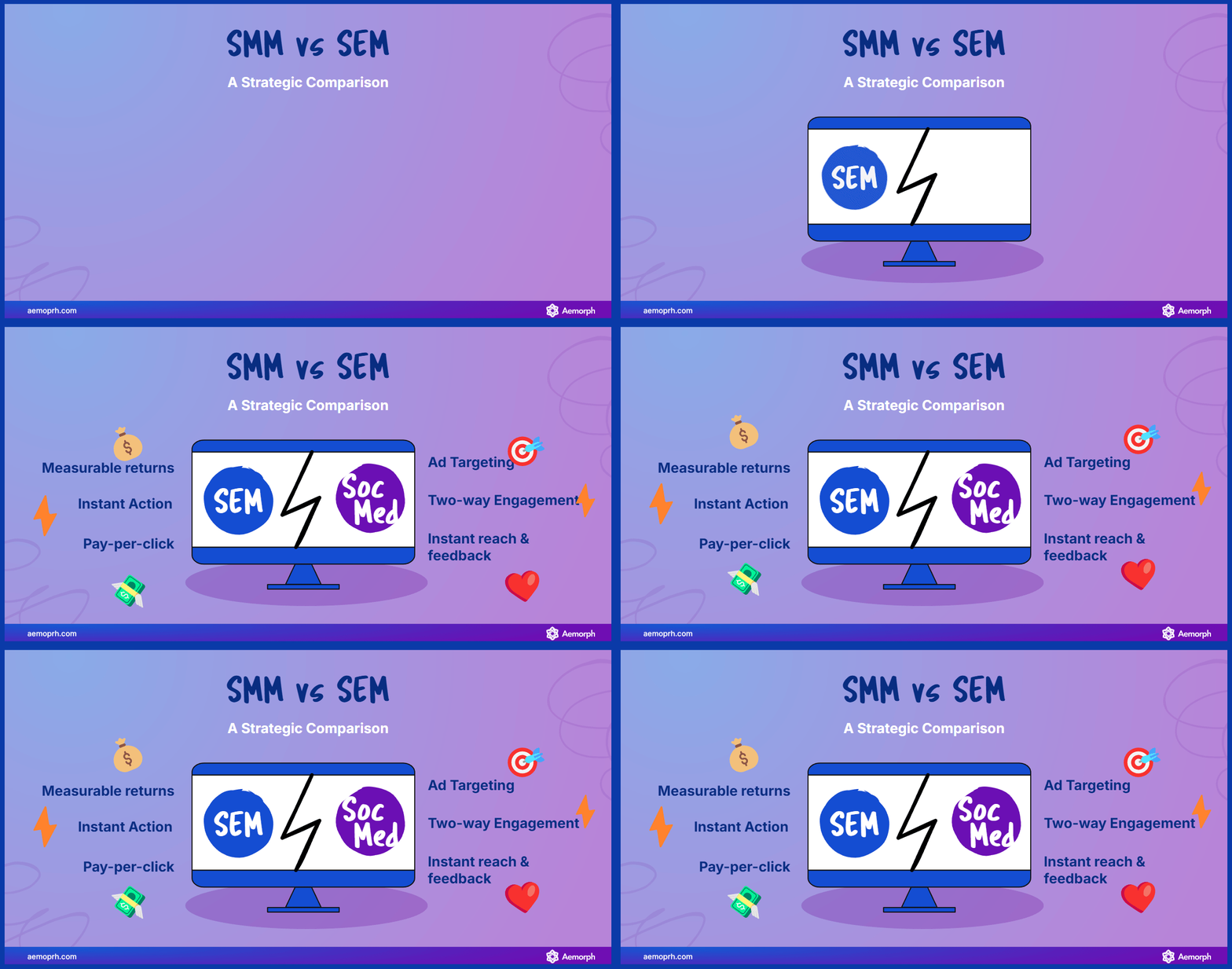
Digital marketing offers many effective ways to reach customers. Among them, Social Media Marketing (SMM) and Search Engine Marketing (SEM) are two of the most widely used and versatile. SMM helps brands connect with audiences through engaging content, community interaction, and ongoing visibility. SEM focuses on attracting people who are actively searching for products or services, often driving immediate actions.
Understanding how these approaches work and where they fit in the customer journey makes it easier to create a marketing strategy that delivers both reach and results. This guide explains each method in detail and shows how they can work together for greater impact.
What is Social Media Marketing (SMM)?
Social Media Marketing (SMM) leverages platforms like Facebook, Instagram, LinkedIn, TikTok, and YouTube to build brand visibility, generate leads, and engage audiences. It includes:
- Organic strategies: unpaid posts, community interaction, and user-generated content
- Paid campaigns: sponsored ads using CPC, CPM, or CPA models
SMM excels in visual storytelling, influencer partnerships, and brand building. Campaigns aim to inspire, educate, or entertain, often prioritising long-term loyalty over immediate sales.
What is Search Engine Marketing (SEM)?
Search Engine Marketing (SEM) is a paid digital marketing approach that displays ads on platforms like Google Ads and Bing Ads based on search keywords. It’s designed to capture high-intent traffic and drive immediate conversions.
SEM typically uses pay-per-click (PPC) models, where advertisers bid on keywords and pay only when a user clicks. Ad formats include:
- Text ads
- Shopping/product listing ads
- Display retargeting
- Local and call extension ads
With a strong keyword strategy, ad copy, and landing pages, SEM can deliver fast, measurable results.
Key Differences Between SMM and SEM

While both SMM and SEM are powerful digital marketing channels, they serve different purposes, operate on different platforms, and engage users at different stages of the buyer journey. Understanding their core distinctions can help you choose the right mix for your business goals or, even better, combine them for a full-funnel strategy.
1. Audience Targeting Capabilities
SMM uses rich platform data to build custom and lookalike audiences, reaching users based on life events, hobbies, or engagement. SEM reaches users actively searching for your offerings, indicating higher intent.
| Feature | SMM | SEM |
| Targeting Method | Based on user demographics, interests, behaviours | Based on keyword searches and search intent |
| Funnel Stage | Awareness to consideration | Decision to action |
Key Takeaway:
SMM targets who you want to reach (based on profile & interests), while SEM targets what users are searching for (active intent).
2. Cost Structures and Cost-Effectiveness
| Feature | SMM | SEM |
| Pricing Models | CPC, CPM, CPE, CPA | Primarily CPC and CPA |
| Cost Efficiency | Generally lower cost for impressions; good for broad reach | Higher cost per click, but traffic is more qualified |
| Conversion Efficiency | Lower purchase intent may increase CPA | Higher intent usually leads to lower CPA and higher ROAS |
| Accessibility | Low entry cost, ideal for startups | Higher costs in competitive industries (e.g., legal, finance) |
SMM can offer low-cost reach but may result in a higher cost-per-conversion. SEM can be expensive in competitive industries, but it often results in higher-quality leads.
3. Return on Investment (ROI) Analysis
SMM builds long-term brand equity, while SEM is best for immediate, measurable returns..
| Feature | SMM | SEM |
| ROI Tracking | Difficult to attribute organic ROI; paid ads are trackable with tools | ROI is easier to track through clicks and conversions |
| Time to ROI | Long-term returns via brand loyalty, awareness, and engagement | Immediate ROI through direct traffic and sales |
| Attribution Challenges | Multi-touch journey makes tracking harder | Clearer attribution; often last-click or linear models |
| Improves Over Time | Organic value compounds as audiences grow | Requires ongoing spend and optimisation to maintain results |
4. Campaign Objectives and Focus Areas
SMM is ideal for creating demand, SEM for capturing it.
| Funnel Stage | SMM | SEM |
| Awareness | ✅ Excellent | ❌ Limited |
| Consideration | ✅ Strong | ✅ Strong |
| Decision | ⚠️ Moderate | ✅ Excellent |
For instance, a beauty brand uses TikTok influencers (SMM) to build buzz before launching a new product. Simultaneously, it runs Google Ads (SEM) targeting “best anti-ageing serum” to capture purchase-ready users.
SMM Strengths:
- Builds brand identity through storytelling
- Fosters social proof and emotional connection
- Encourages engagement and community participation
SEM Strengths:
- Captures users with a clear intent to purchase or convert
- Drives users directly to landing pages or product listings
- Ideal for time-sensitive promotions or lead generation
5. Platforms and Channels in Each Strategy
SMM platforms are chosen for content consumption and engagement, while SEM platforms are selected based on search behaviour and conversion intent.
5.1. SMM Channels:
Social media marketing operates across multiple networks, each with its own strengths, audience demographics, and content norms.
- Facebook – Still the largest social network for both organic and paid campaigns. Strong targeting options and ad formats make it valuable for both B2C and B2B, though paid ads are now more dominant than organic reach.
- Instagram – A visual-first platform ideal for lifestyle, fashion, food, and influencer-driven campaigns. Great for raising awareness and showcasing products, especially among younger demographics.
- Twitter (X) – Best for real-time engagement, PR, and customer service. Effective for timely updates, but has a fast content turnover.
- LinkedIn – Essential for B2B targeting by job title, industry, or company. More expensive ads but high-quality leads for professional markets.
- YouTube – Combines social engagement with search behaviour; ideal for brand storytelling and educational video marketing.
- TikTok – Short-form, viral video platform perfect for tapping into pop culture trends and younger audiences.
- Pinterest – Visual discovery platform with high intent for categories like home décor, weddings, and recipes.
- Reddit & Others – Niche communities (Reddit, Discord) and messaging apps (WhatsApp, WeChat) for targeted engagement.
SEM Channels:
Search engine marketing is driven by platforms that serve ads based on keyword searches.
- Google Ads – The primary SEM channel, encompassing Google Search, Google Shopping, YouTube Search Ads, and the Display Network.
- Bing (Microsoft Advertising) – Smaller market share but often lower competition and CPC. Reaches older and professional audiences.
- Other Search Engines – Baidu (China), Yandex (Russia), DuckDuckGo (privacy-focused), Amazon Ads (product searches).
- Search Extensions & Local Search – Google Maps ads, call extensions, and local targeting for nearby customers.
- Emerging Search Channels – Voice search (Alexa, Siri) and AI-driven search experiences (Google’s Search Generative Experience, Bing AI chat).
Key Insight: While most SEM campaigns start with Google, expanding to Bing or niche search platforms can capture overlooked audience segments. Mobile optimisation is critical since the majority of searches now happen on smartphones.
How to Combine SMM & SEM Effectively

While SMM and SEM work well on their own, their true power lies in combining them. A blended strategy creates a seamless customer journey, from sparking awareness to driving action.
Proven Best Practices:
- Use SMM to build awareness: Create engaging content, work with influencers, and grow a loyal audience.
- Use SEM to capture high-intent traffic: Run targeted campaigns for product or solution-specific queries.
- Use retargeting across both: Re-engage users who interacted with your brand on one channel using the other.
This approach lets you generate demand with SMM and harvest demand with SEM, while retargeting ensures no interested prospect slips away. The result is higher brand visibility, better conversion rates, and a stronger ROI.
Example:
A SaaS company promotes an industry report on LinkedIn (SMM), runs Google Ads for “workflow automation tools” (SEM), and retargets both audiences on Facebook with a free trial offer.
Making the Most of SMM and SEM in Your Marketing Plan
Success with SMM and SEM comes from knowing when and how to use each channel for maximum effect. Social media marketing is ideal for building brand visibility, sharing valuable content, and nurturing long-term relationships with your audience. Search engine marketing excels at capturing attention when potential customers are actively looking for your products or services.
Start by defining clear goals, then map each channel to the appropriate funnel stage. Use campaign data to refine targeting, test creative, and adjust budgets where returns are strongest.When aligned properly, SMM and SEM work together to build a sustainable and scalable marketing engine that drives both brand growth and revenue.