










Customer survey tools are platforms that help businesses collect, manage, and analyse customer feedback across digital touchpoints, including email, websites, apps, and support interactions. Rather than running isolated surveys, these tools allow organisations to operate structured Voice of Customer (VoC) programs that measure satisfaction, loyalty, and effort over time.
As businesses scale, informal feedback collected through inboxes, spreadsheets, or ad-hoc forms becomes unreliable. Customer survey tools provide a system for sending surveys at the right moments, tracking standardised metrics like NPS, CSAT, and CES, and converting responses into actionable data.
This guide reviews seven customer survey tools used by CX teams, SaaS companies, SMEs, and service organisations to understand their customers and make better decisions.
Why Customer Survey Tools Matter for Business Operations
Customer feedback is one of the most valuable signals a business receives. It reflects product quality, service performance, onboarding effectiveness, and customer loyalty. When that feedback is scattered across emails, reviews, and informal messages, it becomes impossible to measure trends or prioritise improvements.
Customer survey tools create a structured way to capture feedback at scale. They automate when surveys are sent, who receives them, and how responses are recorded. This allows teams to compare performance over time, identify recurring issues, and understand which parts of the customer journey drive satisfaction or frustration.
In growing organisations, customer feedback stops being a support function and becomes an operational input for product, marketing, and retention strategies.
Key Benefits of Using Customer Survey Tools
- Centralised collection of customer feedback
- Standardised CX metrics such as NPS, CSAT, and CES
- Automated survey distribution across channels
- Higher response rates through contextual and targeted surveys
- Text and sentiment analysis for open-ended feedback
- Integration with CRM and support platforms
- Scalable feedback programs as teams and customer bases grow
1. SurveyMonkey
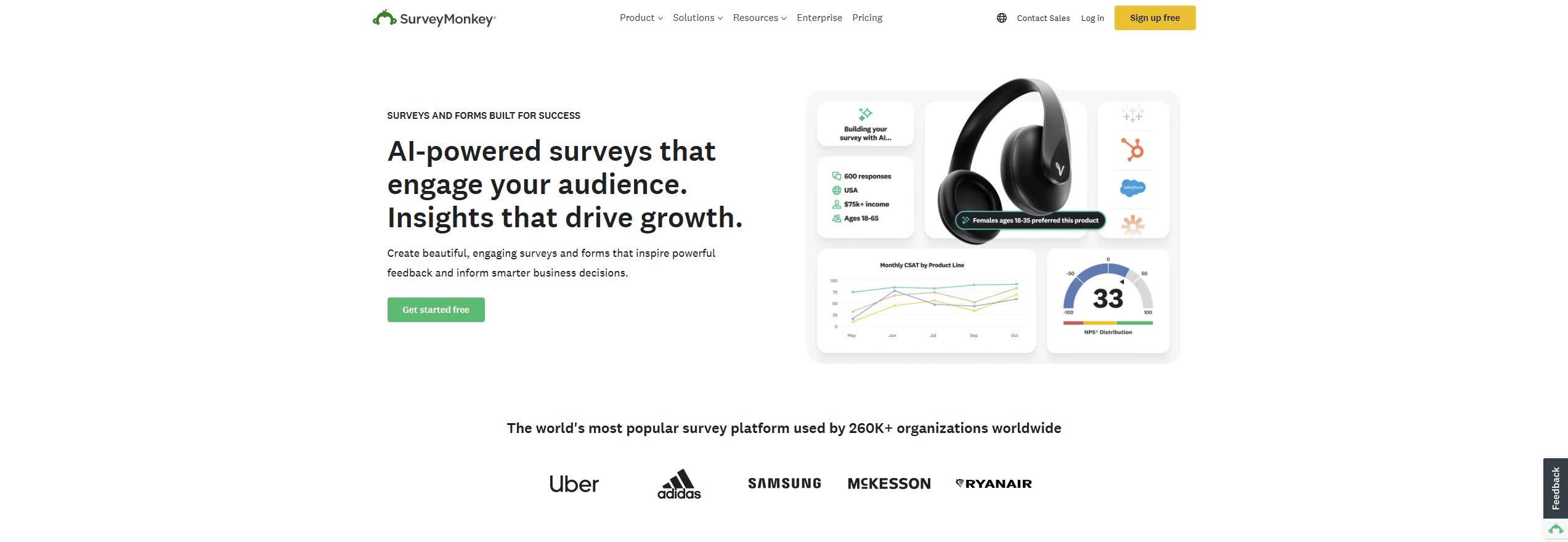
SurveyMonkey is one of the most widely recognised names in online surveys and remains a default choice for many organisations. It offers a broad set of survey creation, logic, and reporting tools that support everything from simple feedback forms to structured research programs. Many teams choose SurveyMonkey because it is easy to adopt and scales well across departments.
The platform is used by marketing teams, HR departments, CX groups, and enterprises that need consistent survey processes without complex setup. Its strength lies in reliability, template depth, and collaboration rather than niche CX workflows.
Core Features
- Survey and form builder
- Logic and branching
- Templates for NPS, CSAT, and research
- Team workspaces
- Data export and reporting
Pricing and Suitability
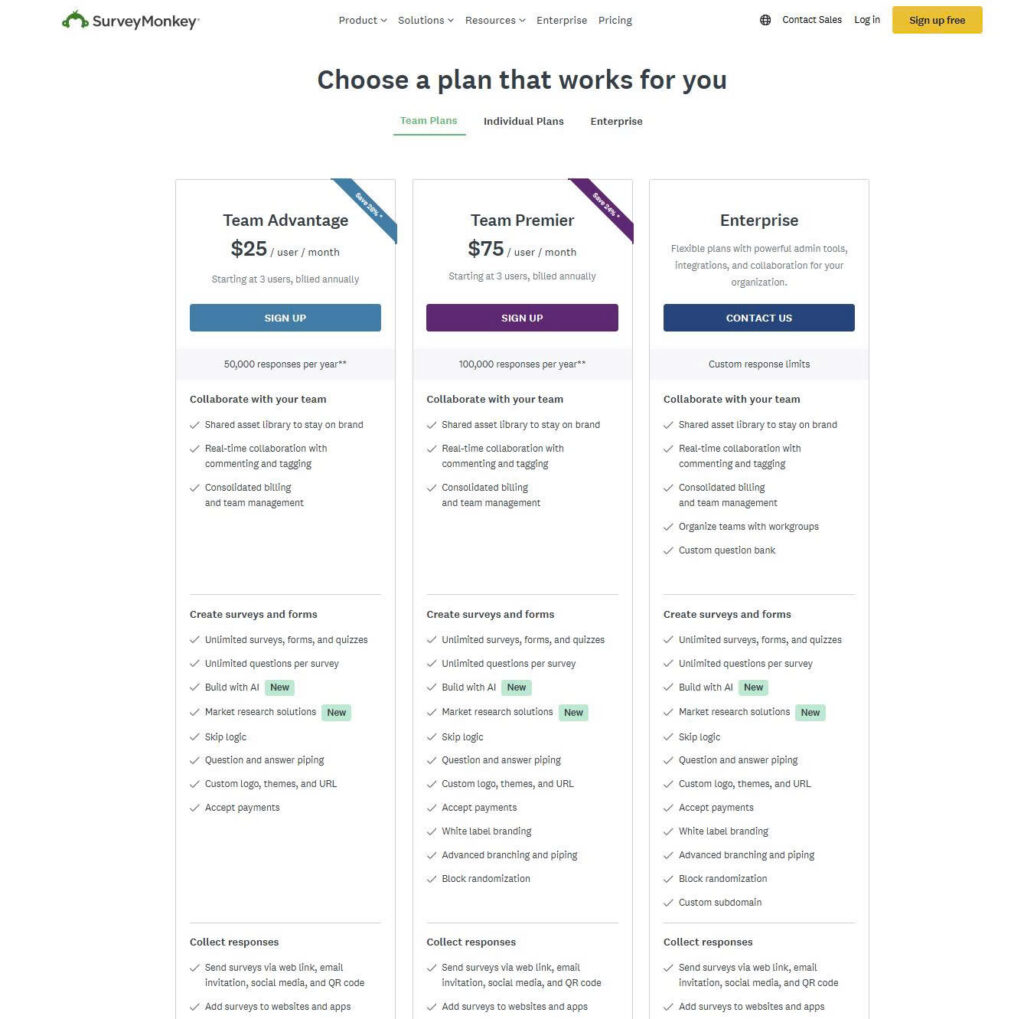
SurveyMonkey’s pricing is structured around team collaboration, survey complexity, and response limits. Entry-level plans are suitable for basic surveys, but most businesses quickly move to paid tiers to unlock higher response volumes, advanced logic, and shared workspaces. Team-based plans are priced per user, which can increase costs as organisations scale. Higher-tier and enterprise plans introduce stronger governance, security controls, and advanced analytics, but pricing becomes less transparent. SurveyMonkey is best suited for teams that value reliability and breadth over strict cost efficiency.
| Plan | Typical Price | Suitable For | Limitations |
| Free | US$0 | Basic surveys | Limited responses and features |
| Team Advantage | ~US$25/user/mo (annual) | Small to mid-size teams | Response and feature caps |
| Premier | ~US$75/user/mo | Larger teams | Cost rises quickly |
| Enterprise | Custom | Large organisations | Pricing not public |
2. Typeform

Typeform focuses on user experience and completion rates. Instead of traditional form layouts, it presents questions in a conversational, one-at-a-time format, which often leads to higher engagement. This makes it particularly popular for customer feedback, onboarding surveys, and product discovery.
While Typeform offers analytics and integrations, its main advantage lies in how respondents perceive the survey experience. It is often used by startups, marketing teams, and SaaS companies that want feedback without damaging brand perception.
Core Features
- Conversational survey interface
- Logic and conditional paths
- Branding and custom design
- Integrations with CRM and marketing tools
Pricing and Suitability
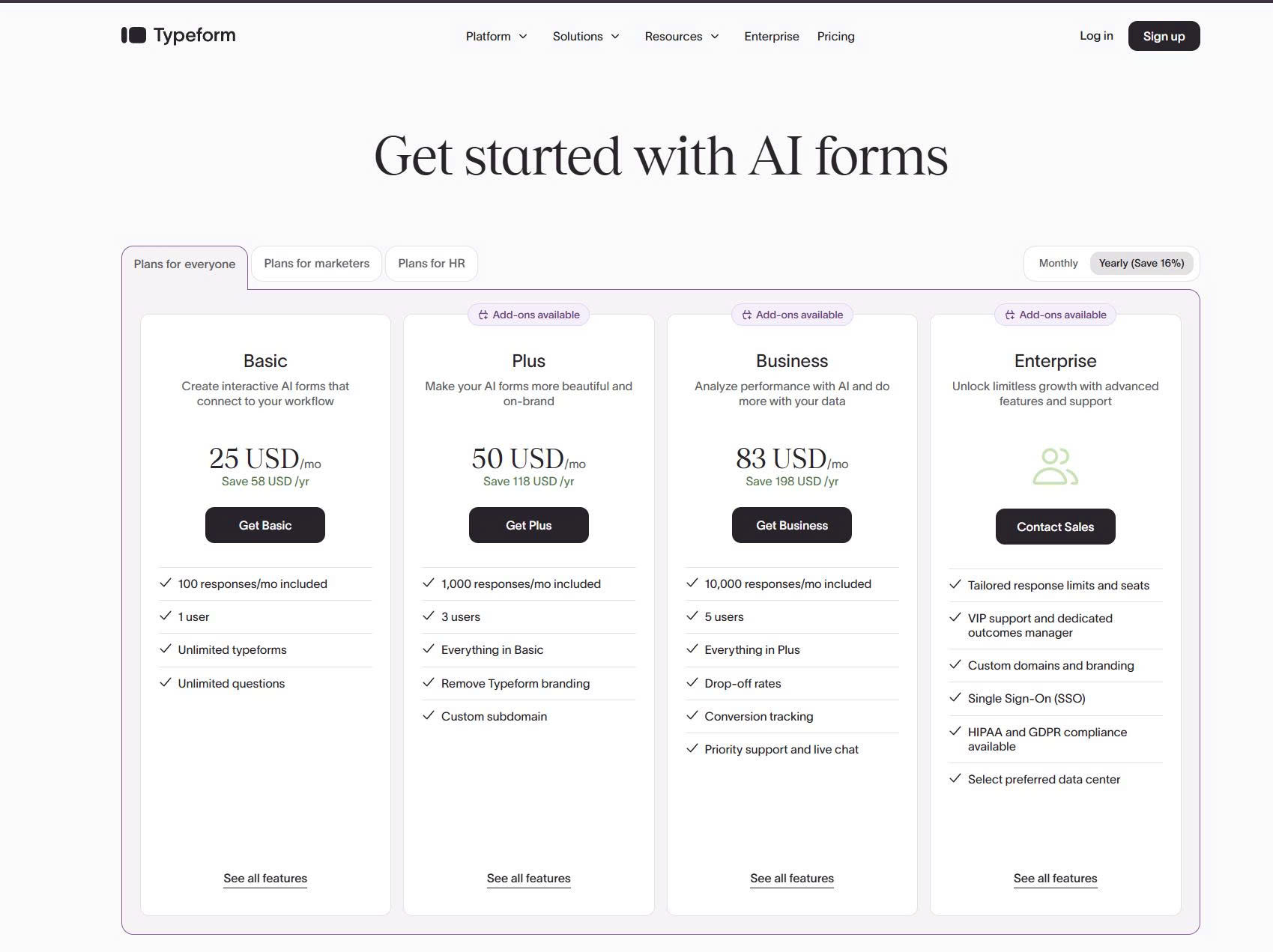
Typeform uses tiered pricing based on response limits, feature access, and collaboration needs. Lower-tier plans work well for lightweight feedback and one-off surveys, but response caps can be restrictive for active teams. As businesses scale, higher plans unlock more integrations, logic, and branding controls, making Typeform more suitable for ongoing customer feedback workflows. Pricing increases primarily with usage rather than the number of surveys. Typeform is best for teams that prioritise user experience and completion rates over raw survey volume.
| Plan | Typical Price | Suitable For | Limitations |
| Basic | ~US$25/mo | Simple surveys | Response limits |
| Plus | ~US$50/mo | Active teams | Limited analytics |
| Business | ~US$83/mo | Growth teams | Costs increase with volume |
| Enterprise | Custom | Large organisations | Pricing not transparent |
3. Qualtrics
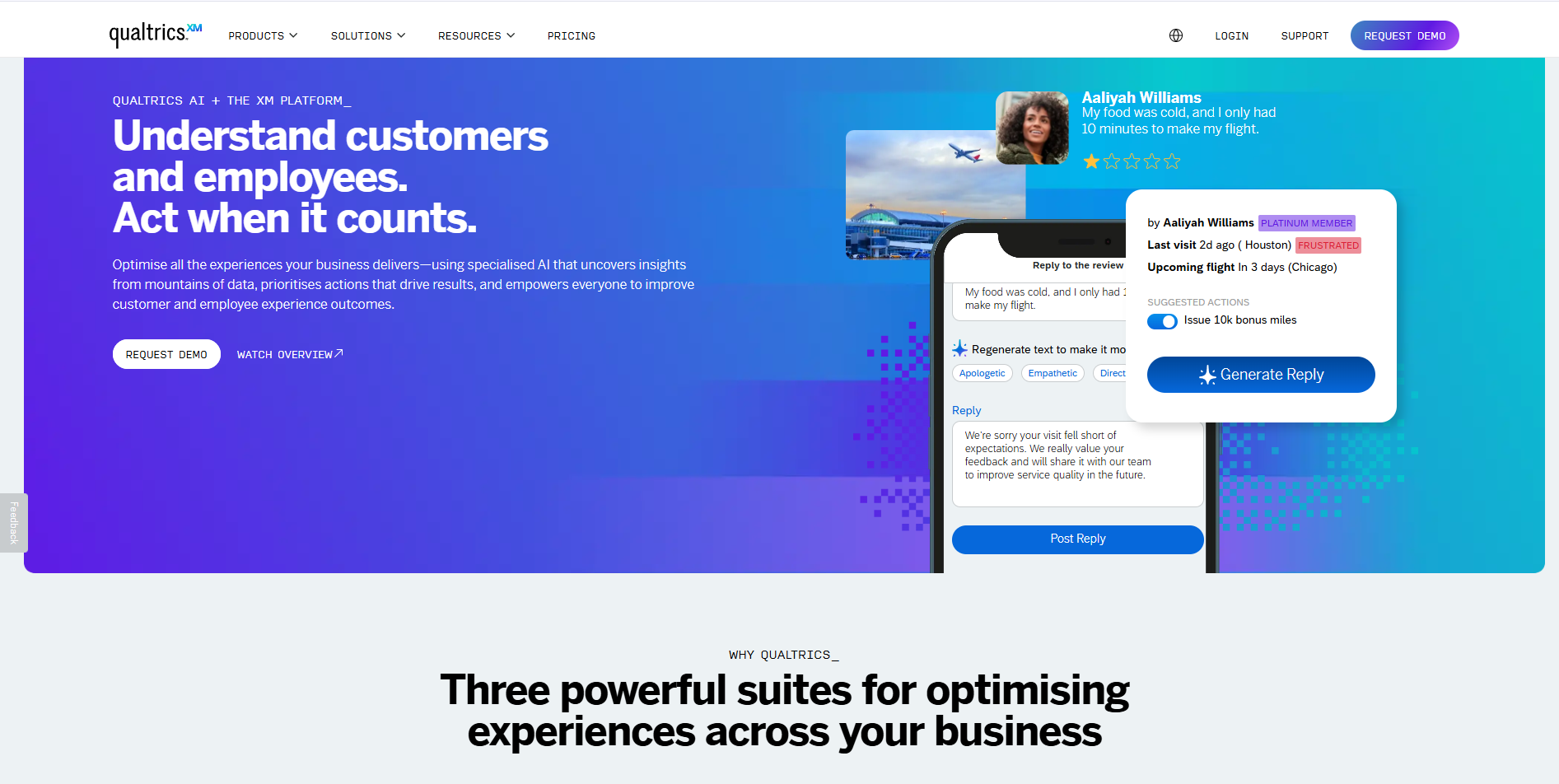
Qualtrics follows a premium, enterprise-oriented pricing model that reflects its position as an experience management platform rather than a simple survey tool. Entry-level “buy online” plans are priced by response volume and are primarily aimed at research use cases. Full CX and XM suites are sold through custom enterprise contracts that scale based on scope, users, and modules. While powerful, Qualtrics represents a significant investment and is not designed for lightweight feedback collection. It is best suited for organisations running large-scale, structured CX or research programmes.
Qualtrics is an enterprise-grade experience management platform. It supports customer, employee, and product research with advanced logic, analytics, and governance. Unlike lightweight survey tools, Qualtrics is designed for organisations that run continuous, multi-department feedback programs.
Large enterprises, government agencies, and research teams use Qualtrics because of its security, compliance, and analytical depth. For small teams, it can be excessive, but for complex organisations, it becomes a central CX system.
Core Features
- Advanced survey logic
- CX and research dashboards
- Text and sentiment analysis
- Enterprise security and roles
Pricing and Suitability
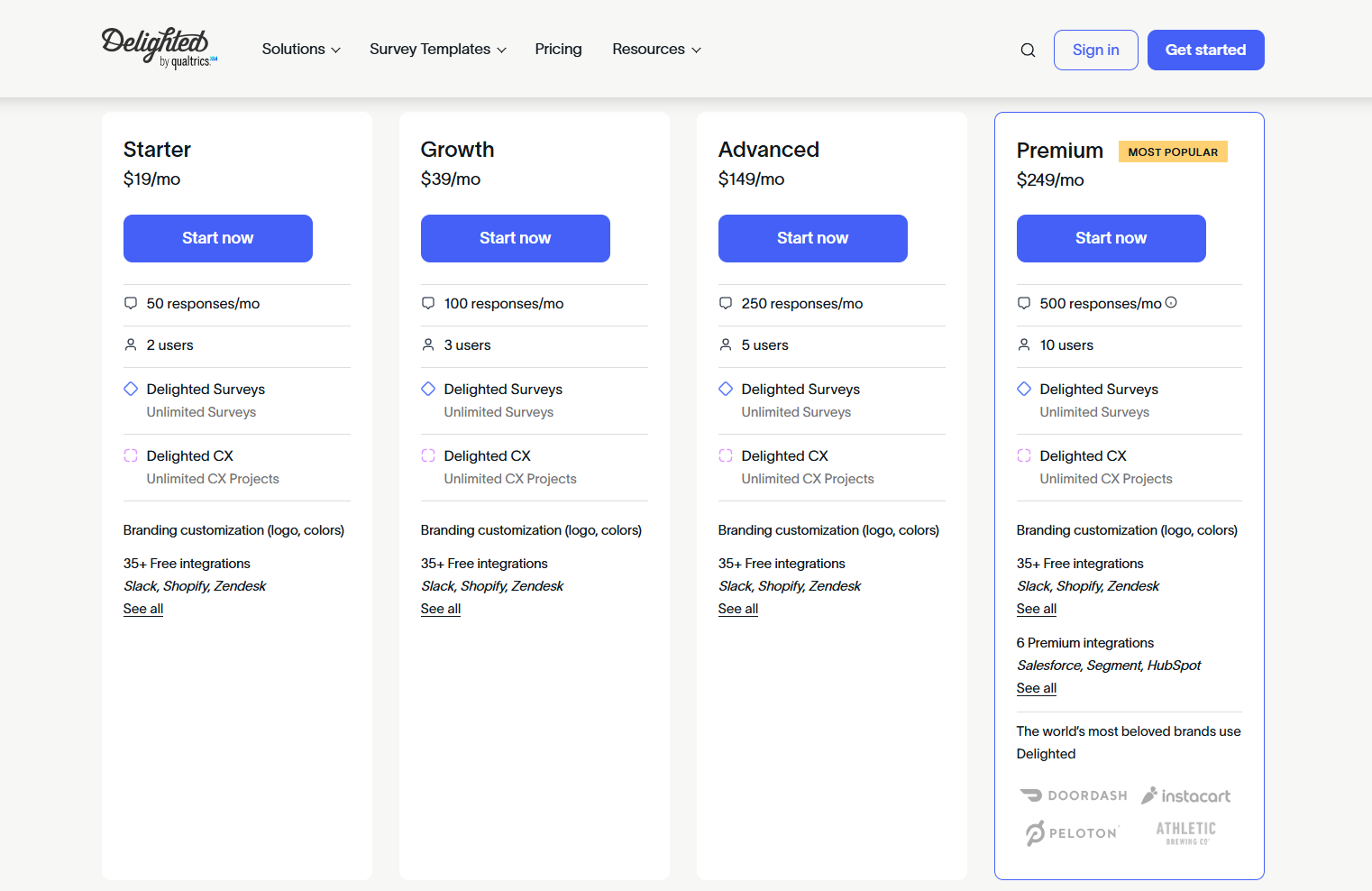
Delighted’s pricing is based on the number of responses collected per month, keeping the model simple and predictable. A free tier allows teams to test NPS, CSAT, or CES with limited responses, while paid plans increase monthly response allowances and automation capabilities. Costs scale with feedback volume, not with user count or survey complexity. This makes Delighted easy to adopt for customer-facing teams that want continuous metrics tracking. Delighted is ideal for organisations focused on loyalty and satisfaction measurement rather than detailed survey design.
| Plan | Typical Price | Suitable For | Limitations |
| Buy Online | ~US$420/mo (1,000 responses) | Research teams | Response-based pricing |
| CX Suites | Custom | Enterprise CX programs | Expensive |
| Enterprise | Custom | Global organisations | Requires a sales process |
4. Delighted
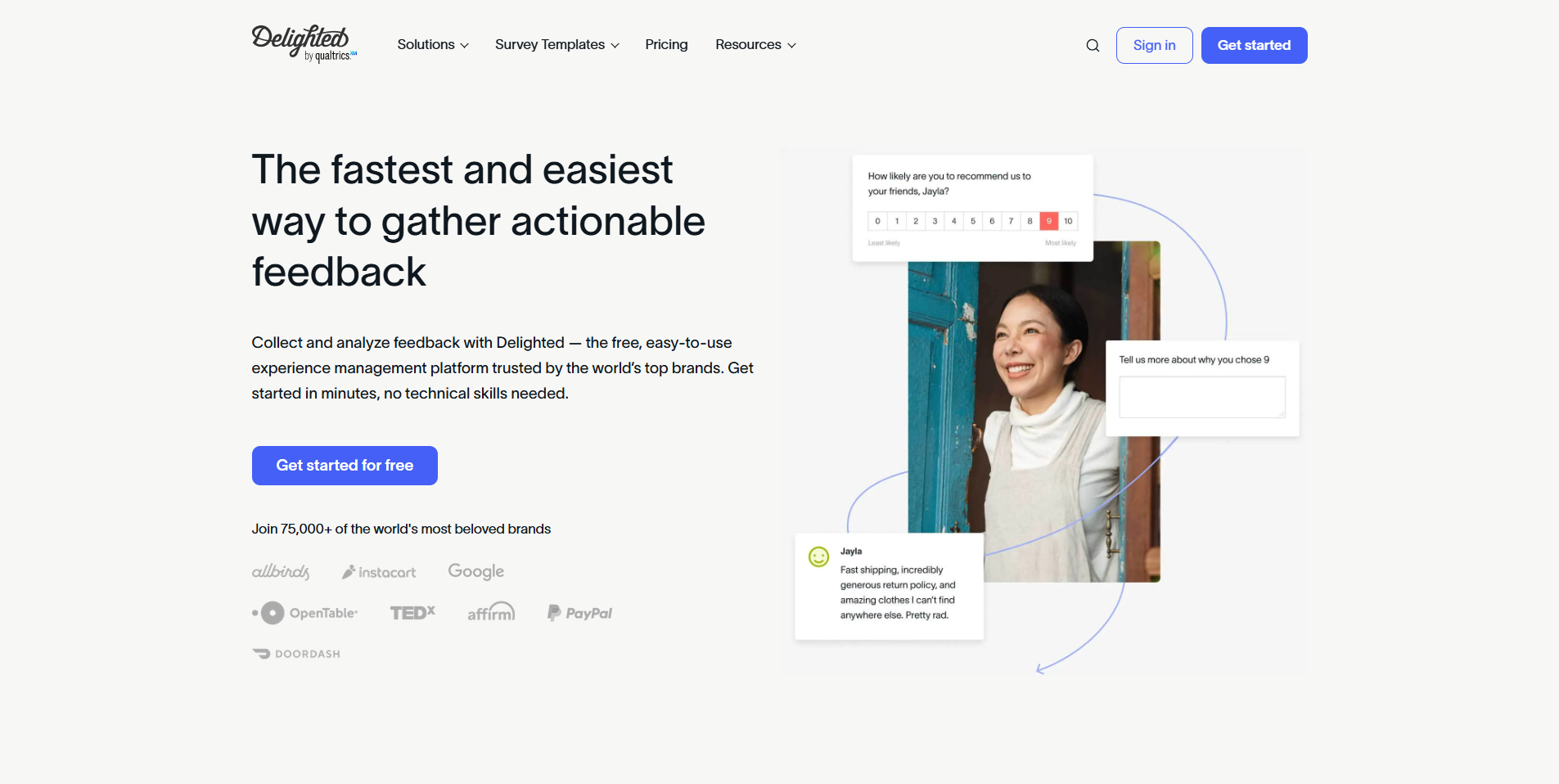
Delighted is built specifically for tracking NPS, CSAT, and CES. Instead of focusing on complex surveys, it provides a simple system for sending metric-based feedback after key events such as purchases or support interactions.
It is commonly used by SaaS companies, support teams, and service businesses that want a clear view of customer loyalty and satisfaction without running full research surveys.
Core Features
- NPS, CSAT, and CES surveys
- Automated sending rules
- Simple dashboards
- Integrations with CRM and support tools
Pricing and Suitability
Survicate offers pricing tiers that scale primarily with response volume and channel access. The free plan supports basic feedback collection, while paid plans unlock multi-channel surveys, behavioural targeting, and integrations. As teams expand their feedback programmes across websites, apps, and email, pricing increases accordingly. Higher tiers are designed for organisations running ongoing VoC initiatives rather than occasional surveys. Survicate is well-suited for teams that need flexible, multi-touchpoint feedback without moving into full enterprise CX platforms.
5. Survicate
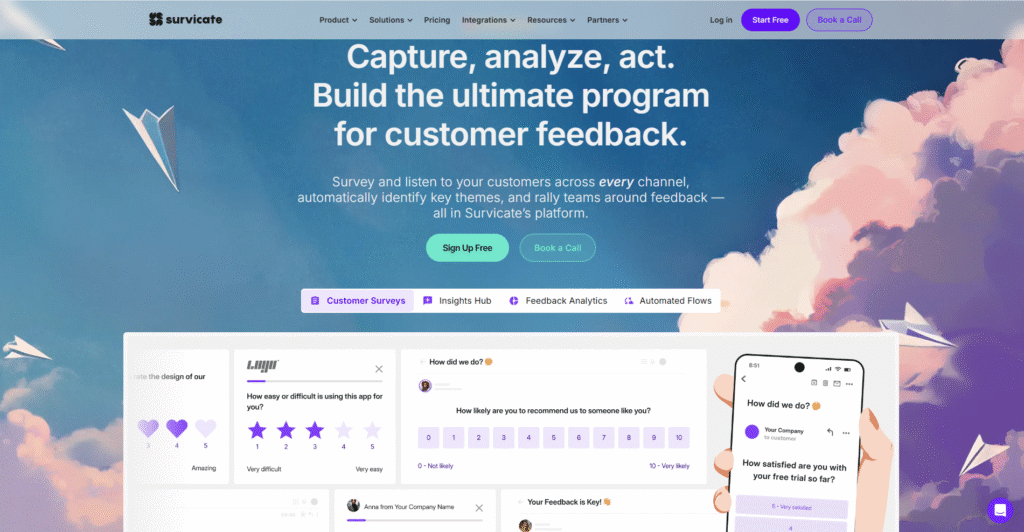
Survicate is a multi-channel customer feedback platform that supports email, website, mobile, and in-app surveys. It allows teams to target users based on behaviour, page visits, or lifecycle stage, making it useful for product teams and marketers.
Survicate sits between simple survey tools and full enterprise platforms. It is often used by SaaS companies and digital businesses seeking ongoing feedback throughout the customer journey.
Core Features
- Website and in-app surveys
- Email and link distribution
- Behaviour-based targeting
- CX metric templates
Pricing and Suitability
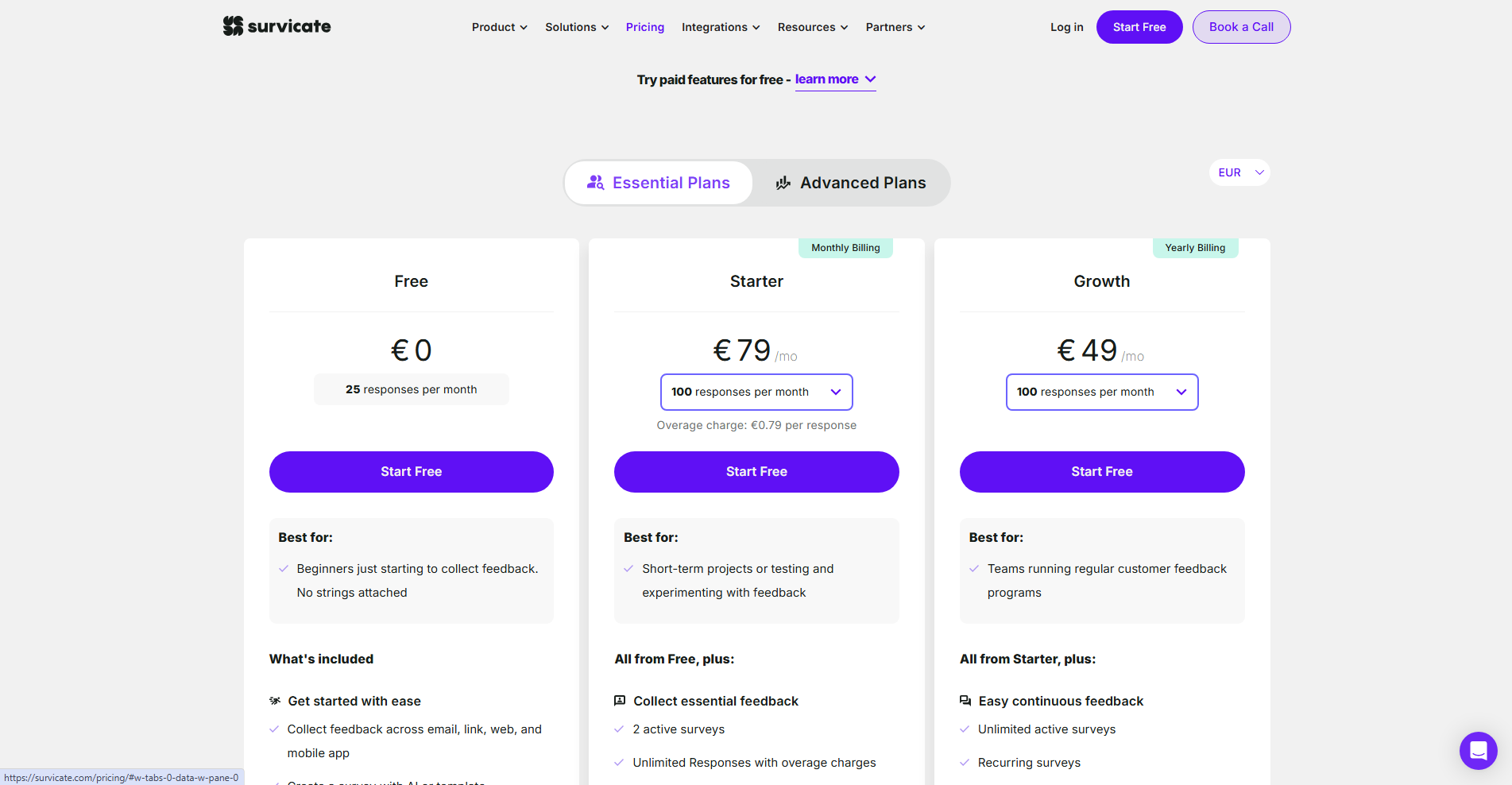
Survicate offers pricing tiers that scale primarily with response volume and channel access. The free plan supports basic feedback collection, while paid plans unlock multi-channel surveys, behavioural targeting, and integrations. As teams expand their feedback programmes across websites, apps, and email, pricing increases accordingly. Higher tiers are designed for organisations running ongoing VoC initiatives rather than occasional surveys. Survicate is well-suited for teams that need flexible, multi-touchpoint feedback without moving into full enterprise CX platforms.
6. Hotjar (Surveys & Feedback)
Hotjar combines website behaviour analytics with on-page surveys and feedback widgets. It is designed to capture users’ thoughts in real time as they use a product or website.
This makes Hotjar especially useful for UX, conversion optimisation, and product teams seeking to understand why users behave as they do.
Core Features
- On-site surveys
- Feedback widgets
- Heatmaps and recordings
- Basic analytics
Pricing and Suitability
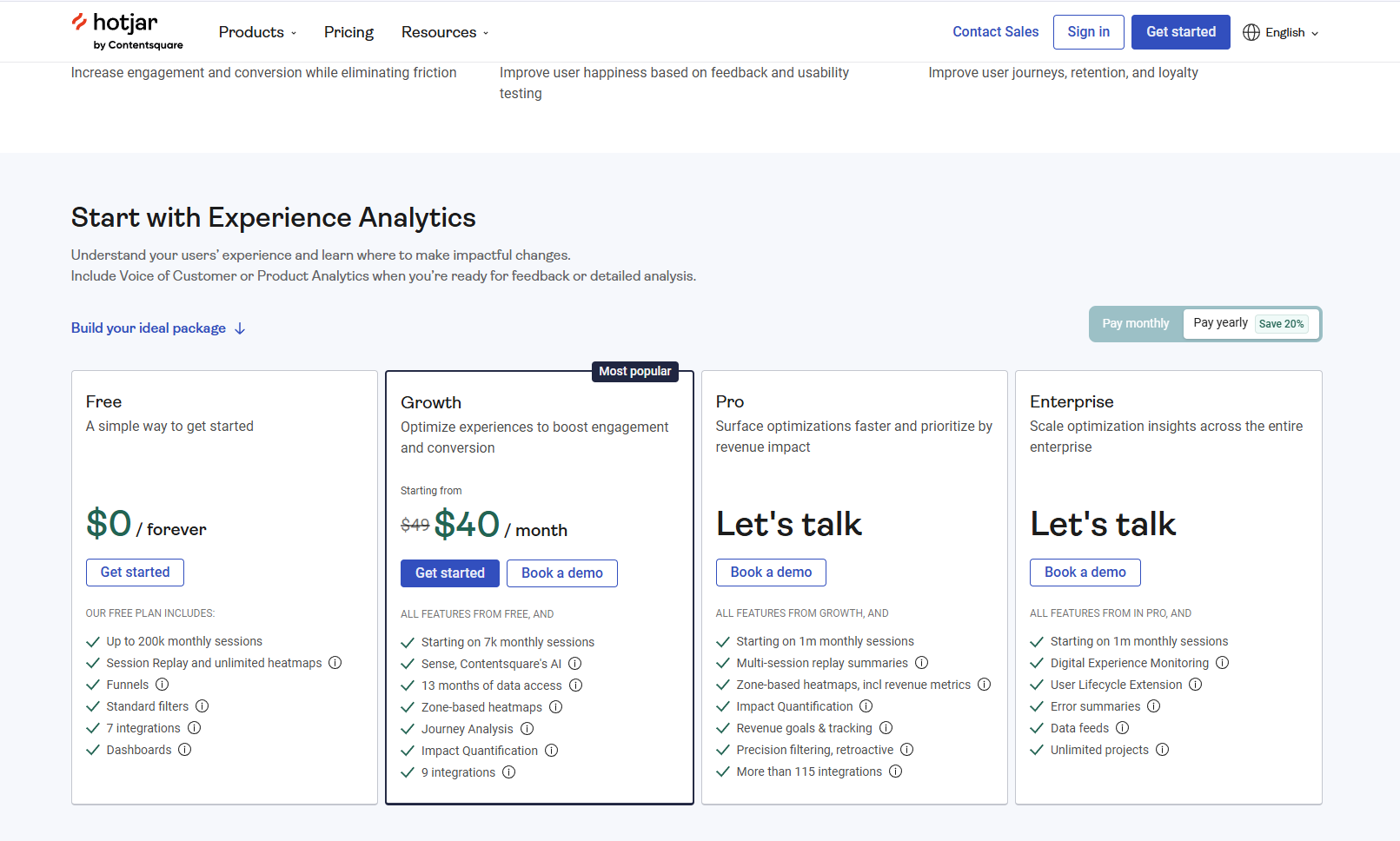
Hotjar’s survey and feedback pricing is tied to monthly response limits and website usage rather than survey complexity. The free plan supports small sites and light feedback collection, while paid plans increase response capacity and unlock advanced targeting and analysis features. Pricing scales predictably as traffic and feedback volume grow. Unlike traditional survey tools, Hotjar bundles surveys with behavioural analytics, which affects overall cost. It is best suited for UX and product teams focused on website optimisation rather than organisation-wide CX programmes.
7. Qualaroo
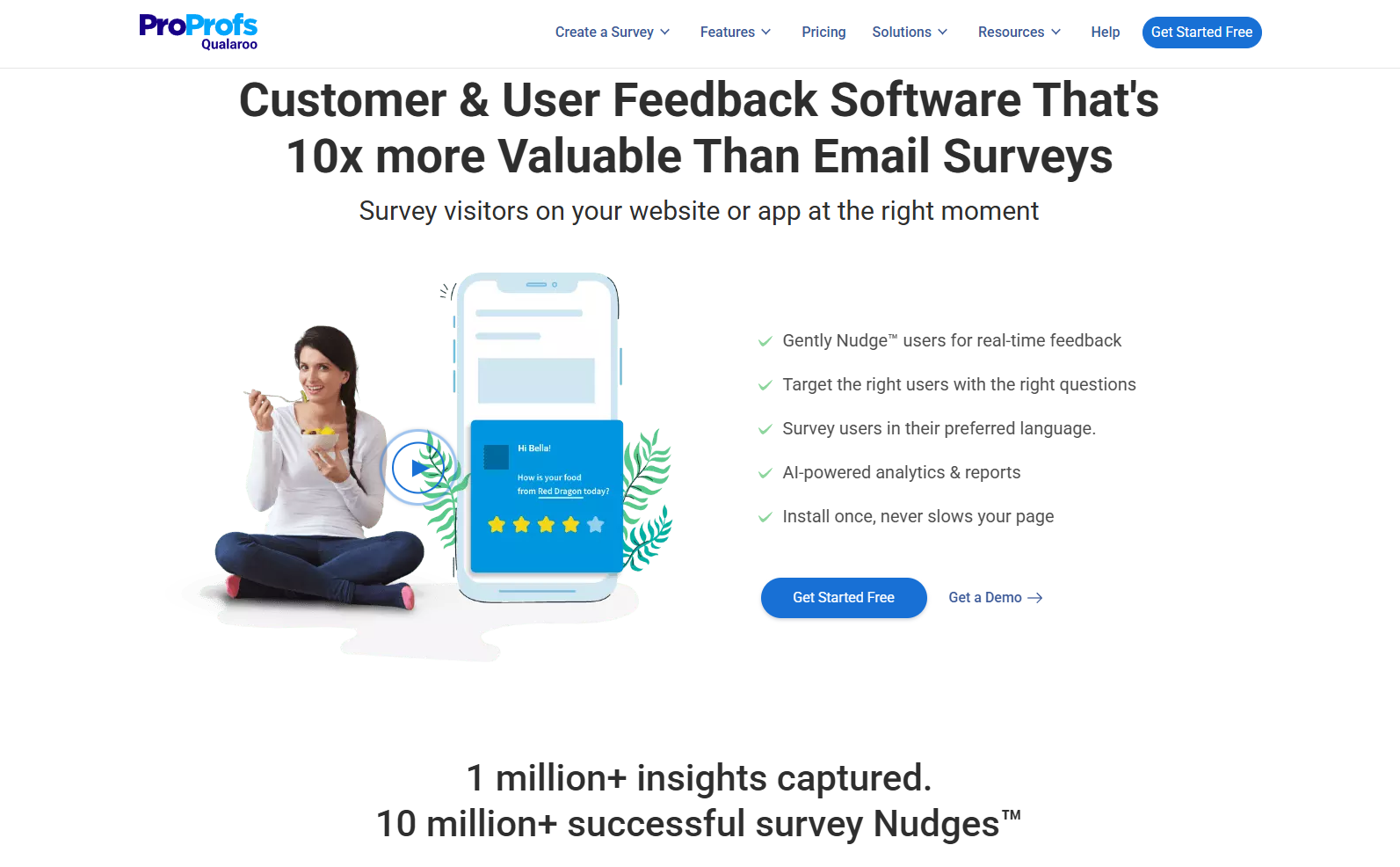
Qualaroo specialises in targeted micro-surveys that appear based on user behaviour. These surveys often include short, contextual questions, such as why a visitor did not convert or why a user cancelled.
It is commonly used by marketing and product teams to collect real-time feedback that informs optimisation and UX decisions.
Core Features
- Behaviour-based targeting
- On-site and in-app surveys
- Question logic
- Integration with analytics tools
Pricing and Suitability
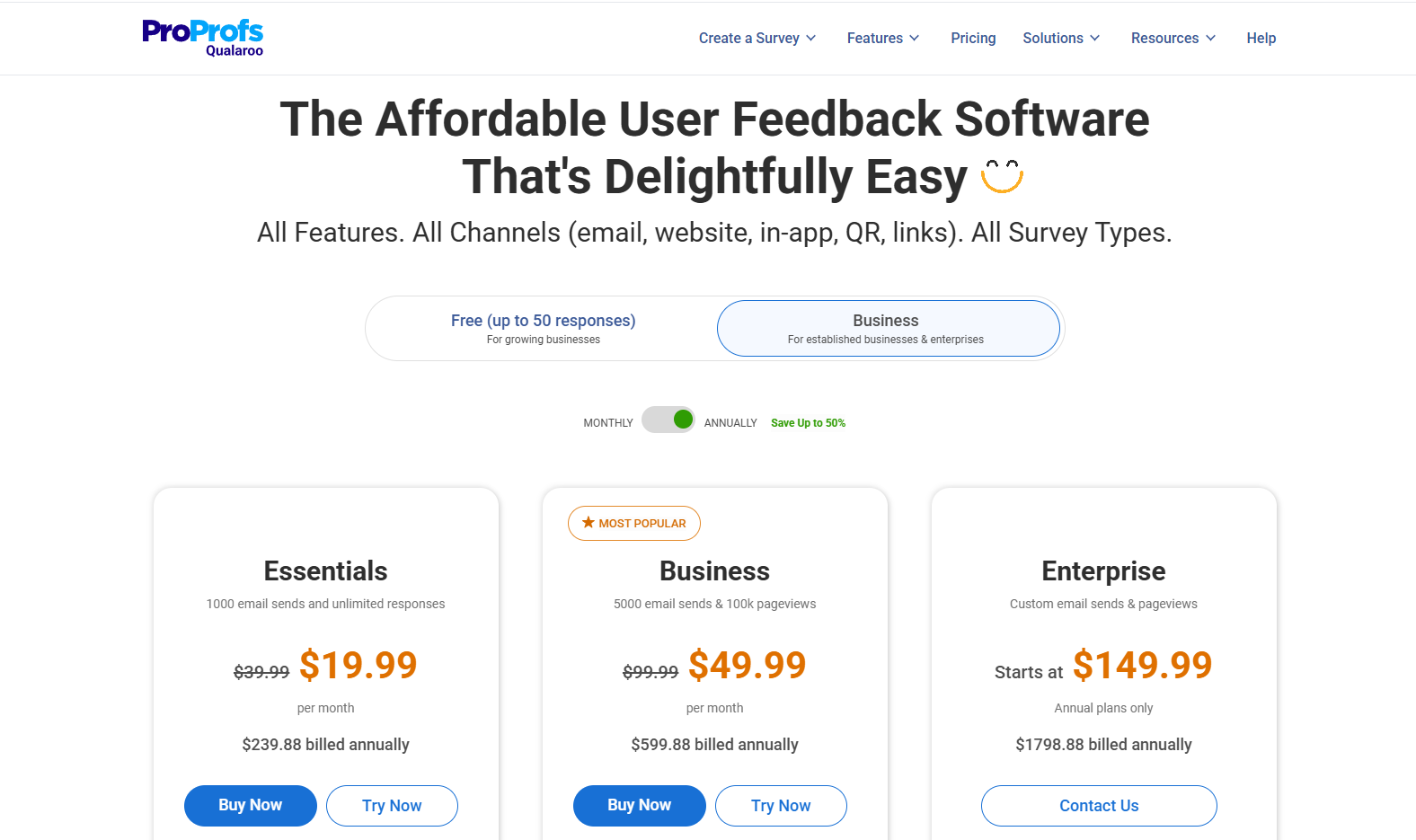
Qualaroo’s pricing is structured around targeting depth and deployment scale rather than basic survey volume. Entry-level plans are designed for small teams running simple on-site surveys with limited behavioural triggers. As teams move into conversion optimisation and product experimentation, higher tiers unlock advanced targeting, logic, and integrations, with costs rising accordingly. Enterprise plans are tailored for large organisations that require custom deployments, governance, and support, and are sold through a sales-led process. Qualaroo is best suited for teams that prioritise real-time, behaviour-driven feedback over low-cost survey collection.
| Plan | Typical Price | Suitable For | Limitations |
| Essentials | From ~US$20/mo | Small teams | Limited targeting |
| Business | From ~US$50/mo | Conversion teams | Cost increases |
| Enterprise | From ~US$150/mo | Large organisations | Sales-led pricing |
How to Choose the Right Customer Survey Tool
The right tool depends on how feedback fits into your operations. Small teams may only need simple surveys to collect opinions, while growing businesses benefit from automated CX programs that track satisfaction and loyalty over time.
Key factors to consider include the number of responses you expect, where the surveys will be displayed, how the results will integrate with your existing systems, and whether governance or compliance is required. The more customer feedback drives revenue, retention, or product decisions, the more structure your survey platform should provide
Customer Survey Tools — Decision Matrix
| Tool | Best For | Strengths | Limitations |
| SurveyMonkey | General survey use across teams | Reliable, flexible, strong templates | Cost increases with scale |
| Typeform | High-engagement surveys | Excellent UX and branding | Response limits |
| Qualtrics | Enterprise CX and research | Deep analytics and governance | Expensive |
| Delighted | NPS and CSAT tracking | Simple, focused, automated | Not for complex surveys |
| Survicate | Multi-channel feedback | Behaviour-based targeting | Pricing scales with responses |
| Hotjar | Website feedback | Contextual insights | Web-only |
| Qualaroo | Conversion and UX surveys | Real-time targeting | Higher-tier pricing |
Conclusion
Customer survey tools give businesses a structured way to listen to their customers and make better decisions. Whether you need simple satisfaction tracking or a full enterprise experience management system, the right platform turns feedback into reliable insights.
Each tool in this list serves a different stage of growth. Choosing the right one depends on how deeply customer feedback is embedded in your business strategy and operations.