









B2B project management software supports organisations in planning, tracking, and delivering work across teams, departments, and stakeholders. These platforms centralise tasks, workflows, timelines, and reporting, enabling businesses to maintain visibility and control as delivery complexity increases. Unlike basic task tools, B2B project management systems focus on coordination, governance, and accountability across multiple workstreams.
As organisations scale, projects involve more dependencies, contributors, and decision layers. Without a structured system, delivery becomes fragmented and unpredictable. This article explains why B2B project management software matters, how these platforms differ by system role, and which tools businesses rely on in 2026, including pricing structures and selection guidance.
Why B2B Project Management Software Matters for Organisational Delivery
As teams grow, delivery challenges extend beyond task completion. Projects span functions, timelines overlap, and stakeholders require consistent reporting. Without a central coordination layer, teams rely on disconnected tools, manual updates, and informal communication, which increases delivery risk.
B2B project management software addresses this by standardising how work is planned, executed, and reviewed. These platforms connect tasks, dependencies, timelines, and reporting into a single system. This structure supports predictable delivery, clearer ownership, and better visibility across the organisation.
Key outcomes for businesses include:
- Improved delivery predictability
- Clearer accountability across teams
- Consistent execution processes
- Better stakeholder visibility
- Stronger control over resources and timelines
1. ClickUp
ClickUp supports work execution and delivery coordination through a unified system that combines tasks, workflows, timelines, and reporting. Organisations use ClickUp to centralise work that would otherwise sit across multiple tools, improving visibility and reducing coordination effort.
B2B teams commonly apply ClickUp across product delivery, operations, and internal services. Its structure supports both structured workflows and flexible execution, allowing organisations to standardise delivery while adapting to different team requirements.
Pricing plans
ClickUp uses a tiered pricing model based on users and feature depth. Entry plans support basic coordination, while higher tiers unlock reporting, automation, and governance controls.
| Plan | Price | Included features | Limitations |
| Free Forever | Free | Tasks, docs, basic views | Limited storage |
| Unlimited | From USD 7 per user per month | Unlimited storage, integrations, Gantt, and custom fields | Advanced governance excluded |
| Business | From USD 12 per user per month | Dashboards, workload, automation | Higher cost at scale |
| Enterprise | Custom | Advanced permissions, security controls | Quote required |
2. Asana
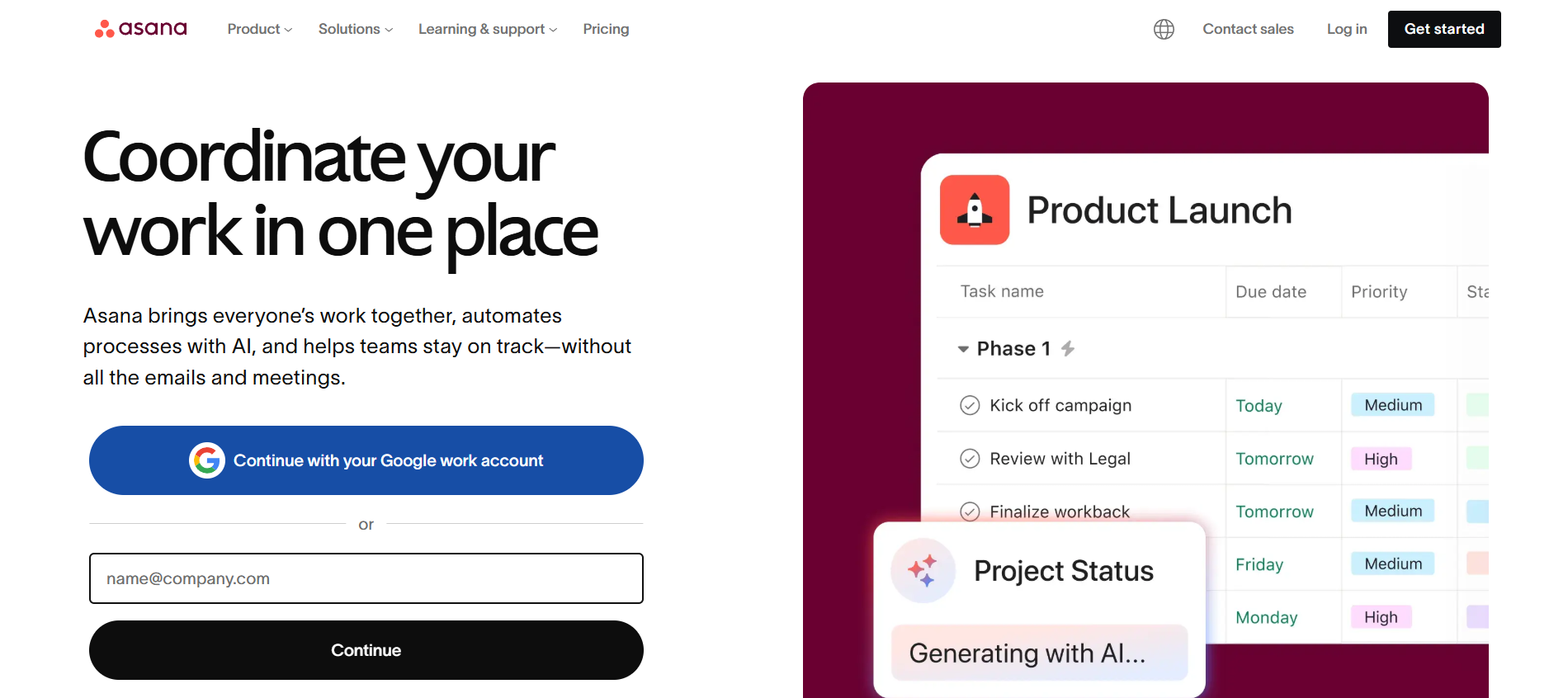
Asana focuses on structured project and workflow management, helping teams maintain clarity across ongoing work. The platform emphasises visibility and consistency, making it suitable for organisations that require standardised delivery processes.
B2B teams often use Asana to coordinate cross-functional initiatives, including marketing execution, internal operations, and programme delivery. Its design supports transparency without requiring heavy configuration.
Pricing plans
Asana pricing scales by user count and access to advanced reporting and portfolio features.
| Plan | Price | Included features | Limitations |
| Personal | Free | Core task and project management | Limited users |
| Starter | From USD 10.99 per user per month | Timelines, dashboards, workflow builder | Portfolio features excluded |
| Advanced | From USD 24.99 per user per month | Goals, workload, advanced reporting | Higher tier required for scale |
| Enterprise | Custom | Governance and admin controls | Quote required |
3. Monday.com
Monday.com provides a configurable work management platform designed to model operational processes across teams. Its visual structure allows organisations to adapt workflows while maintaining oversight.
B2B organisations apply monday.com to operations management, service delivery, and cross-department coordination. The platform suits teams that need flexibility without losing delivery structure.
Pricing plans
Pricing varies by plan and billing cycle, with costs increasing as teams unlock automation and advanced views.
| Plan | Price | Included features | Limitations |
| Free | Free | Basic tracking | Limited seats and boards |
| Basic | Varies | Centralised task tracking | Limited views |
| Standard | Varies | Timelines, calendars | Automation limits |
| Pro | Varies | Time tracking, advanced workflows | Higher seat cost |
| Enterprise | Custom | Enterprise governance | Quote required |
4. Wrike
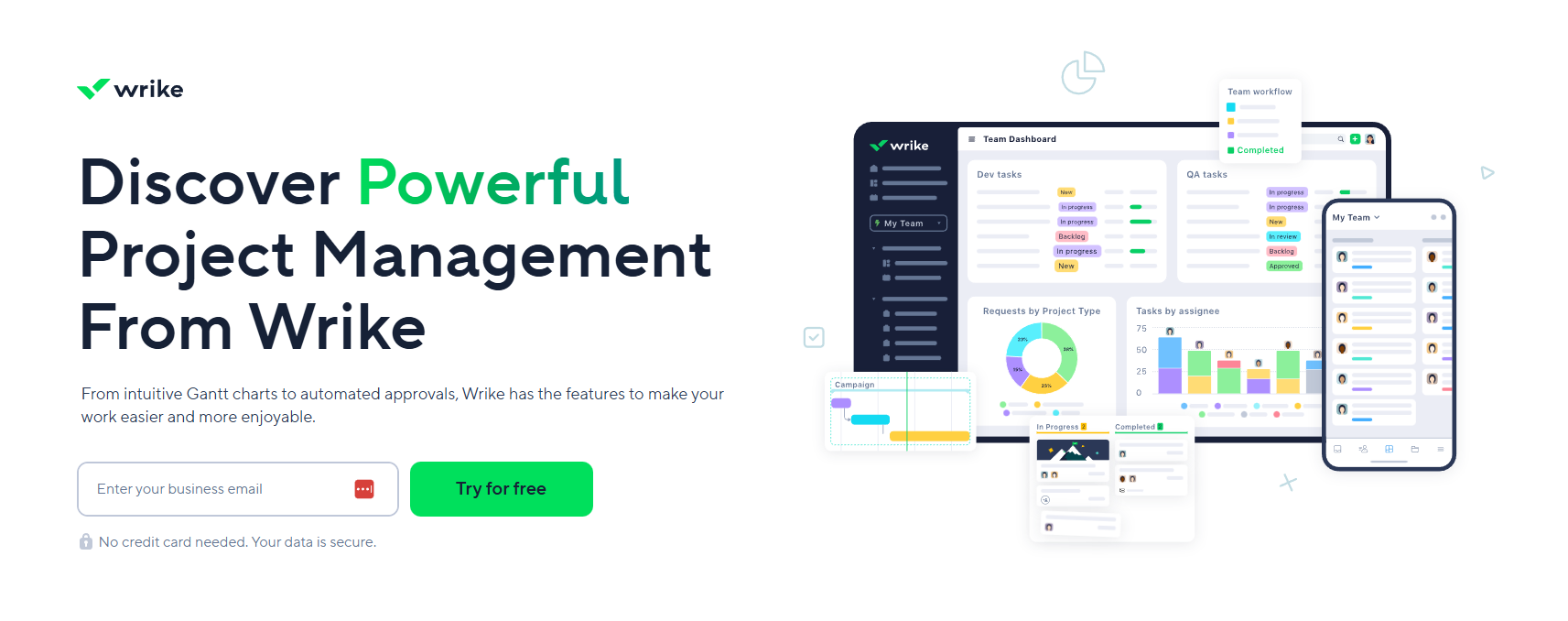
Wrike supports delivery management and resource planning for organisations managing multiple projects at scale. The platform emphasises approvals, reporting, and capacity planning.
B2B teams in agencies, professional services, and regulated environments rely on Wrike to maintain control across complex delivery structures. Its governance features support consistent execution and accountability.
Pricing plans
Wrike pricing scales by user count and access to advanced planning and analytics.
| Plan | Price | Included features | Limitations |
| Free | Free | Task and project tracking | Limited active tasks |
| Team | From USD 10 per user per month | Dashboards, custom fields | Automation limits |
| Business | From USD 25 per user per month | Resource planning, approvals | Seat minimums |
| Enterprise | Custom | Advanced security | Quote required |
| Pinnacle | Custom | Advanced analytics | Quote required |
5. Smartsheet

Smartsheet provides spreadsheet-based project and portfolio management with structured reporting and automation. Its interface suits teams that prefer familiar planning models with added coordination features.
Organisations use Smartsheet for programme planning, PMO oversight, and operational forecasting. The platform supports delivery tracking while enabling structured reporting.
Pricing plans
Smartsheet pricing increases based on member count and automation requirements.
| Plan | Price | Included features | Limitations |
| Pro | From USD 9 per member per month | Core planning and tracking | Member limits |
| Business | From USD 19 per member per month | Workload tracking, admin controls | Higher cost for scale |
| Enterprise | Custom | Security and governance | Quote required |
6. Jira
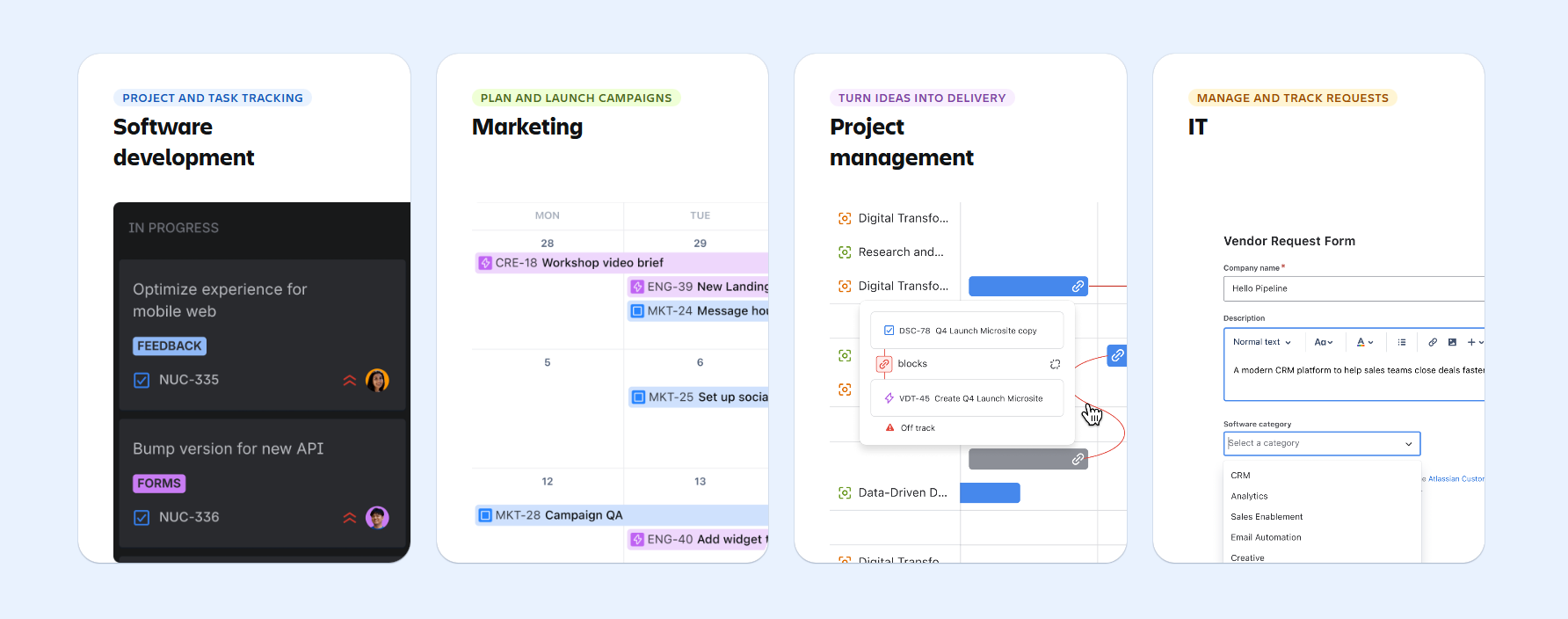
Jira supports technical project management for software and product delivery teams. The platform focuses on issue tracking, workflows, and structured delivery processes.
B2B organisations with engineering-led delivery models rely on Jira to manage development pipelines and product roadmaps. Its structure supports technical governance and execution consistency.
Pricing plans
Jira pricing scales by user tier and access to advanced planning features.
| Plan | Price | Included features | Limitations |
| Free | Free | Core issue tracking | User limits |
| Standard | From USD 7.91 per user per month | Permissions, workflows | Scale requires a higher tier |
| Premium | From USD 14.54 per user per month | Advanced planning | Higher cost |
| Enterprise | Custom | Enterprise governance | Quote required |
7. Airtable
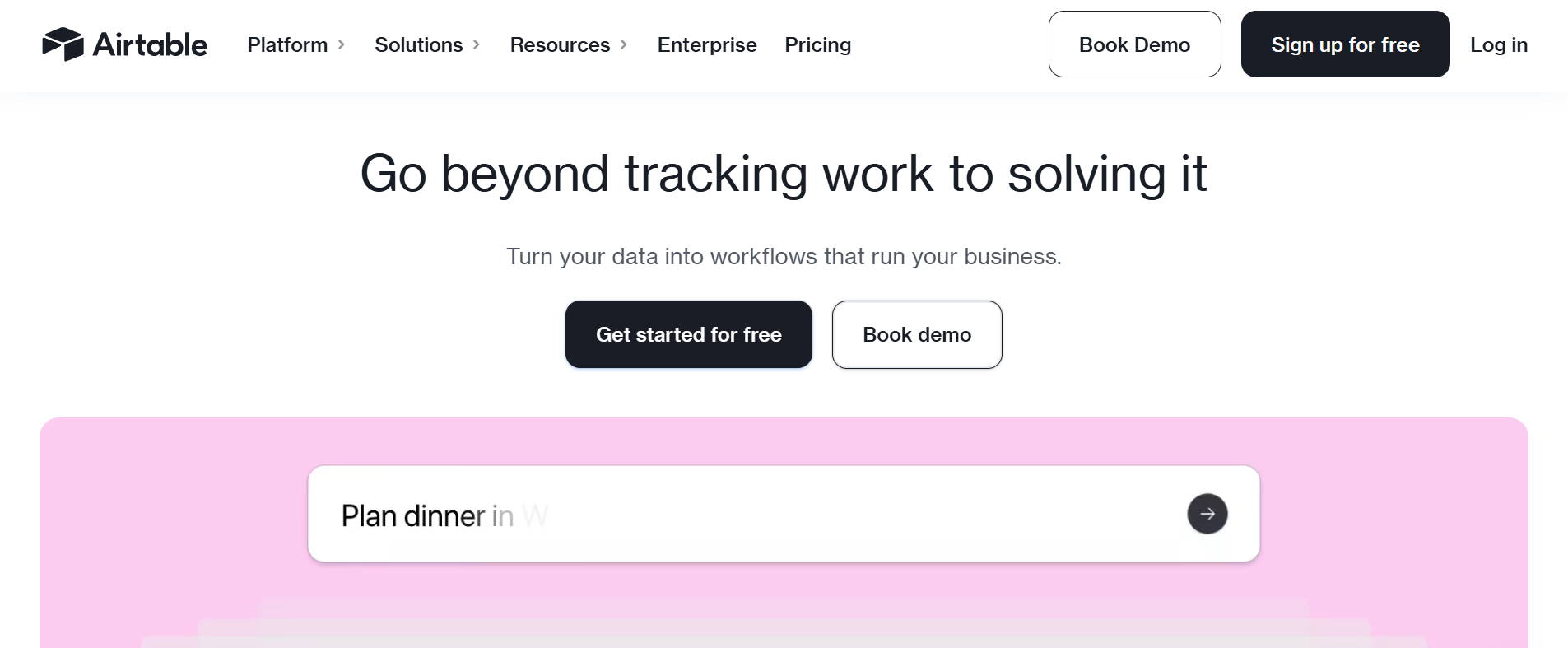
Airtable combines database functionality with workflow coordination, allowing teams to model projects in a flexible structure. Its design suits organisations that require custom data relationships alongside task tracking.
B2B teams use Airtable for operations planning, resource modelling, and custom project systems. The platform supports adaptability where rigid structures limit delivery.
Pricing plans
Pricing increases based on collaboration needs and governance requirements.
| Plan | Price | Included features | Limitations |
| Free | Free | Core database and collaboration | Limited scale |
| Team | From USD 20 per user per month | Team collaboration | Feature limits |
| Business | From USD 45 per user per month | Advanced controls | Enterprise features excluded |
| Enterprise Scale | Custom | Organisation-wide governance | Quote required |
How Businesses Should Choose B2B Project Management Software
Tool selection depends on organisational structure, delivery complexity, and governance needs. Popularity alone does not indicate suitability. Businesses should evaluate how a platform supports coordination, visibility, and long-term scalability.
Key factors to assess include:
- Project and team complexity
- Reporting and visibility requirements
- Resource and capacity planning needs
- Permission and governance controls
- Integration with existing systems
A structured evaluation reduces misalignment between tools and delivery requirements.
B2B Project Management Software by System Role
| Tool | Primary system role | Best suited for |
| ClickUp | Unified delivery coordination | Cross-functional teams |
| Asana | Structured workflow management | Internal operations |
| monday.com | Configurable work management | Operational teams |
| Wrike | Scaled delivery governance | Agencies and enterprises |
| Smartsheet | Planning and portfolio oversight | PMOs and planners |
| Jira | Technical delivery management | Engineering teams |
| Airtable | Data-driven workflow modelling | Custom operations |
Conclusion
B2B project management software plays a central role in coordinating how organisations plan and deliver work. These platforms move beyond task tracking by providing visibility, structure, and governance across teams and projects. As delivery complexity increases, many teams complement project oversight with scheduling software to manage capacity, timelines, and resource availability more precisely.
Selecting the right system depends on delivery needs, organisational maturity, and long-term scalability rather than surface features. When evaluated thoughtfully, B2B project management software, supported by effective scheduling tools, enables predictable delivery, clearer accountability, and sustainable operational growth in 2026 and beyond.