










Audience segmentation tools are software platforms that analyse customer data, such as behaviour, demographics, and preferences, to divide audiences into targeted groups. These tools help businesses deliver more relevant messaging, optimise campaigns, and improve return on marketing investment. By grouping users based on how they act, purchase, or engage, teams can avoid generic marketing and focus on precision. As marketing channels fragment and acquisition costs rise, segmentation tools have become essential systems rather than optional add-ons.
Modern businesses rely on audience segmentation tools to connect insights with action. These platforms support personalisation across email, paid ads, websites, and product experiences while improving decision-making across marketing, sales, and product teams. Instead of relying on assumptions, teams can identify high-value users, predict behaviour, and refine strategies using real data. In 2026, effective segmentation underpins scalable growth, retention, and sustainable marketing performance.
How Audience Segmentation Tools Improve Marketing Performance
Audience segmentation tools analyse customer data to identify patterns and group users with similar characteristics or behaviours. These groups, often called audiences or segments, allow businesses to tailor messaging, offers, and experiences to specific needs. Segmentation in B2B contexts can be based on actions taken, lifecycle stage, purchase history, engagement level, or firmographic attributes. This approach improves relevance and reduces wasted spend across marketing and product initiatives.
By applying segmentation, teams can personalise communication, optimise funnels, and prioritise high-value opportunities. Marketing teams use segments to send targeted campaigns and suppress irrelevant audiences. Product teams analyse behavioural cohorts to improve onboarding and retention. Leadership teams gain clearer visibility into performance trends and growth drivers through structured audience insights.
Common Use Cases for Audience Segmentation Tools
Businesses use audience segmentation tools across multiple functions to improve precision and efficiency.
- Campaign targeting and personalisation
- Customer lifecycle and retention management
- Behavioural and product usage analysis
- Paid advertising, audience creation, and suppression
- Account-based marketing and lead prioritisation
- Performance reporting and insight generation
These use cases allow teams to align messaging, improve engagement, and focus resources where they deliver the greatest impact.
Benefits of Using Audience Segmentation Tools
Audience segmentation tools improve how businesses understand and engage their customers.
- Higher engagement through relevant messaging
- Improved conversion rates and marketing ROI
- Reduced ad spend waste through suppression and targeting.
- Clearer customer insights and behavioural understanding
- Stronger alignment between marketing, sales, and product teams
Together, these benefits position audience segmentation tools as foundational infrastructure for modern digital marketing and growth strategies.
1. Google Analytics 4
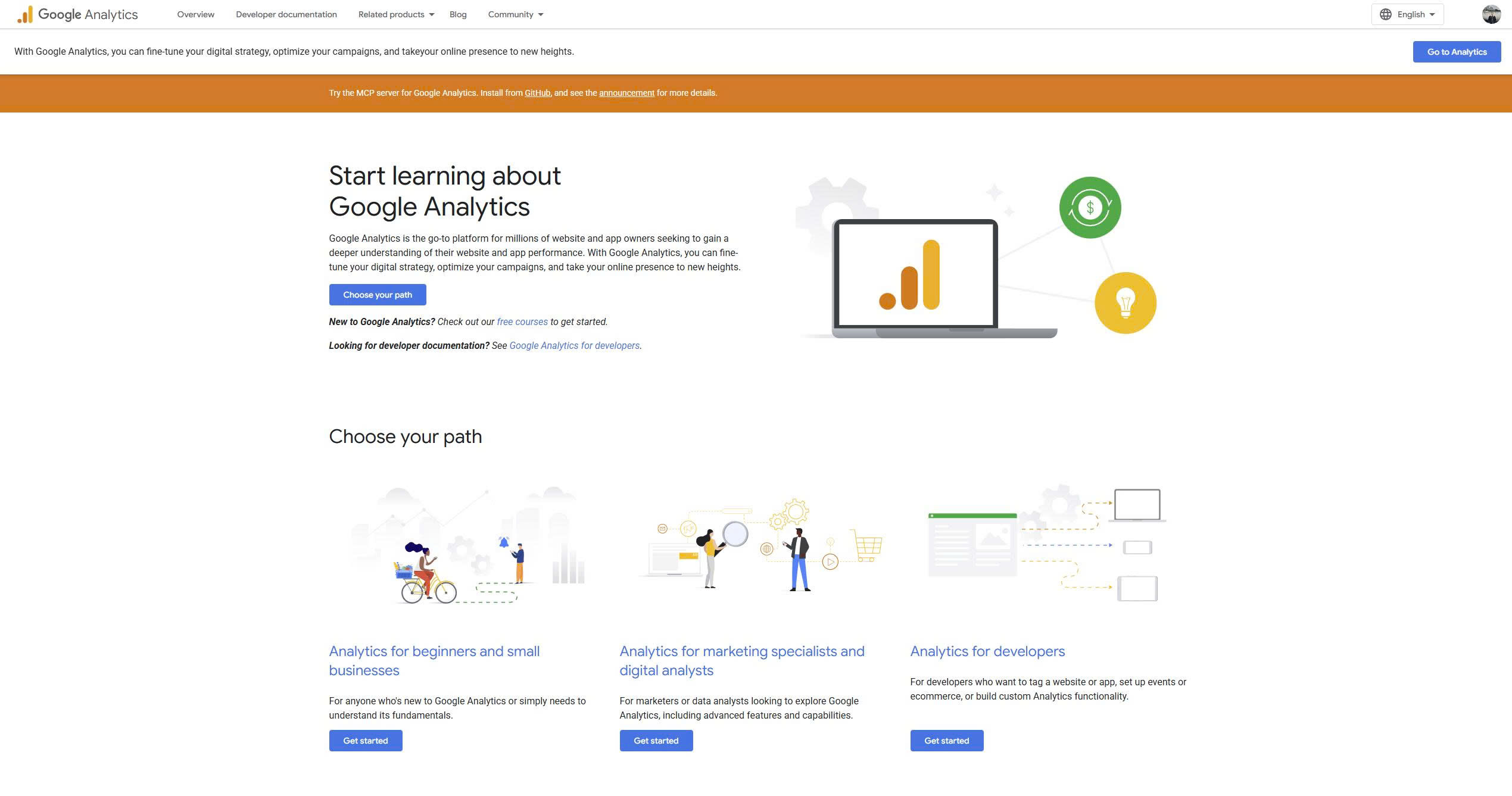
Google Analytics 4 is a behavioural analytics platform that allows businesses to segment users based on website and app activity. It helps teams understand how users interact with content, funnels, and events across devices. GA4 is commonly used to create audiences for analysis and export them to advertising platforms. It works best as a discovery and insight layer rather than a full activation tool.
GA4 enables marketers to identify high-intent behaviours, drop-off points, and engagement trends. Teams can analyse cohorts over time and understand how different user groups progress through funnels. While it does not send campaigns itself, it plays a critical role in informing targeting strategies. GA4 suits businesses that want behavioural clarity before activation.
Core features
- Behaviour-based audience creation
- Event and funnel segmentation
- Cohort and retention analysis
- Cross-device tracking
- BigQuery integration (GA4 360)
Pricing and Suitability
Google Analytics 4 is available in both a free version and an enterprise-tier paid offering, allowing businesses to start with behavioural segmentation at no cost. The free plan supports audience creation, event tracking, funnels, and cohort analysis, making it suitable for most small and mid-sized teams. For organisations that require unsampled data, advanced analysis, and deeper integration with data warehouses, GA4 360 provides expanded capabilities. However, the enterprise plan comes with a high annual cost, making it out of reach for most SMEs. As a result, GA4 is commonly used as a foundational analytics and segmentation tool rather than a full activation platform.
| Plan | Price | Key Features | Limitations |
| Free | $0 | Behavioural audiences, events, funnels | No native activation |
| GA4 360 | ~$50,000/year | Unsampled data, advanced analysis | Enterprise pricing |
2. HubSpot Marketing Hub
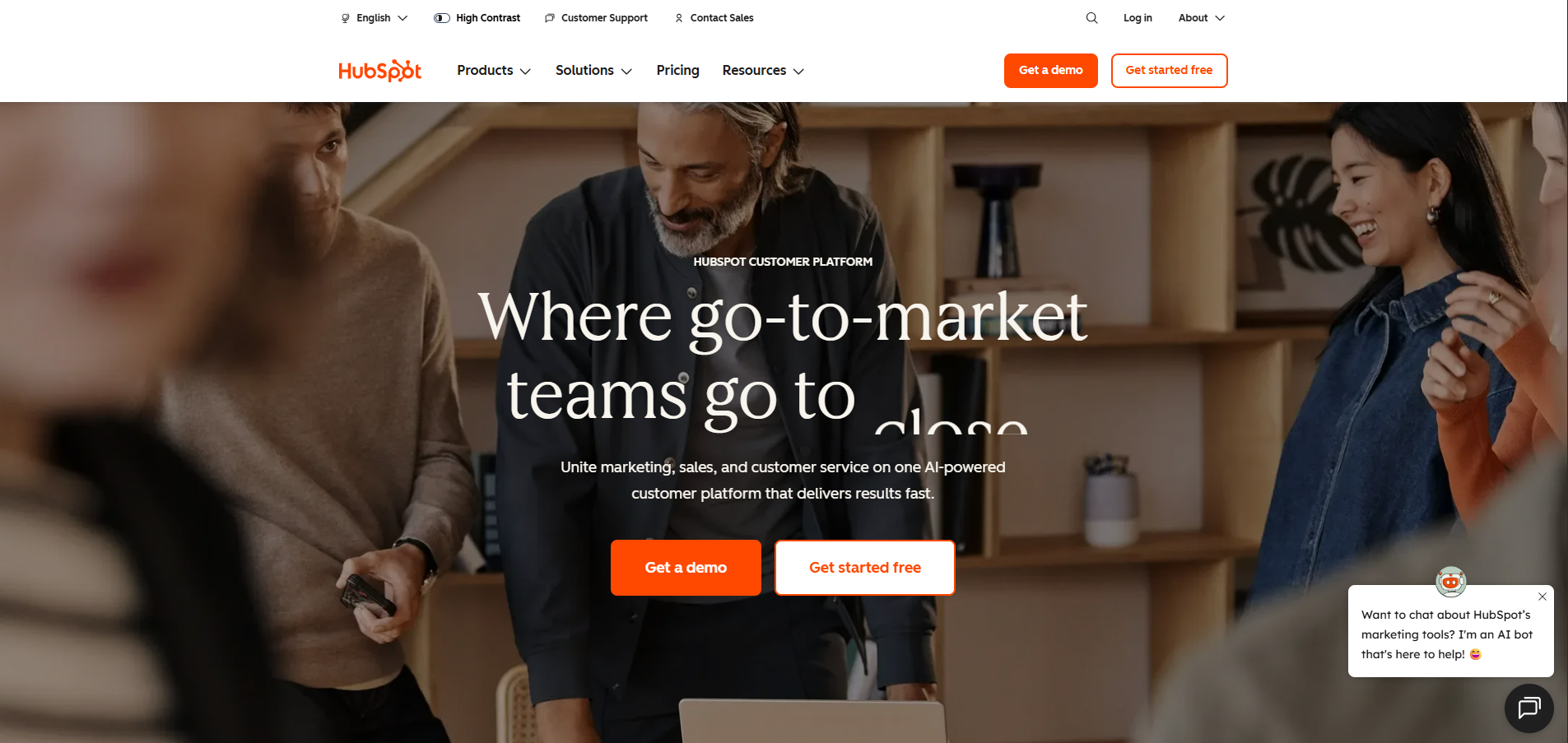
HubSpot Marketing Hub is a CRM-driven platform that enables segmentation based on contact data, behaviour, and lifecycle stages. It allows marketing and sales teams to build dynamic lists that update automatically as contacts change. HubSpot connects segmentation directly to email, workflows, and CRM records. This makes it suitable for lead nurturing and lifecycle marketing.
HubSpot supports both simple and advanced segmentation depending on the plan. Teams can combine form submissions, page views, and CRM properties to refine targeting. It works particularly well for B2B and service-based businesses that rely on structured contact data. However, advanced segmentation and automation are available only on higher-tier plans.
Core features
- Contact and lifecycle segmentation
- Behaviour-based dynamic lists
- CRM-linked audience building
- Lead scoring (higher tiers)
Pricing and Suitability
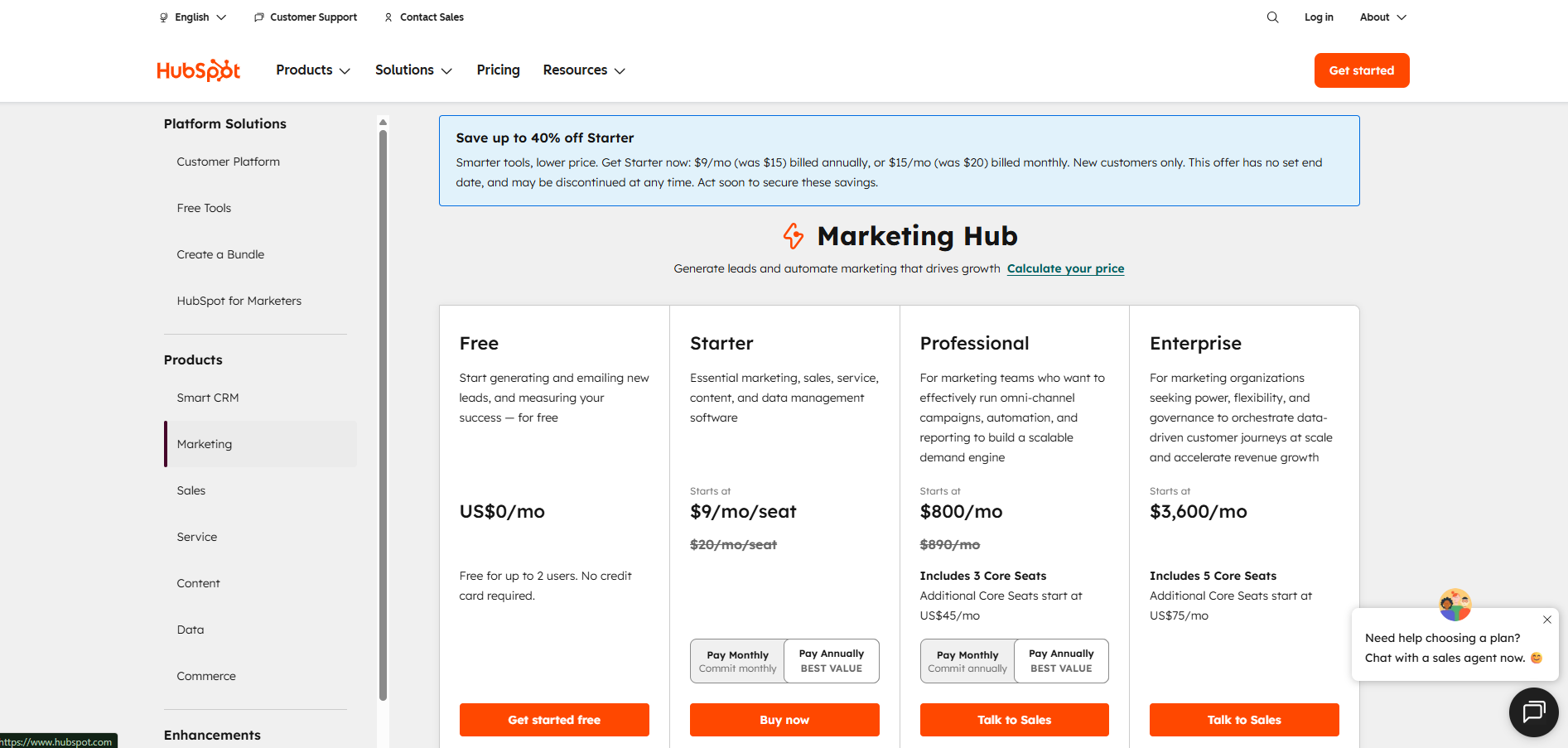
HubSpot Marketing Hub uses a tiered pricing model that scales based on feature depth and automation capability. The free and Starter plans offer basic segmentation through contact properties and simple behavioural tracking, which suits early-stage teams. Advanced segmentation, automation workflows, and lifecycle logic become available at the Professional tier, where costs increase significantly. Enterprise plans introduce predictive scoring and custom events, designed for larger or more complex organisations. Businesses should expect segmentation power to scale directly with price, making HubSpot most suitable when CRM-driven activation is a priority.
| Plan | Price (USD) | Key Features | Limitations |
| Free | $0 | Basic lists, CRM access | No automation |
| Starter | $20/month | Simple segmentation and email | Limited logic |
| Professional | $890/month | Advanced workflows and segmentation | High cost |
| Enterprise | $3,600/month | Predictive scoring and custom events | Overkill for SMEs |
3. Mailchimp
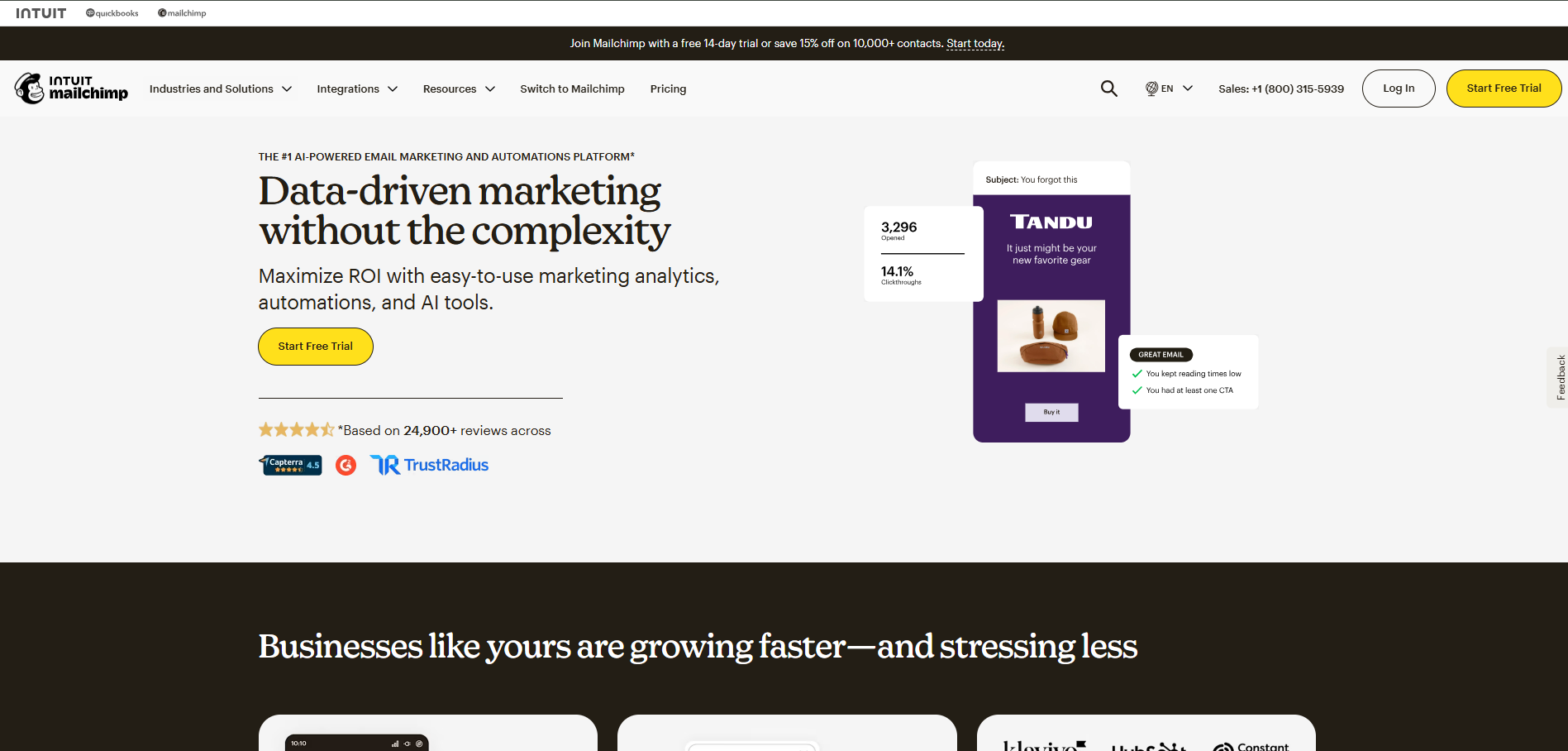
Mailchimp is an email-focused marketing platform that offers audience segmentation based on engagement, purchase history, and customer behaviour. Small and mid-sized businesses widely use it for email campaigns and basic automation. Mailchimp allows teams to tag, group, and target subscribers within a single audience model. Its segmentation capabilities are closely tied to email and e-commerce use cases.
Mailchimp suits teams that prioritise email marketing and simple personalisation. As audiences grow, segmentation becomes more powerful but also more expensive. Advanced segmentation logic and predictive features are available only on higher plans. This makes cost management an important consideration for scaling teams.
Core features
- Audience tags and segments
- Engagement-based targeting
- Purchase and e-commerce segmentation
- Basic predictive insights
Pricing and Suitability
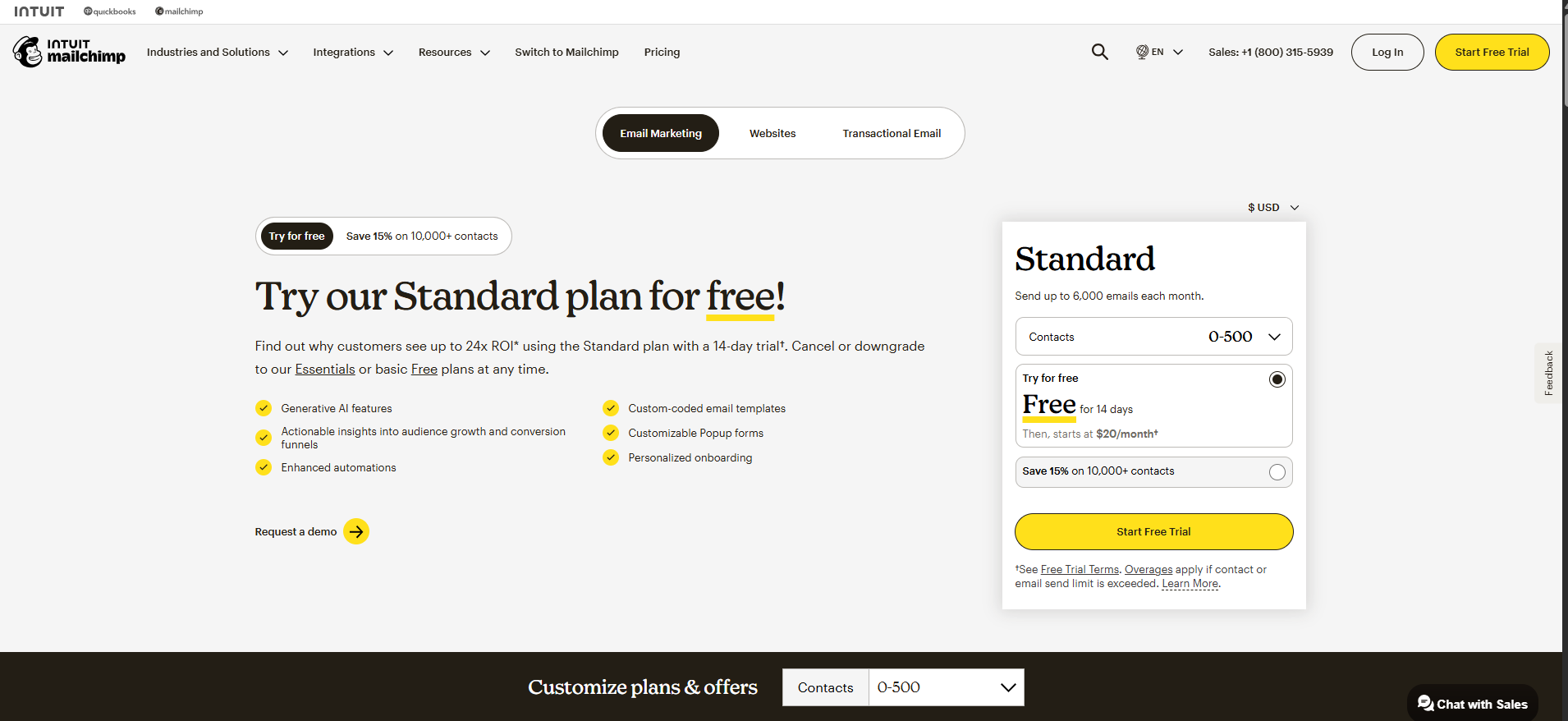
Mailchimp offers multiple pricing tiers that scale with audience size and segmentation complexity. The free plan allows basic tagging and list management but is limited in automation and advanced targeting. Paid plans unlock behavioural and purchase-based segmentation, with the Standard plan serving as the most common choice for growing teams. The Premium tier adds advanced segmentation logic and testing capabilities but introduces a steep price increase. Mailchimp’s pricing structure makes it accessible initially, though costs can rise quickly as lists and requirements grow.
| Plan | Price | Key Features | Limitations |
| Free | $0 | Basic tagging and segmentation | Very limited |
| Essentials | $13/month | Engagement-based segments | Limited logic |
| Standard | $20/month | Behavioural and purchase data | Cost scales |
| Premium | $350/month | Advanced segmentation and testing | Large price jump |
4. Heap
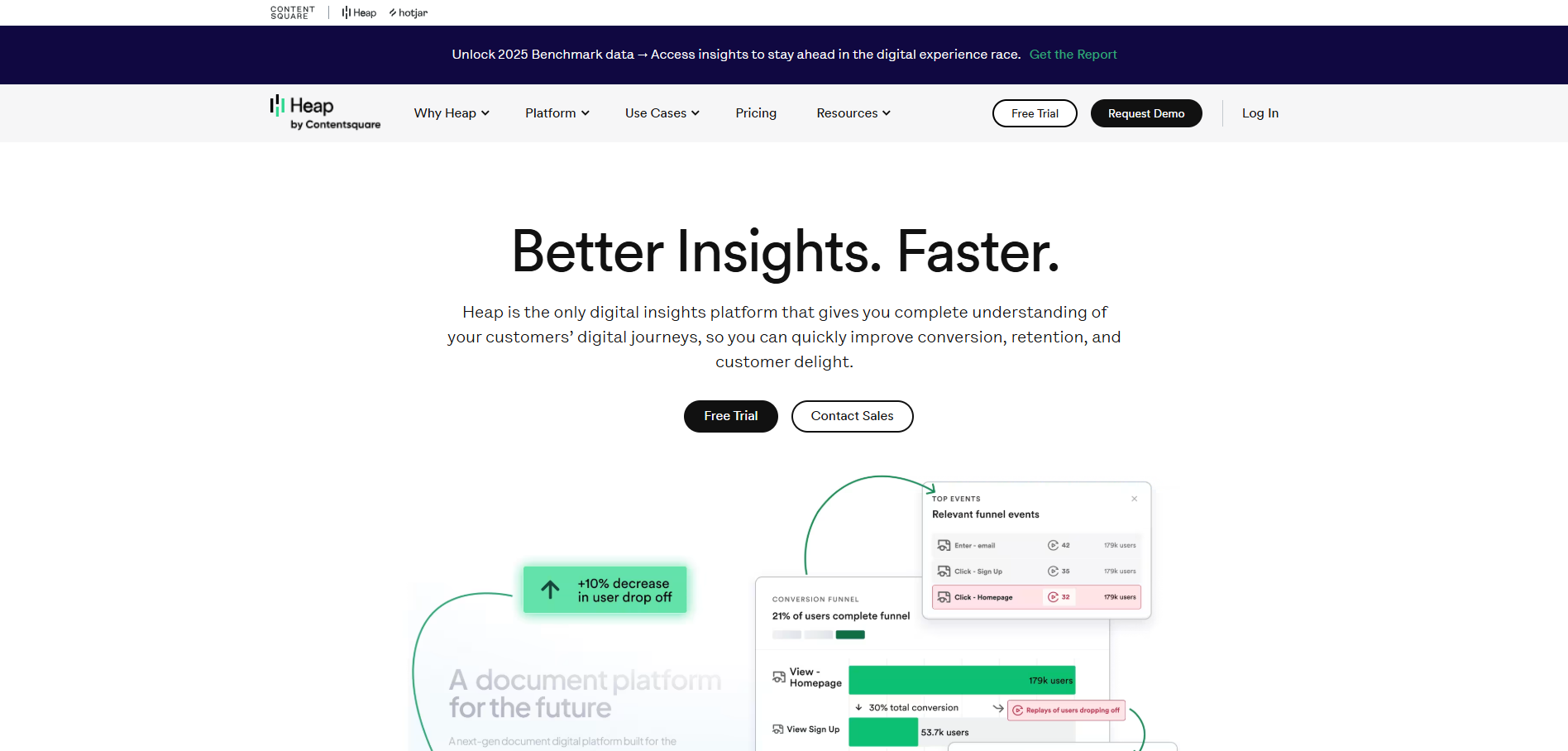
Heap is a product analytics platform that specialises in behavioural segmentation without manual event setup. It automatically captures user interactions and allows teams to define segments retroactively. This makes Heap useful for analysing product usage and customer journeys. Product-led teams rely on Heap to understand how different cohorts behave.
Heap enables segmentation based on actions taken across digital products. Teams can identify friction points, activation behaviours, and retention drivers. While Heap excels at analysis, it does not directly activate audiences for campaigns. It works best alongside marketing or CDP tools.
Core features
- Automatic event capture
- Behavioural cohort segmentation
- Funnel and journey analysis
- Data governance controls
Pricing and Suitability
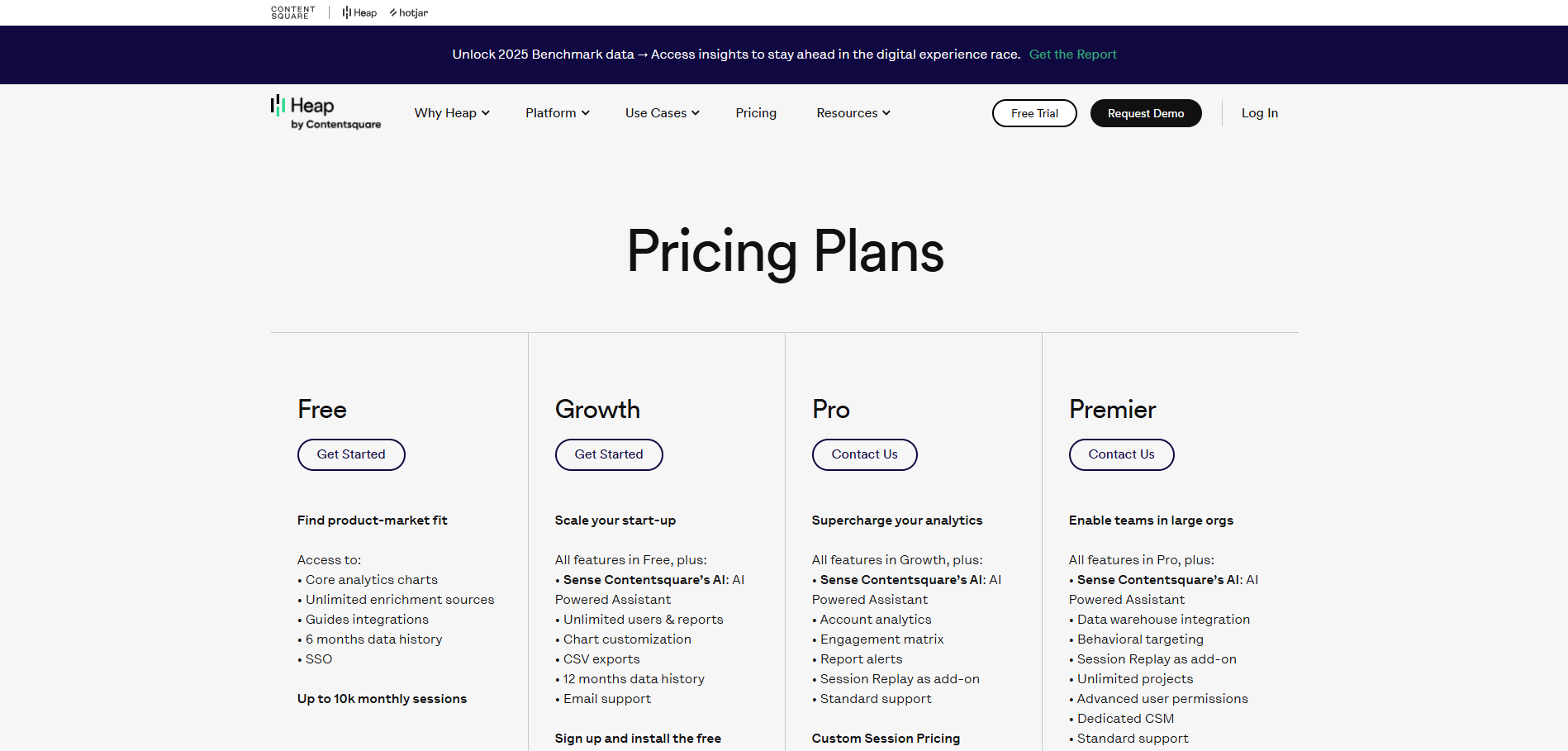
Heap provides a free entry-level plan alongside paid tiers designed for teams that require deeper behavioural analysis. The free plan supports automatic event capture and basic segmentation, making it useful for early product exploration. Paid plans unlock advanced cohort analysis, journey tracking, and governance features, with pricing determined through custom agreements. Because Heap focuses on analytics rather than activation, pricing reflects data depth rather than marketing functionality. It is best suited for product-led teams that prioritise insight over campaign execution.
| Plan | Price | Key Features | Limitations |
| Free | $0 | Auto-capture, basic analysis | Data limits |
| Growth | Custom | Advanced cohorts and journeys | No native activation |
| Pro | Custom | Governance and scale | Sales-led pricing |
5. Contentsquare
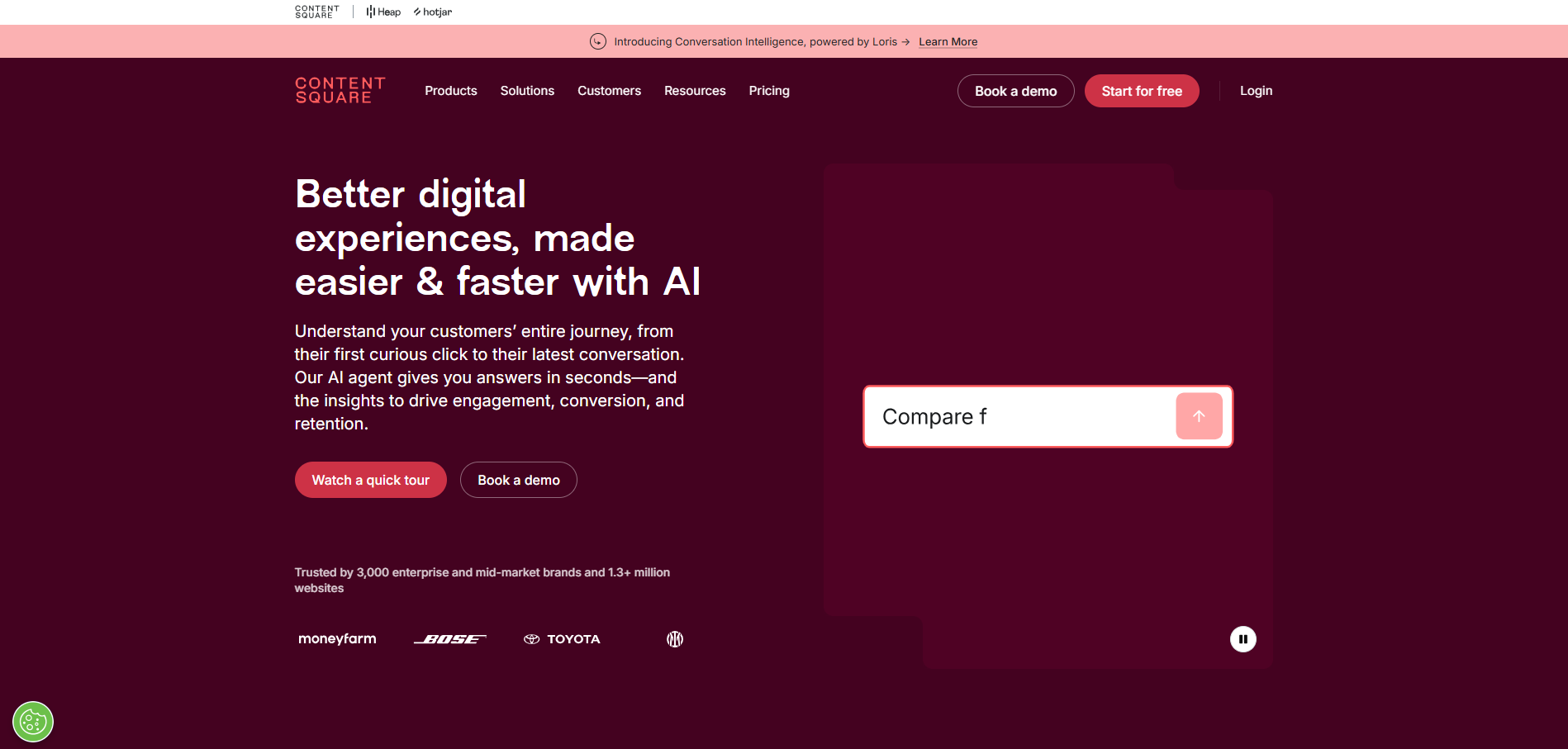
Contentsquare focuses on experience-based segmentation by analysing how users interact with digital interfaces. It uses session replays, heatmaps, and experience scores to group users by behaviour quality. Teams use Contentsquare to identify friction and optimise user journeys. Segmentation is driven by experience signals rather than CRM data.
UX, product, and optimisation teams commonly use this platform. It helps businesses understand why certain segments convert or drop off. Contentsquare is not designed for campaign execution or CRM-centric segmentation. It suits enterprises focused on digital experience optimisation.
Core features
- Session replay and heatmaps
- Experience-based segmentation
- Journey analysis
- Behavioural insights
Pricing and Suitability
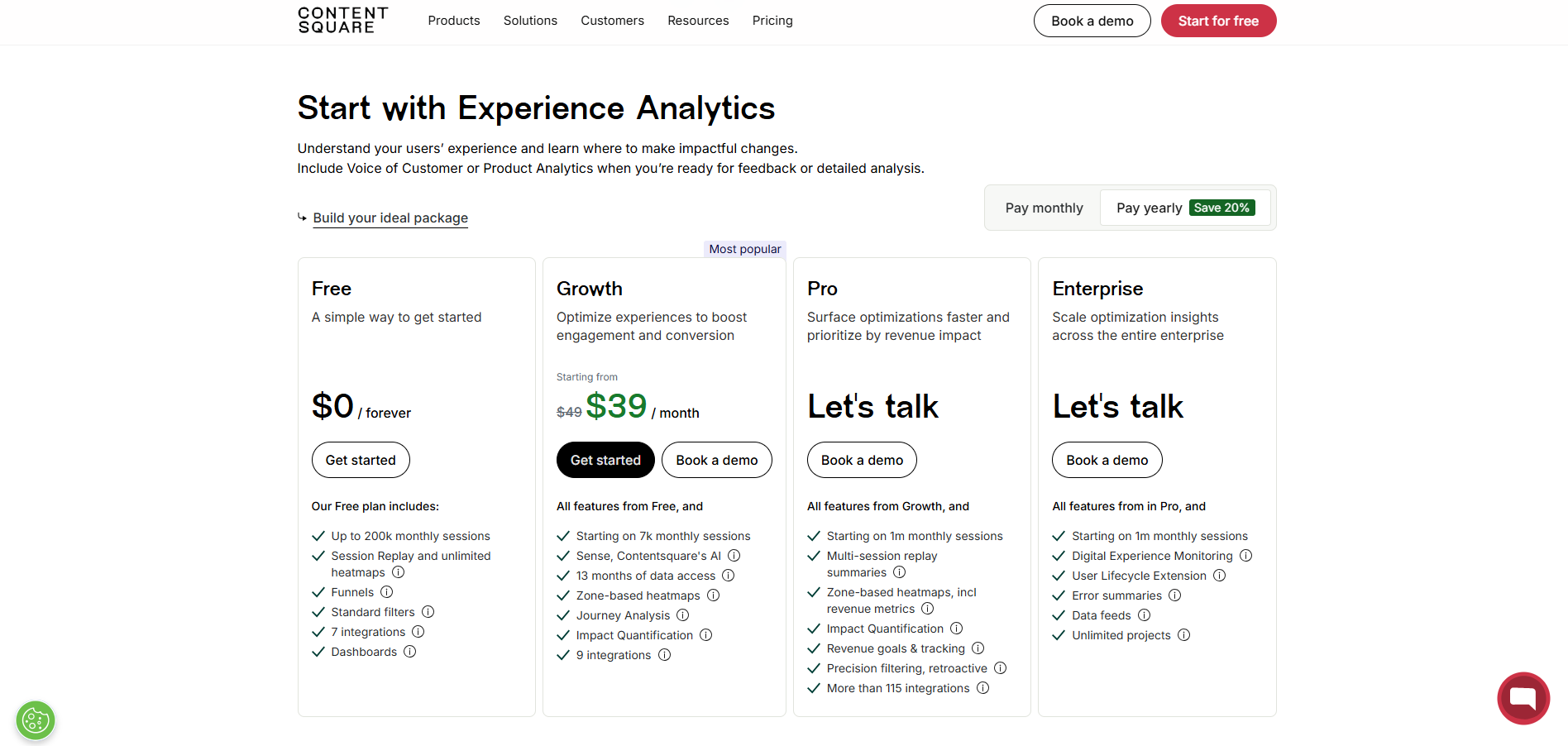
Contentsquare follows a fully custom pricing model tailored to business size and data volume. Entry-level packages provide access to experience analytics and behavioural segmentation based on session quality and interaction patterns. Higher tiers unlock more advanced journey analysis and optimisation capabilities for large digital properties. Due to its enterprise-oriented pricing, Contentsquare is typically adopted by mid-market and large organisations. It is positioned as a premium experience analytics tool rather than a general-purpose segmentation platform.
6. Twilio Segment
Twilio Segment is a customer data platform that unifies data from multiple sources into a single customer profile. It enables segmentation based on traits, events, and identity-resolved users. Segment acts as a central hub for sending audiences to marketing, advertising, and analytics tools. This makes it a strong choice for data-driven organisations.
Segment supports real-time audience updates and cross-tool activation. Teams can build consistent segments across channels without duplicating logic. However, Segment requires a mature data stack and technical setup. It suits businesses that prioritise data governance and scale.
Core features
- Unified customer profiles
- Identity resolution
- Real-time audience sync
- Broad integrations
Pricing and Suitability
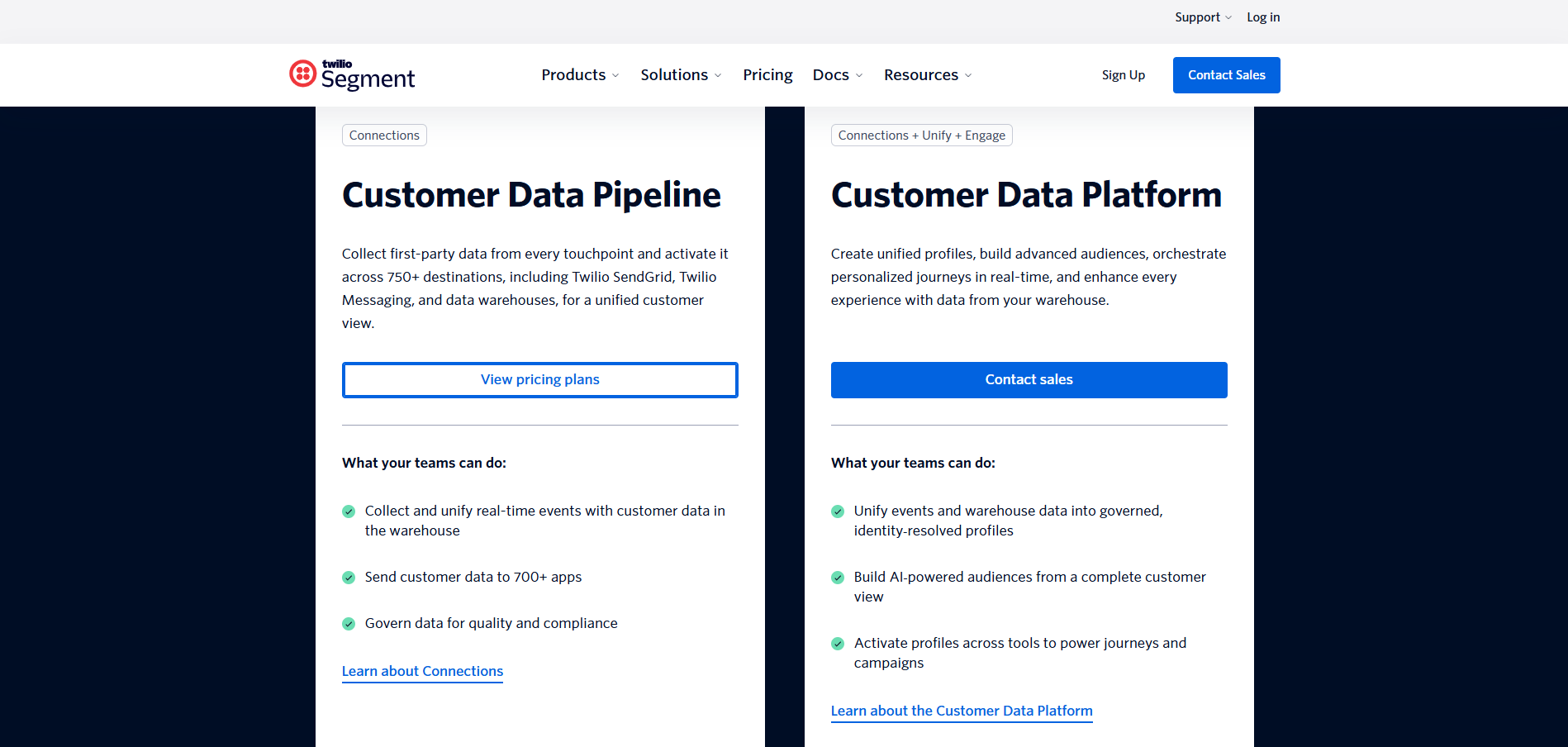
Twilio Segment offers a tiered pricing structure that reflects data volume, integration needs, and governance requirements. The free plan allows teams to experiment with basic data pipelines and audience traits at a limited scale. Paid plans introduce identity resolution, real-time audience updates, and activation across multiple tools. As pricing increases, Segment becomes a central orchestration layer for customer data rather than a standalone segmentation tool. It is most suitable for organisations with a mature data stack and cross-channel activation needs.
| Plan | Price | Key Features | Limitations |
| Free | $0 | Basic pipelines | Event limits |
| Team | ~$120/month | Traits and profiles | Setup complexity |
| Business | Custom | Advanced identity and activation | Higher cost |
| Enterprise | Custom | Governance and scale | Enterprise pricing |
7. Amplitude
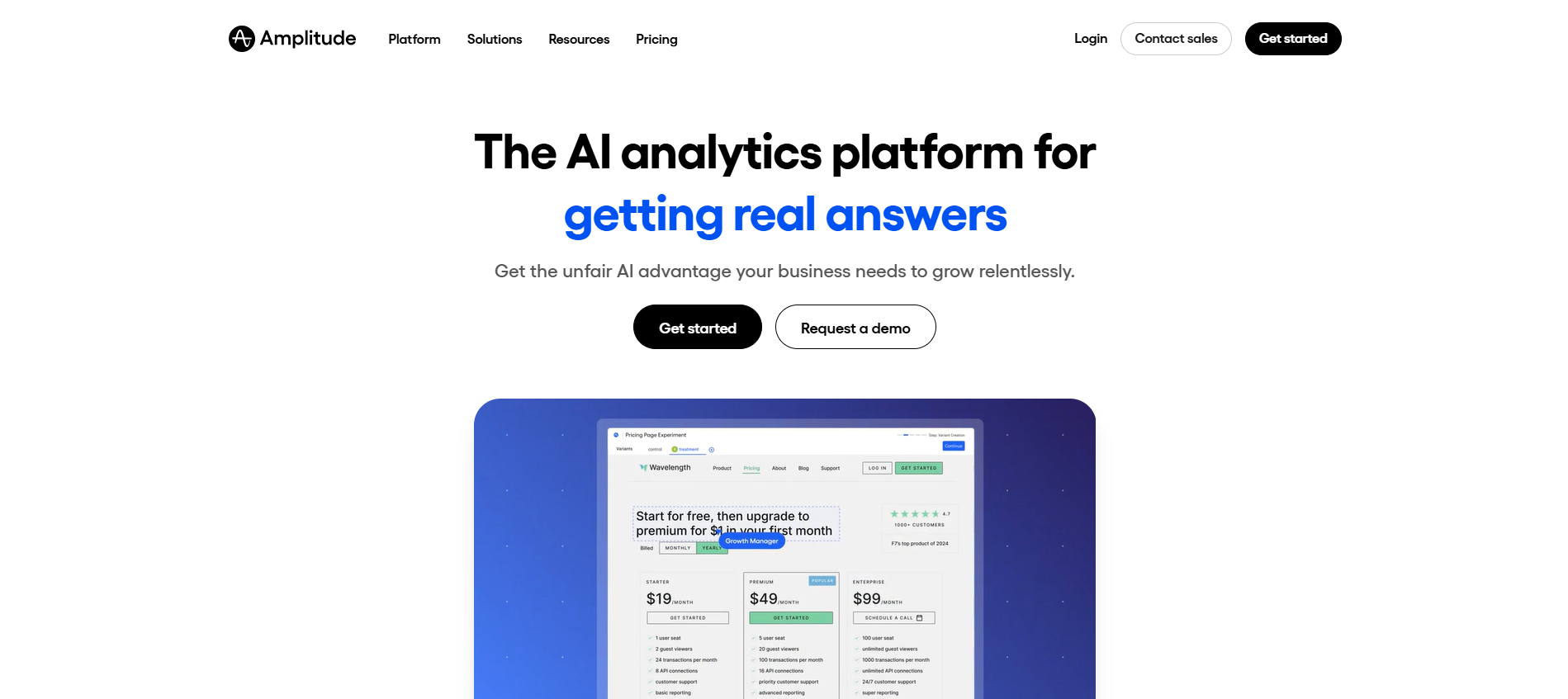
Amplitude is a product analytics platform designed for advanced behavioural and cohort segmentation. It helps teams understand user journeys, retention patterns, and growth drivers. Amplitude is commonly used in product-led and SaaS environments. Segmentation is central to its analytics and experimentation capabilities.
Amplitude enables teams to build predictive cohorts and analyse long-term behaviour trends. It supports experimentation and insight-driven decision-making. While powerful, it requires analytical maturity to use effectively. Activation often depends on integrations with other tools.
Core features
- Behavioural cohorts
- Retention and funnel analysis
- Predictive insights
- Experimentation support
Pricing and Suitability
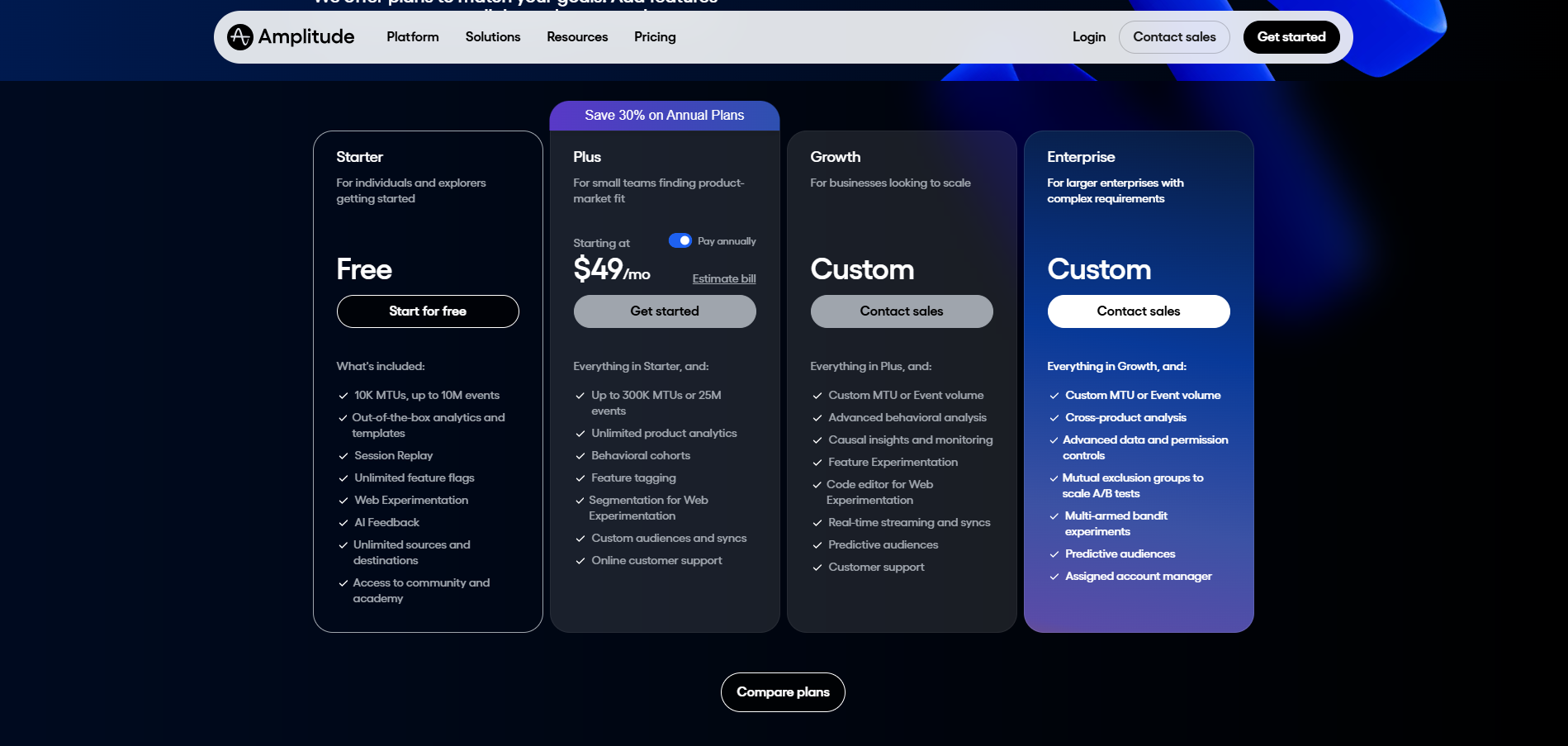
Amplitude provides a free starter plan alongside paid tiers that expand analytical depth and predictive capability. The free plan supports core behavioural segmentation and funnel analysis, which is sufficient for early product insights. Paid plans introduce advanced cohorts, predictive analytics, and experimentation features designed for growth-focused teams. Enterprise tiers support large-scale data analysis and governance but require custom pricing. Amplitude’s pricing model aligns with teams that treat segmentation as a strategic input to product and growth decisions.
| Plan | Price | Key Features | Limitations |
| Starter | Free | Core analytics | Data caps |
| Plus | $49/month | Advanced cohorts | Limited activation |
| Growth | Custom | Predictive insights | Learning curve |
| Enterprise | Custom | Full analytics suite | Cost |
How to Choose the Right Audience Segmentation Tool
Choosing the right audience segmentation tool depends on business goals, data maturity, and activation needs.
- Data sources and integrations
- Segmentation depth and logic
- Activation requirements
- Real-time vs batch updates
- Reporting and measurement needs
- Cost and scalability
Clear alignment between tool capability and business use case leads to better outcomes.
Audience Segmentation Tools Comparison Matrix
| Tool | Primary Segmentation Type | Best For | Activation Capability | Data Depth | Setup Complexity |
| Google Analytics 4 | Behavioural | Traffic & funnel analysis | Low | Medium | Low |
| HubSpot Marketing Hub | CRM & lifecycle | Lead nurturing & CRM workflows | High | Medium | Medium |
| Mailchimp | Email & engagement | Email campaigns | High (email) | Low–Medium | Low |
| Heap | Product behaviour | Usage & journey analysis | Low | High | Medium |
| Contentsquare | Experience-based | UX & conversion optimisation | Low | High | Medium–High |
| Twilio Segment | Identity-based | Cross-tool activation | Very High | Very High | High |
| Amplitude | Predictive & cohort | Retention & growth analysis | Medium (via integrations) | High | Medium |
Conclusion
Audience segmentation tools help businesses move from generic marketing to precision-driven engagement. By selecting tools that align with data sources, team capabilities, and activation needs, organisations can improve relevance and performance. Segmentation is no longer a tactical feature but a strategic foundation. In 2026, businesses that segment effectively are better positioned to grow sustainably and compete with clarity.