










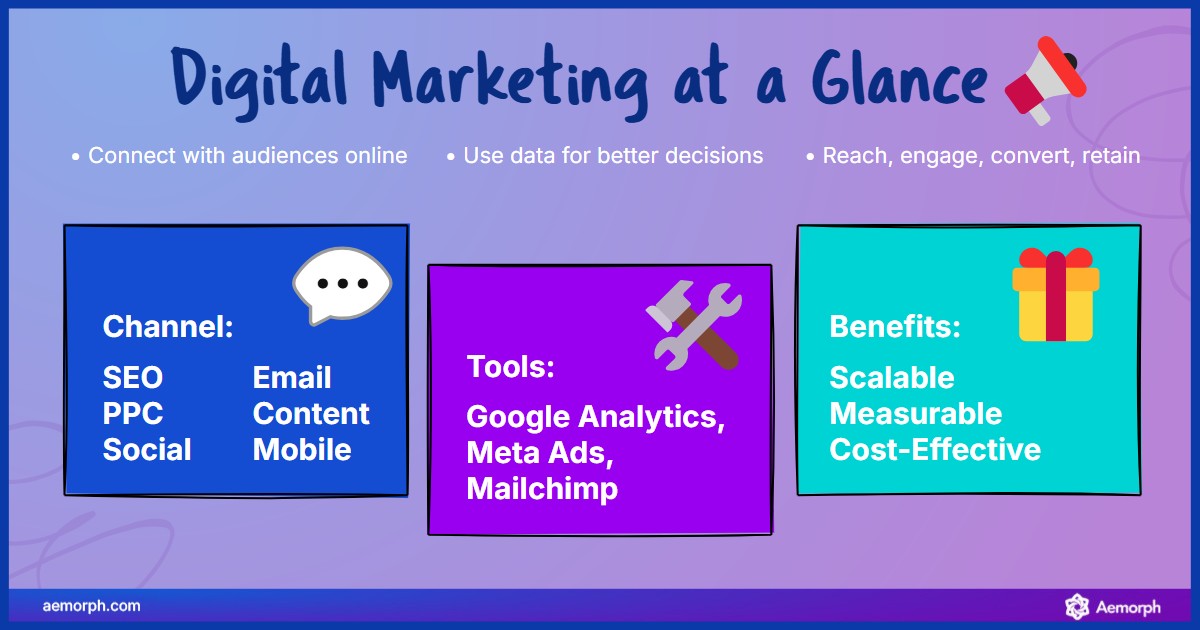
Digital marketing is the use of digital channels to promote products, services, and brands directly to target audiences. It enables businesses to connect with potential customers online and through other digital platforms such as websites, social media, email, and search engines. Since the early 1990s, digital marketing has evolved from basic online ads to a vital component of modern business strategies.
For SMEs and larger enterprises alike, digital marketing offers cost-effective and scalable methods to reach audiences, build brand awareness, and drive measurable results. This guide outlines the core types, strategic functions, and tools involved in digital marketing, and why it remains vital in today’s business environment.
What Is Digital Marketing?
Digital marketing refers to the strategies used to market a product or service using digital technologies. It includes both online formats (web, email, social) and broader digital formats such as mobile messaging or digital TV, unlike traditional marketing, which relies on print or broadcast media. Digital marketing leverages interactivity, real-time engagement, and advanced data analysis.
Digital marketing encompasses more than simple advertising. It includes targeting, measuring, and adapting strategies based on customer behaviour and performance metrics. Since the first clickable ad in 1994, the landscape has evolved into a dynamic ecosystem where businesses can reach users across multiple touchpoints.
Key Types of Digital Marketing Channels
Businesses rely on several digital channels to reach and convert their audiences. Each channel serves specific objectives and stages of the marketing funnel.
Search Engine Optimisation (SEO)
SEO is the process of optimising website content and structure to rank higher in organic search engine results. It includes keyword optimisation, backlink development, mobile-friendly design, and content quality. SEO enhances visibility and fosters long-term traffic growth.
Search Engine Marketing (SEM) / Pay-Per-Click (PPC)
SEM involves placing paid ads in search engine results, typically using platforms like Google Ads. Businesses bid on keywords and only pay when a user clicks the ad. PPC delivers immediate visibility and is effective for time-sensitive campaigns or highly competitive keywords.
Content Marketing
Content marketing focuses on creating valuable, relevant content to attract and retain audiences. Formats include blogs, videos, case studies, and ebooks. It supports SEO, builds brand authority, and nurtures customer trust over time.
Social Media Marketing
Social media marketing utilises platforms like LinkedIn, Instagram, and TikTok to promote content, interact with customers, and build brand communities. It includes both organic engagement and paid advertising with precise audience targeting options.
Email Marketing
Email marketing sends targeted messages to subscribers, customers, or prospects. It’s used for newsletters, promotions, and automated sequences. Email offers strong ROI, direct communication, and effective segmentation.
Affiliate Marketing
Affiliate marketing uses third-party partners who promote products or services in exchange for a commission. It’s performance-based and scalable, ideal for e-commerce and online services.
Influencer Marketing
Influencer marketing involves collaborating with creators or thought leaders who have established trust with niche or mass audiences. Brands leverage their credibility to promote products or services through authentic, engaging content on platforms like Instagram, TikTok, and Lemon8.
Mobile & Display Advertising
Mobile marketing reaches users via SMS, apps, or mobile web. Display advertising includes visual ads (banners, videos) on websites and apps. These formats raise brand awareness and can retarget users based on behaviour.
How Digital Marketing Works
Digital marketing follows a structured lifecycle that guides potential customers from discovery to long-term loyalty. This journey is typically divided into four main stages:
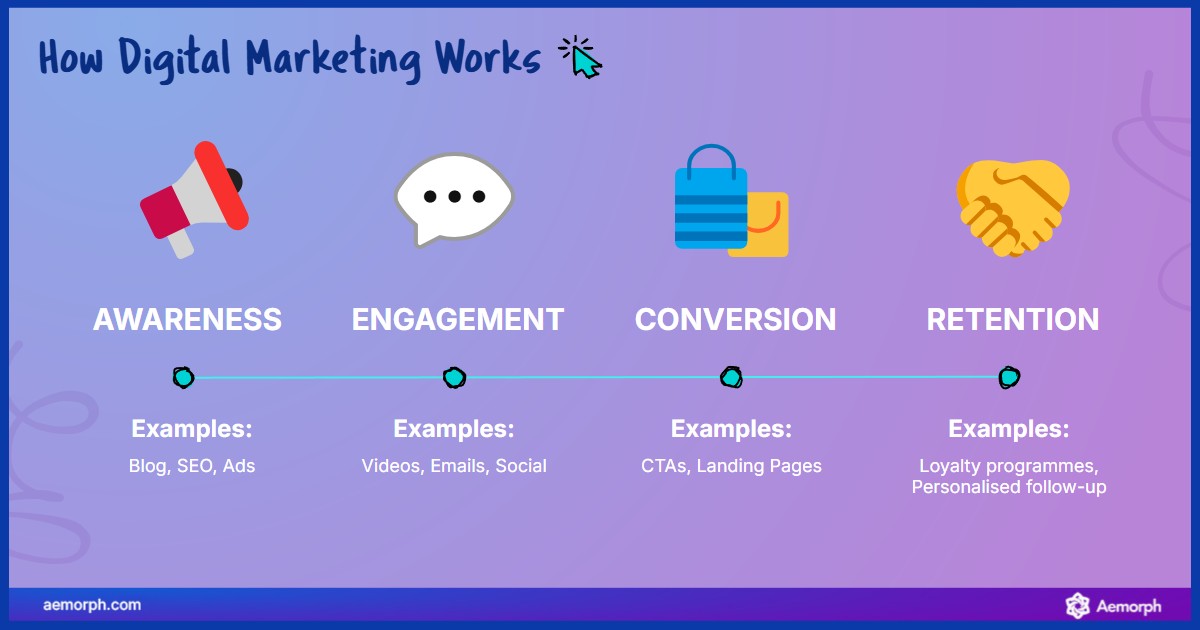
- Awareness: At this stage, the aim is to introduce the brand to new audiences. This is often achieved through blog posts, social media, search engine visibility, and online advertising.
- Engagement: Once users are aware of the brand, the goal is to build interest. Businesses might use videos, email newsletters, or interactive content to keep users engaged and encourage them to explore more.
- Conversion: This is the point where an interested user becomes a customer. Clear calls to action, streamlined checkout processes, and targeted messaging support this stage.
- Retention: After a customer has made a purchase, the focus is on keeping them engaged. Loyalty programmes, personalised content, and post-sale communication help maintain the relationship.
Throughout this lifecycle, data collection and analytics play a key role. Businesses monitor user interactions and behaviours to improve targeting and content strategies. Automation tools, such as triggered emails or remarketing ads, enhance the customer experience and improve efficiency.
A consistent brand presence is essential across channels. Whether it’s a website, social media page, or email newsletter, messaging should feel unified and trustworthy.
Effective digital marketing is also supported by strong targeting strategies, including:
- Demographics – Age, gender, location, occupation.
- Behaviour – Browsing habits, content interaction, purchase history.
- Preferences – Stated interests, previous choices, engagement patterns.
By using the right tools and strategies at each stage, businesses can move users smoothly through the funnel and build lasting relationships.
Benefits of Digital Marketing for SMEs
Digital marketing offers a range of advantages for small and medium-sized enterprises (SMEs), especially in terms of accessibility, flexibility, and measurable growth.
One of the key strengths of digital channels is their ability to support both global reach and local focus. A business can promote itself worldwide while still targeting audiences based on location-specific preferences or needs.
Some of the primary benefits for SMEs include:
- Low cost of entry: Digital platforms are often free or low-cost to join, making them accessible to businesses with limited budgets.
- Scalable campaigns: Marketing efforts can be increased or adjusted as the business grows or market demand changes.
- Measurable results: Metrics such as website visits, click-through rates, leads, and conversions help assess campaign performance in real time.
- Precise audience targeting: Businesses can segment their audience based on behaviour, interests, and demographics, resulting in more relevant content delivery.
- Real-time feedback and adjustments: Unlike fixed campaigns, digital marketing allows for ongoing changes based on user data and response.
- Trust and credibility: By publishing consistent, helpful content and engaging with users regularly, SMEs can build lasting customer relationships.
These benefits make digital marketing a powerful tool for SMEs looking to compete, grow, and connect with audiences in a meaningful way.
Digital Marketing vs Traditional Marketing
To better understand the value of digital strategies, it is helpful to look at how they differ from traditional marketing methods:
| Attribute | Digital Marketing | Traditional Marketing |
| Cost | Low and scalable | High and fixed |
| Targeting | Behavioural, demographic | Broad/geographic |
| Metrics | Real-time analytics | Limited tracking |
| Reach | Global | Local/National |
| Engagement | Interactive (comments, shares) | One-way messaging |
While traditional marketing still plays a role in certain industries, digital channels offer greater precision, flexibility, and responsiveness.
Tools That Power Digital Marketing
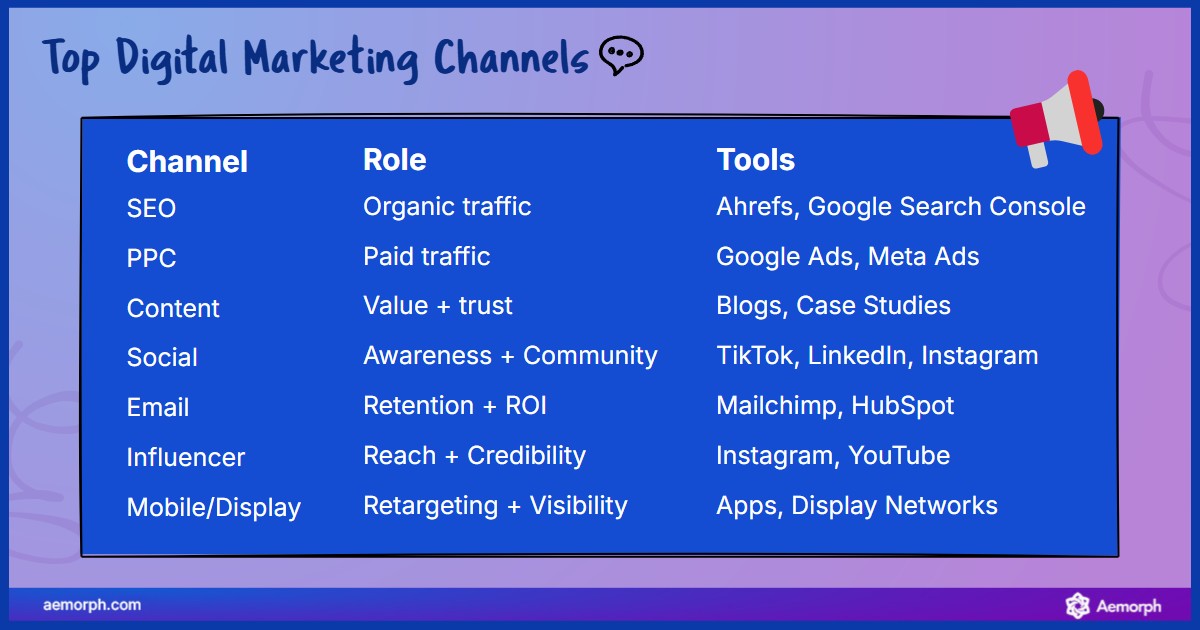
A variety of tools support the implementation of digital marketing strategies. These tools help businesses analyse data, manage content, and connect with customers more effectively.
Performance and paid media tools include:
- Google Analytics: For tracking website traffic and user behaviour.
- Google Ads: For managing paid search campaigns.
- Facebook Ads Manager: For creating and monitoring social media advertising.
Content creation and website management platforms include:
- Canva: For designing marketing visuals.
- Adobe Creative Suite: For advanced graphic and video production.
- WordPress: For website and blog content management.
Email and marketing automation tools include:
- Mailchimp, HubSpot, and ActiveCampaign: For automating email campaigns and nurturing leads.
Social media management tools include:
- Hootsuite and Buffer: For scheduling posts and monitoring engagement across platforms.
In addition, CRM (Customer Relationship Management) and Customer Data Platforms (CDPs) such as Salesforce and Zoho help businesses manage customer information and personalise marketing efforts at scale.
Current Trends Shaping the Future of Digital Marketing
The digital marketing landscape continues to evolve rapidly. For SMEs, staying aware of emerging trends is essential for building sustainable, future-ready strategies.
Several innovations and shifts are already reshaping how businesses connect with audiences:
- Short-form video dominance – Platforms such as Instagram Reels, YouTube Shorts, and TikTok have changed content consumption habits. These formats encourage high engagement and are ideal for brand storytelling in quick, digestible formats.
- AI and automation in campaign planning – Tools powered by artificial intelligence help businesses automate repetitive tasks, personalise content, and forecast campaign outcomes. This leads to more efficient use of time and resources.
- Voice and visual search – With the increased use of voice assistants like Siri and visual search tools like Google Lens, content must be optimised for conversational queries and image-based discovery.
- Cookieless marketing and privacy compliance – As third-party cookies are phased out, businesses must focus on collecting first-party data and ensuring compliance with privacy regulations. Transparency and user trust are more important than ever.
- Augmented and virtual reality (AR/VR) – While still in early adoption stages, AR/VR is beginning to offer immersive brand experiences. SMEs exploring these technologies can stand out and engage audiences in new, interactive ways.
Being aware of these trends allows SMEs to adapt early and maintain a competitive edge in their digital marketing efforts.
Getting Started with Digital Marketing
Starting a digital marketing strategy can seem overwhelming, but taking a structured, step-by-step approach helps simplify the process.
Here is a basic framework SMEs can follow:
- Define your business goals
Be clear about what you want to achieve – whether it’s increasing brand awareness, generating leads, or driving online sales. - Select 2–3 starting channels.
Begin with a manageable mix of platforms. A common starting point includes a business website, search engine optimisation (SEO), and one social media channel suited to your audience. - Create or audit your digital assets.
Make sure your website is mobile-friendly, your social profiles are complete, and your content aligns with your brand message. - Set up basic analytics and conversion tracking.
Use tools like Google Analytics and Meta Pixel to track how users interact with your site and where conversions occur. - Start small and tes.t
Launch initial campaigns with modest budgets. Measure the results, learn from the data, and refine your strategy over time.
By focusing on fundamentals and building gradually, SMEs can create a strong digital foundation that supports long-term growth.
Why Digital Marketing Matters More Than Ever
Digital marketing continues to prove its value as one of the most accessible and adaptable strategies for business growth. For SMEs, it offers a clear path to increase visibility, generate leads, and retain loyal customers without requiring large budgets.
Whether you’re aiming to reach local clients or expand to new markets, digital platforms provide the tools and insights needed to grow confidently.