


Affiliate marketing is a performance-based marketing strategy where businesses reward third-party publishers, known as affiliates, for generating traffic, leads, or sales through promotional content. This model combines accountability with scalability, allowing companies to pay only for verified results while enabling affiliates to earn commissions by recommending products they trust.
The global affiliate marketing sector continues to grow rapidly, with its market value projected to exceed $17 billion in 2025 and forecasted to approach nearly $28 billion by 2027. This reflects its rising importance in performance-based digital marketing strategies.
In this article, you’ll learn how affiliate marketing functions as a collaborative ecosystem involving advertisers, affiliates, and consumers and how it helps businesses achieve cost-effective growth, expand their audience reach, and build trust through credible recommendations. By understanding the structure and strategic value of affiliate partnerships, businesses can unlock a sustainable channel that supports visibility, conversion, and long-term performance.
Understanding Affiliate Marketing

Affiliate marketing operates through a network of partners working toward the same goal: expanding reach and driving sales through targeted promotion. Advertisers provide products or services, affiliates create the promotional material, and consumers make purchases after engaging with that content.
This partnership relies on technology that tracks clicks, conversions, and customer journeys to ensure accurate attribution. Successful affiliate marketing depends on the relationship between transparency, trust, and data-driven performance. It allows businesses to scale marketing activities without increasing internal resources or media budgets.
Core components of affiliate marketing:
- Advertisers: Companies offering products or services that compensate affiliates for generating sales or leads.
- Affiliates: Independent creators, bloggers, or organisations who use their platforms to promote offers.
- Consumers: Individuals who engage with affiliate content and complete purchases or actions through tracked links.
This ecosystem thrives because every participant benefits. Affiliates create authentic content that informs or inspires, consumers receive recommendations that match their interests, and businesses gain verified results backed by measurable data.
The Benefits of Affiliate Marketing for Businesses
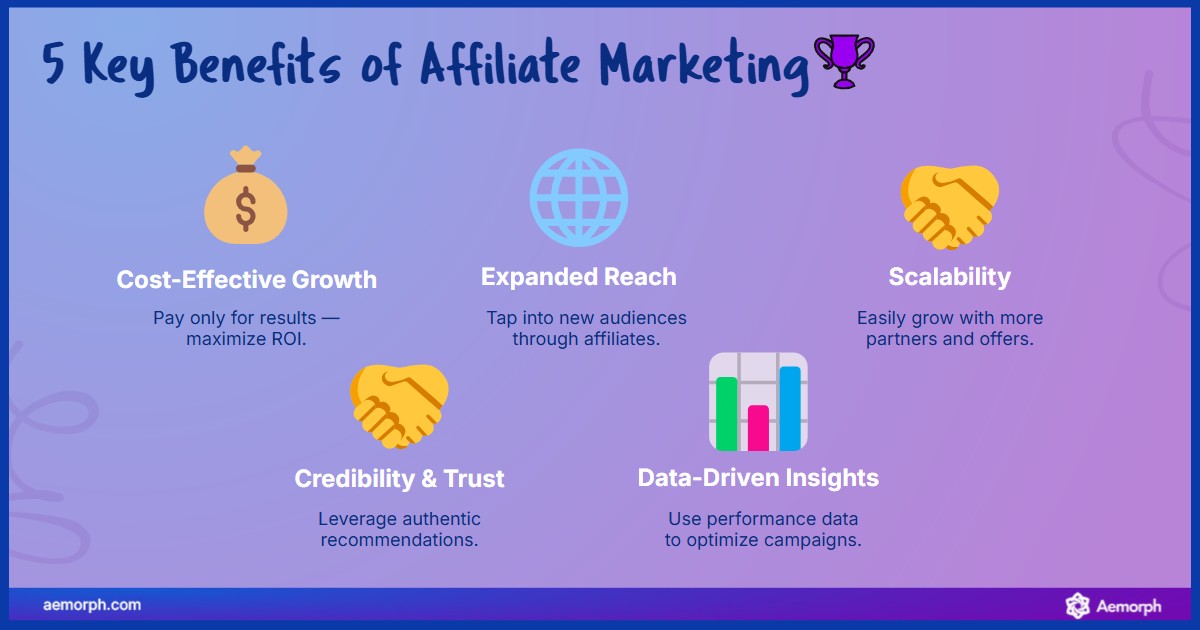
Affiliate marketing provides a combination of reach, credibility, and performance that traditional advertising often struggles to match. Its structure makes it especially valuable for small and mid-sized enterprises seeking sustainable, scalable growth.
1. Cost-Effective Growth
Affiliate marketing allows companies to control spending by paying only for proven outcomes, such as sales or qualified leads. This eliminates wasted ad spend and ensures every dollar contributes to a measurable return.
Before any payment is made, the result must be achieved, providing businesses with both accountability and financial efficiency. For SMEs, this performance-based model offers the flexibility to start small and scale once results become consistent.
Main advantages:
- Payments tied directly to verified performance.
- Minimal upfront costs and low financial risk.
- Predictable returns that improve budget management.
This disciplined approach enables businesses to reinvest confidently, knowing every campaign delivers genuine value.
2. Expanded Reach and Brand Visibility
Affiliates open doors to audiences that businesses might otherwise struggle to reach. From niche bloggers and product reviewers to social media influencers, affiliates already have established communities that trust their voice.
Through these partnerships, brands can extend their presence into new markets and demographics, increasing exposure without additional advertising infrastructure. Each affiliate acts as an extension of the brand’s marketing team, offering authentic advocacy to specific audience segments.
Key advantages:
- Broader brand recognition through diverse content channels.
- Access to pre-engaged, loyal audiences.
- Improved visibility across digital platforms and regions.
The ripple effect of this exposure often results in heightened brand awareness and new customer acquisition opportunities that persist beyond individual campaigns.
3. Scalability and Flexibility
Affiliate marketing naturally adapts to the pace and capacity of your business. It’s designed to expand in proportion to success, allowing companies to add new affiliates, experiment with commission structures, or introduce fresh offers without disrupting operations.
For growing businesses, this adaptability makes it a reliable long-term strategy. Campaigns can be scaled up quickly, and performance data makes it easy to identify where additional investment delivers the best results.
Core strengths:
- Simple to expand affiliate partnerships as results grow.
- Flexible reward structures that motivate top performers.
- Easy to align with seasonal or promotional goals.
This scalability gives businesses the agility to compete and evolve, traits that are crucial in fast-changing digital markets.
4. Credibility and Consumer Trust
Affiliates serve as credible messengers who promote brands through authentic recommendations rather than overt advertising. Their endorsements carry influence because they come from individuals or platforms that audiences already trust.
When a respected content creator or reviewer features a product, it adds social proof that strengthens consumer confidence. This authenticity shortens the path from interest to purchase and builds positive brand associations over time.
Primary benefits:
- Enhances brand reputation through trusted advocacy.
- Generates organic engagement driven by audience loyalty.
- Establishes emotional connection and confidence in the brand.
By leveraging affiliates’ credibility, businesses can build deeper, more genuine relationships with consumers—relationships that encourage repeat purchases and long-term loyalty.
5. Data-Driven Decision-Making
Affiliate marketing’s performance tracking provides insights that go far beyond surface-level metrics. Businesses can analyse conversion rates, customer acquisition costs, and lifetime value to refine strategies and invest where the impact is greatest.
This continuous feedback loop allows marketers to identify high-performing affiliates, adjust commission rates, and optimise campaigns for higher returns. The result is smarter spending and faster improvement cycles.
Performance insights include:
- Real-time data on clicks, sales, and conversions.
- Clear understanding of customer behaviour and source value.
- Ability to allocate budget to the most effective partnerships.
The precision of data makes affiliate marketing not just a growth channel but also a strategic feedback tool for improving all other marketing activities.
Integrating Affiliate Marketing Into Your Growth Strategy
Affiliate marketing is a strategic channel that aligns performance with partnership. By leveraging trusted voices and measurable outcomes, businesses can build credibility, reach new audiences, and drive growth without upfront ad spend. Its flexibility makes it ideal for companies aiming to scale efficiently while maintaining brand integrity.
As digital strategies become more integrated, affiliate marketing plays a complementary role alongside other digital marketing strategies like content, SEO, and paid media. It delivers measurable value without requiring a heavy upfront investment.
At Aemorph, we help brands build measurable digital strategies through services like SEO, SEM, and content optimisation, key pillars that support performance channels such as affiliate marketing. By strengthening visibility and on-site engagement, we enable businesses to get the most out of every traffic source, including partnerships.