








AI image generators have become practical business tools. Marketing teams use them to produce campaign visuals faster, reduce design bottlenecks, and maintain brand consistency across channels. For SMEs and leadership teams, these tools support speed, cost control, and scalable content production.
Why AI Image Generator Tools Matter for Business Growth
AI image generator tools help businesses produce marketing visuals without relying fully on in-house designers or external agencies. This shortens production cycles and enables teams to move campaigns from planning to launch more quickly. For SMEs and marketing teams, these tools reduce friction in content creation while maintaining consistent output across channels.
They also enable non-designers to create usable assets for ads, landing pages, social media, and presentations. With minimal setup, teams can respond quickly to campaign needs and adjust visuals without waiting on design resources.
Key business benefits
- Faster turnaround for marketing assets
- Reduced design and outsourcing costs
- Consistent branding across campaigns
- Scalable content production as demand increases
- Better support for testing and creative iteration
From a decision-making perspective, the right AI image generator supports both efficiency and control. Businesses that choose tools with clear licensing, predictable pricing, and easy workflows gain more value over time. This balance helps SMEs maintain quality while scaling content output sustainably.
1. Adobe Firefly
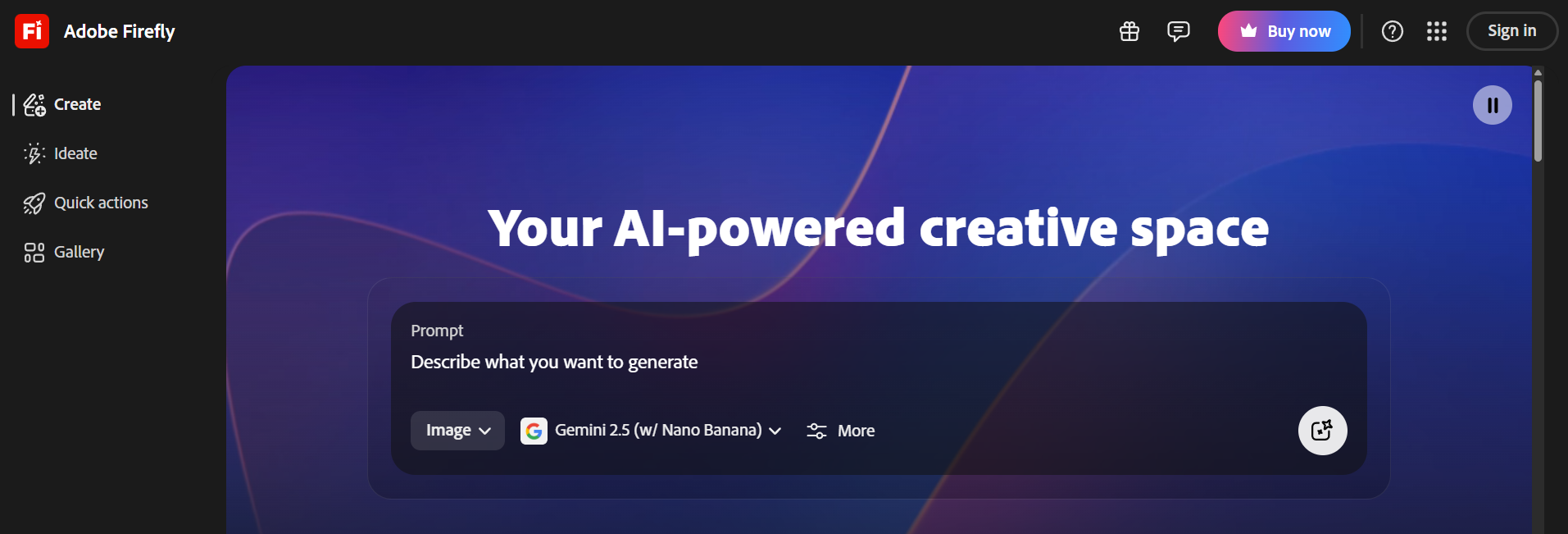
Adobe Firefly is designed for businesses that need reliable, brand-safe image generation at scale. It sits within Adobe Creative Cloud, which makes it suitable for marketing teams already using Photoshop, Illustrator, or other Adobe tools. The platform focuses on licensed training data, which reduces risk for commercial use.
For businesses managing multiple campaigns, Firefly supports consistent visual styles across channels. It works well for teams that value control, compliance, and predictable creative workflows.
Key Features
- Text-to-image generation optimised for marketing use
- Style controls to maintain brand consistency.
- Native integration with Adobe Creative Cloud tools
- Focus on commercially safe outputs.
Pricing and Business Suitability
Adobe Firefly uses a credit-based pricing model. This structure suits teams that can estimate monthly content volume and plan usage accordingly. Higher tiers support frequent asset production but require closer credit management to avoid overuse.
| Plan | Price | Key Features | Limitations |
| Free | $0 | Limited generative credits | Low usage limits |
| Standard | ~$9.99/month | 2,000 credits | Credit cap |
| Pro | ~$19.99/month | 4,000 credits | Still credit-limited |
| Premium | ~$199.99/month | 50,000 credits | High cost |
| Creative Cloud Pro | ~$69.99/month | CC apps plus Firefly | Broader bundle |
2. Canva AI Image Generator
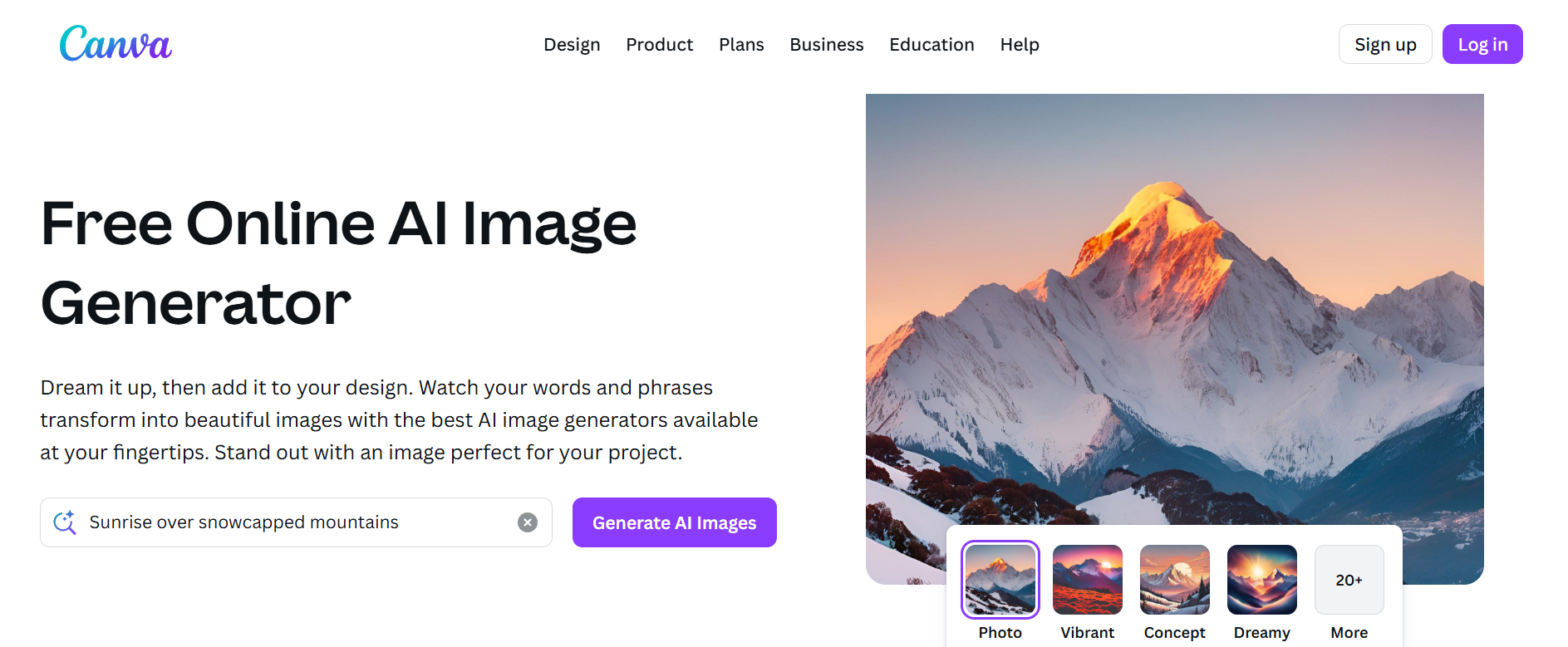
Canva AI targets SMEs and marketing teams that need fast visual output without the complexity of design. The image generator works within Canva’s design environment, allowing teams to move from generation to layout in one place. This reduces handoffs and speeds up campaign execution.
For businesses producing social media posts, ads, and presentations, Canva offers a practical balance between speed and control. It suits teams that prioritise accessibility and collaboration.
Key Features
- AI image generation within templates
- Brand kits for consistent visuals
- Team collaboration and shared assets
- Quick resizing for multiple channels
Pricing and Business Suitability
Canva bundles AI image generation into its broader subscription plans. This works well for SMEs that want a single platform for design, content creation, and basic collaboration. AI usage limits depend on the selected plan.
| Plan | Price | Key Features | Limitations |
| Free | $0 | Basic AI access | Limited usage |
| Pro | ~$10/month per user | Higher AI limits, brand kits | Per-user pricing |
| Teams | ~$100/year per user | Collaboration tools | Minimum users |
| Enterprise | Custom | Advanced controls | Custom pricing |
3. Google Gemini Image Generation

Google Gemini provides image generation as part of its broader AI ecosystem. Businesses typically use it for experimentation, ideation, and integration with other Google services. It fits teams already working within Google’s environment.
Rather than acting as a full creative suite, Gemini supports flexible use cases where image generation complements other AI-driven tasks.
Key Features
- Text-to-image generation via AI Studio
- Multimodal AI capabilities
- Integration with Google platforms
Pricing and Business Suitability
Gemini offers free access with usage limits. Businesses that require higher volumes or automation usually rely on API-based pricing through Google Cloud, which requires technical setup.
| Plan | Price | Key Features | Limitations |
| Free | $0 | Limited image generation | Usage caps |
| API Access | Usage-based | Scalable integration | Technical setup required |
4. Microsoft Copilot Image Generator

Microsoft Copilot integrates image generation into Microsoft 365 applications. It supports teams that create visuals for presentations, internal documents, and basic marketing materials. The environment feels familiar to corporate users.
This tool suits business communication needs rather than full-scale creative production. It works best when image generation supports productivity rather than campaign design.
Key Features
- Image generation via Copilot prompts
- Integration with Word, PowerPoint, and other apps
- Familiar enterprise interface
Pricing and Business Suitability
Copilot image generation comes bundled with Microsoft 365 subscriptions. This makes cost planning simple, but limits flexibility for teams that want standalone creative tools.
| Plan | Price | Key Features | Limitations |
| Microsoft 365 plus Copilot | Subscription-based | Image generation in apps | No standalone plan |
5. Freepik AI Image Generator
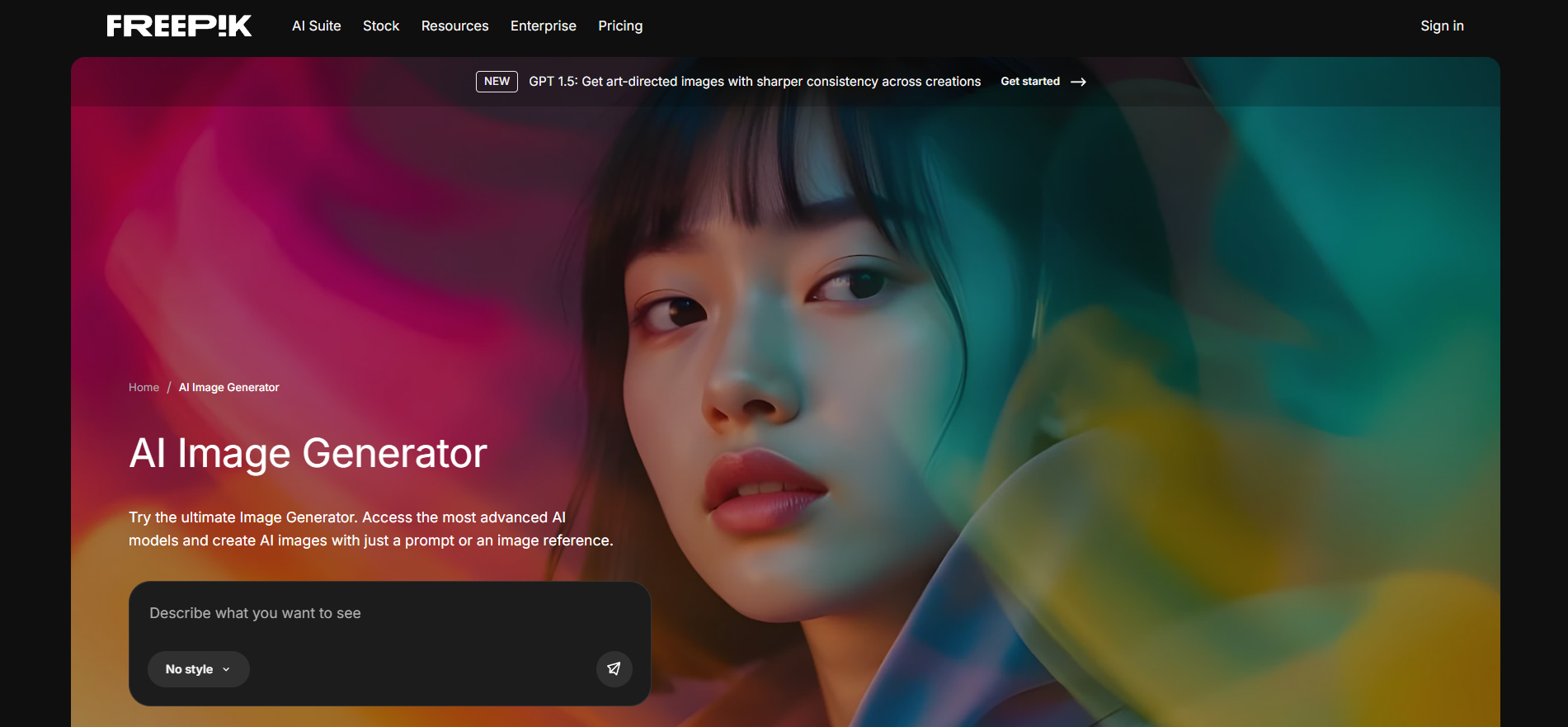
Freepik AI combines image generation with a large stock asset library. Marketing teams and designers use it to create visual variations that align with existing design styles. This helps maintain consistency across campaigns.
It works well for teams that already depend on stock visuals and need faster creative iteration without starting from scratch.
Key Features
- Multiple AI image styles
- Integration with stock assets
- Credit-based generation system
Pricing and Business Suitability
Freepik uses monthly credits, which makes costs predictable for regular use. Higher tiers support larger content volumes but still require monitoring to manage limits.
| Plan | Price | Key Features | Limitations |
| Free | $0 | Limited daily images | Usage caps |
| Essential | ~$7/month | 7,000 credits | Credit limits |
| Premium | ~$12/month | Higher credits | Monthly cap |
| Premium+ | ~$22.50/month | Higher usage | Model limits |
| Enterprise | Custom | Legal and admin tools | Custom pricing |
6. DeepAI Image Generator
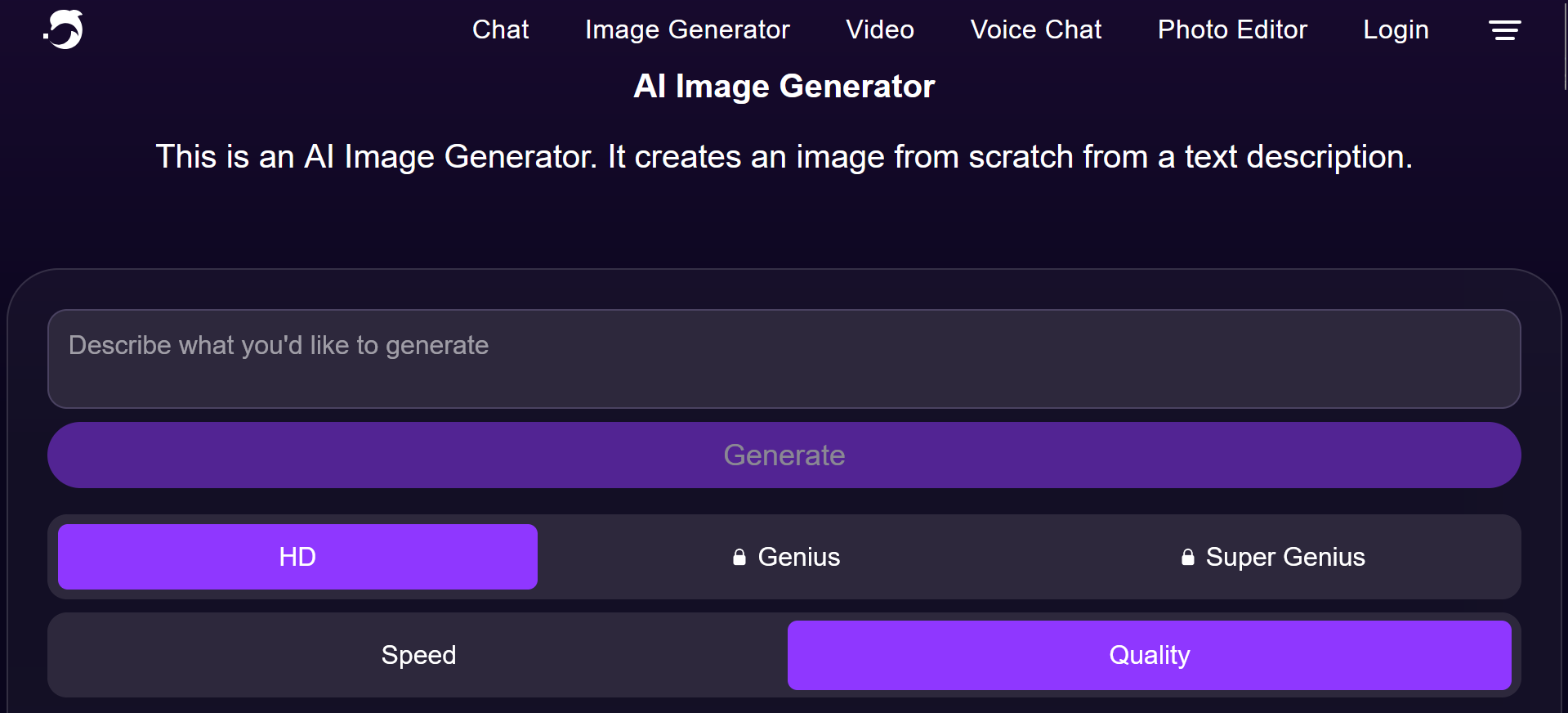
DeepAI offers a straightforward image generator designed around experimentation and technical use. Businesses typically use it to test image concepts or explore how AI-generated visuals could fit into custom workflows. Its API-first approach makes it better suited to development teams than to marketing departments.
For organisations with in-house technical resources, DeepAI can support early-stage testing or internal tooling. However, the lack of advanced brand controls limits its role in structured marketing production, where consistency and governance matter.
Key Features
- Basic text-to-image generation
- Developer-focused API access
- Lightweight interface for testing ideas
Pricing and Business Suitability
DeepAI provides free access with clear rate limits. Paid usage is mainly handled through API requests, making cost planning less predictable for non-technical teams. This pricing structure suits developers integrating image generation into systems rather than marketers managing campaigns.
| Plan | Price | Key Features | Limitations |
| Free | $0 | Basic generation | Rate limits |
| API Usage | Variable | Scalable access | Limited pricing clarity |
7. Perchance AI Image Generator
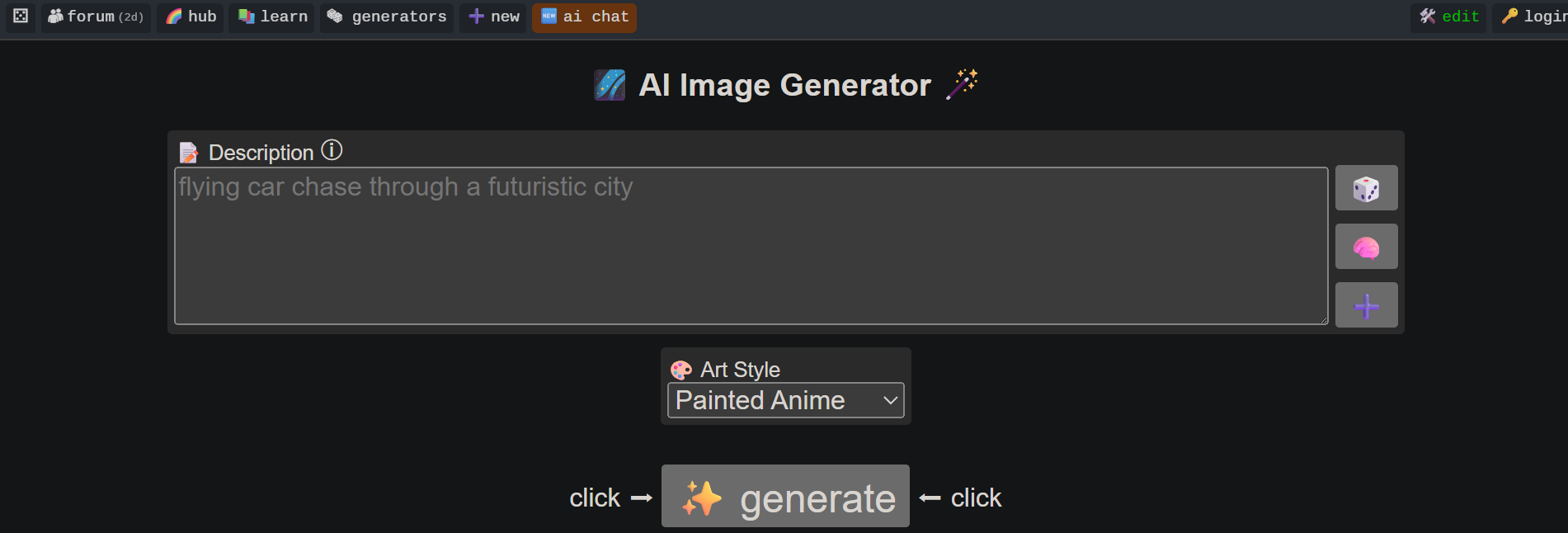
Perchance focuses on free, open image generation with no sign-up requirements. It supports rapid ideation and creative exploration rather than structured business workflows. Teams often use it during early concept testing or brainstorming sessions.
While the tool offers unlimited access, it does not provide the controls required for professional marketing environments. The absence of collaboration features and licensing clarity limits its use in commercial settings.
Key Features
- Unlimited free image generation
- Community-driven prompt formats
- No account or setup required
Pricing and Business Suitability
Perchance does not publish paid plans or usage tiers. This makes it accessible for experimentation but unsuitable for businesses that require predictable governance, accountability, or commercial safeguards.
| Plan | Price | Key Features | Limitations |
| Free | $0 | Unlimited access | Not business-focused |
How Businesses Can Choose the Right AI Image Generator
Businesses should match tools to workflow needs. Marketing teams benefit from tools that balance speed, licensing clarity, and predictable costs.
A clear assessment avoids overpaying for unused features.
Decision checklist
- Identify content volume
- Confirm commercial usage rights.
- Assess team skill level.
- Review pricing predictability
- Check integration needs
AI Image Generator Tools for Businesses
| Tool | Best For | Pricing Model | Free Access | Business Limitations |
| Adobe Firefly | Brand-safe marketing | Credit-based | Yes | Credit caps |
| Canva AI | SME marketing teams | Subscription | Yes | Bundled access |
| Google Gemini | Ecosystem users | Usage-based | Yes | Technical setup |
| Microsoft Copilot | Corporate teams | Bundled | Yes | Limited creativity |
| Freepik AI | Designers | Credit-based | Yes | Monthly limits |
| DeepAI | Testing | Usage-based | Yes | Basic tooling |
| Perchance | Ideation | Free | Yes | Not business-focused |
Conclusion
AI image generator tools now support everyday business operations across marketing, communications, and digital campaigns. They help teams move faster, test ideas efficiently, and maintain visual consistency without increasing operational overhead.
Each tool in this list addresses a different business requirement. Some prioritise brand safety and governance, while others focus on speed, accessibility, or experimentation. The right choice depends on how your team works, the volume of content you produce, and the level of control you need over visual assets.
For SMEs and marketing leaders, the value comes from selecting a tool that fits existing workflows and budgets. When used with clear guidelines and realistic expectations, AI image generators become a reliable part of long-term content production rather than a short-term experiment.