









AI email automation tools help businesses manage email workflows by making data-driven decisions rather than relying on manual rules. These platforms use behavioural signals, performance data, and predictive logic to decide when emails should be sent, who should receive them, and how journeys should progress. Instead of treating email as a sequence of campaigns, AI email automation treats it as a connected workflow that adapts as customer behaviour changes.
As inbox competition increases and marketing teams manage larger databases, email performance depends less on volume and more on relevance, timing, and lifecycle alignment. This article explains how AI email automation works, why it matters for growing teams, and which tools businesses rely on in 2026 to optimise email workflows at scale.
What AI Email Automation Tools Are?
AI email automation tools manage email workflows using behavioural data and predictive logic rather than static rules. These platforms analyse signals such as email engagement, website activity, purchase behaviour, and lifecycle stage to guide decisions on timing, targeting, and message progression. Instead of sending identical sequences to every contact, AI adjusts email journeys based on each user’s behaviour over time, keeping communication relevant as intent changes.
In practice, this shifts email operations away from manual control and towards data-led prioritisation:
- Email timing adapts based on engagement likelihood
- Targeting updates as behaviour and lifecycle stage change
- Journeys progress dynamically instead of following fixed paths.
For growing marketing teams, manual email workflows create operational strain. As databases expand, teams must manage overlapping journeys, prioritise segments, and protect deliverability simultaneously. AI reduces decision fatigue by handling prioritisation at scale, allowing teams to improve engagement and inbox placement while scaling email activity without increasing workload, complexity, or operational risk.
How AI Email Automation Platforms Work and the Capabilities That Define Them
AI email automation platforms operate by continuously processing behavioural and performance signals. Every interaction, including opens, clicks, site visits, and conversions, feeds into decision logic that guides future email actions. These systems evaluate likelihood rather than certainty, allowing workflows to adapt as customer behaviour changes rather than relying on fixed schedules or predefined rules.
The capabilities that define AI email automation platforms include:
- Behaviour-driven workflow triggering based on real user actions
- Predictive send-time optimisation to improve engagement
- Dynamic segmentation and journey branching by intent and lifecycle stage
- Continuous optimisation using performance data
- Email-level measurement and attribution across the lifecycle
Together, these capabilities allow email workflows to adjust automatically as engagement patterns shift. High-intent users progress faster, inactive users receive different messaging, and optimisation happens continuously without manual testing. This enables teams to manage email as a connected lifecycle system rather than a collection of isolated campaigns.
1. HubSpot
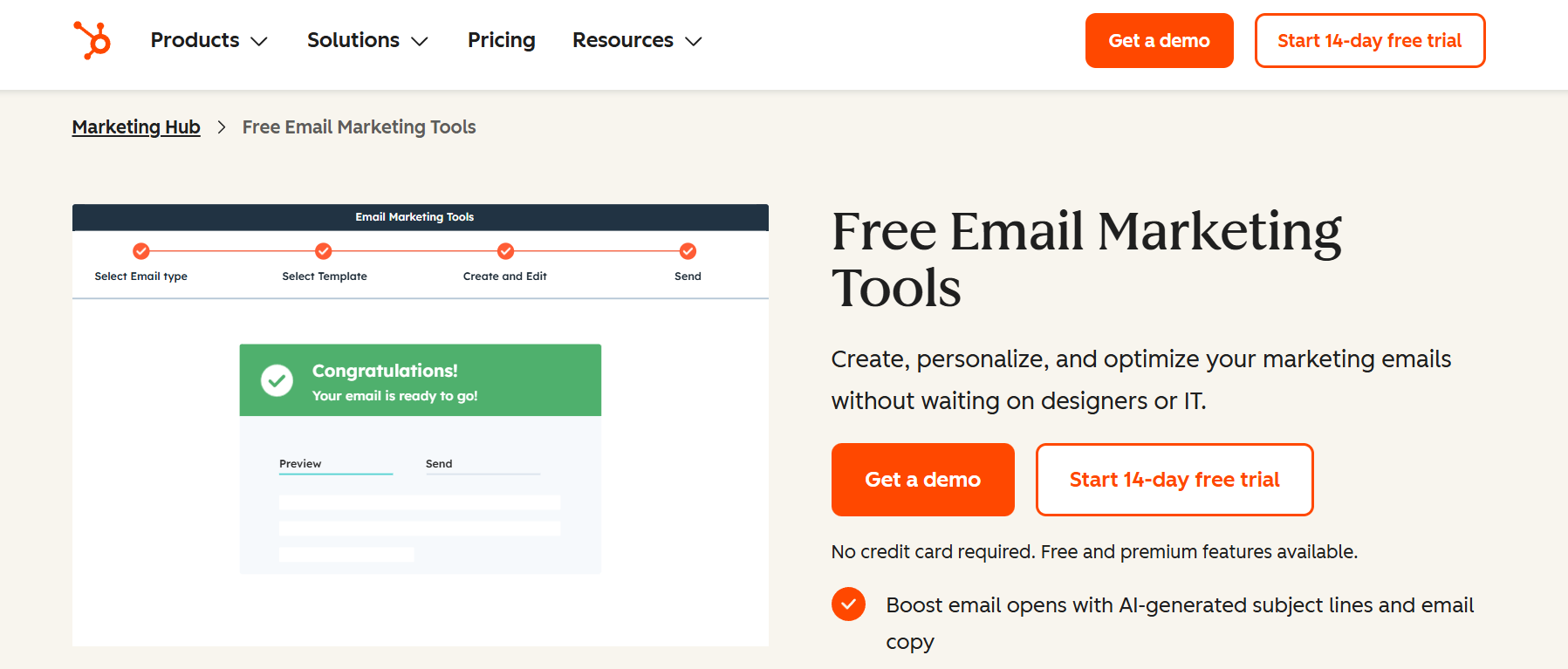
HubSpot supports lifecycle-based email automation through behaviour-driven workflows and predictive logic. The platform connects engagement data with automation rules, allowing teams to guide contacts through structured email journeys aligned with lifecycle stages. AI-powered send-time optimisation improves engagement by delivering emails when recipients are most likely to open them.
HubSpot suits businesses that want structured email automation tied to broader lifecycle management. Its strength lies in coordinating email workflows across acquisition, nurturing, and retention stages, provided teams are ready to invest in higher-tier plans.
Pricing and plans
| Plan | Price (USD/month) | Email automation included | Limitations |
| Free | 0 | Basic email sends, simple automation | Limited workflows |
| Starter | From 15 | Simple email automation | Restricted logic |
| Professional | From 890 | Behaviour-based workflows, AI send-time optimisation | High entry cost |
| Enterprise | From 3,600 | Advanced journey automation | Enterprise pricing |
2. Salesforce Marketing Cloud (Einstein)
Salesforce Marketing Cloud uses Einstein as its AI decision layer to optimise email engagement at scale. Einstein analyses historical and behavioural data to guide send timing, engagement likelihood, and prioritisation. Rather than focusing on execution, the platform supports strategic decision-making across complex email ecosystems.
This tool suits enterprises managing large datasets and complex lifecycle flows. Email automation is tightly integrated into broader marketing operations, making it appropriate for organisations with mature data and governance structures.
Pricing and plans
| Plan | Price | Email automation included | Limitations |
| Marketing Cloud Growth | From $1,500 per org/month | Core email automation with AI foundations | Limited advanced personalisation |
| Marketing Cloud Advanced | From $3,250 per org/month | Expanded journey automation | Add-ons required |
| Einstein add-ons | Custom | Predictive engagement optimisation | Requires core platform |
3. Iterable
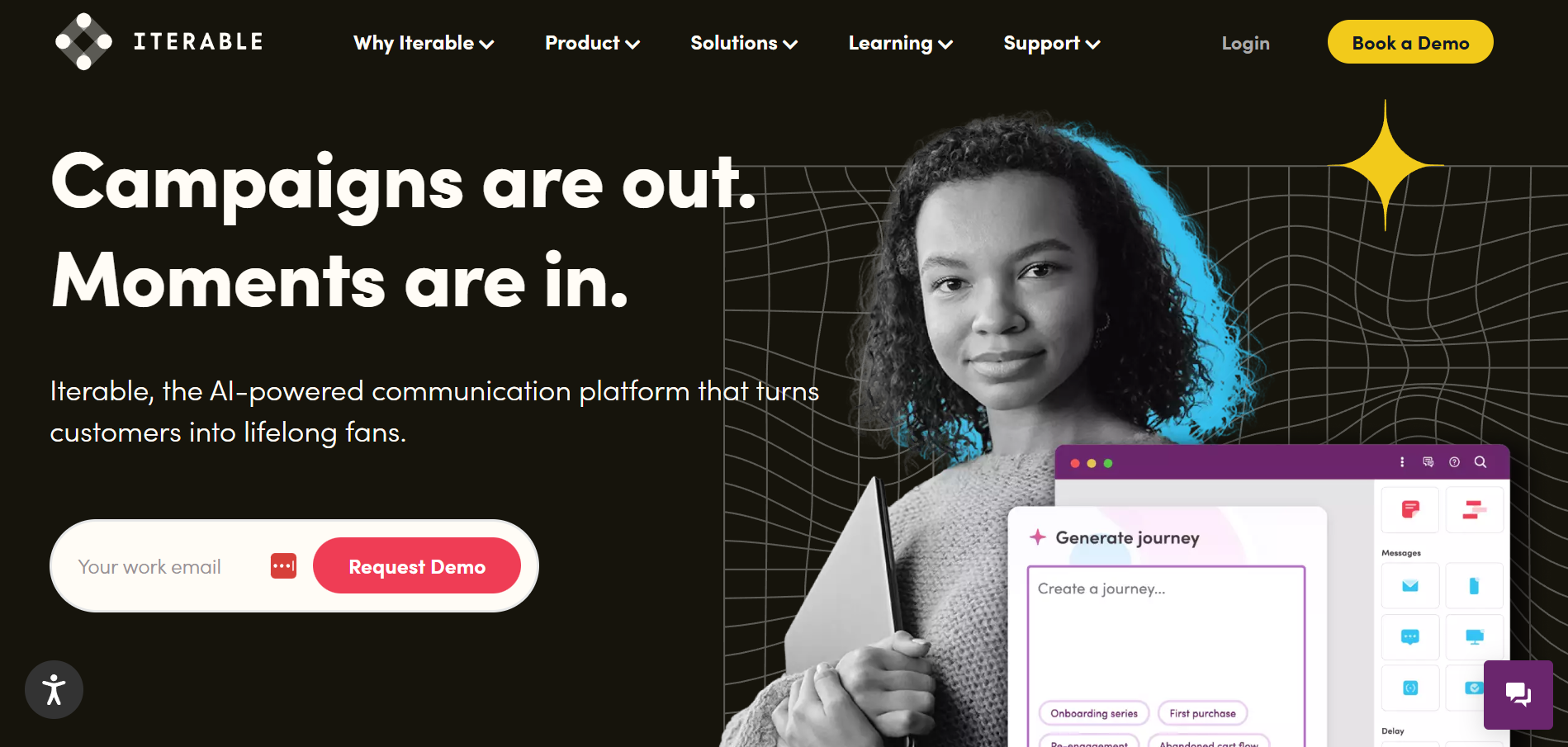
Iterable focuses on lifecycle orchestration and experimentation for email automation. The platform uses AI to optimise send timing and manage journey progression across customer lifecycles. It supports teams that run complex email workflows requiring continuous testing and optimisation.
Iterable suits mid-market and enterprise teams that prioritise lifecycle performance and experimentation. Its automation logic supports structured decision-making rather than one-off campaigns.
Pricing and plans
| Plan | Price (est.) | Email automation included | Limitations |
| Standard | From 1,500 per month | AI send-time optimisation, journey orchestration | Usage-based pricing |
| Enterprise | Custom | Advanced lifecycle automation | Quote required |
4. Mailchimp
Mailchimp provides accessible email automation with AI-assisted optimisation for small and mid-sized businesses. The platform supports behaviour-based triggers and send-time optimisation while maintaining a simple workflow interface. Its AI capabilities focus on improving engagement rather than deep lifecycle orchestration.
Mailchimp suits teams seeking practical automation without complex setup. It supports early-stage lifecycle workflows where simplicity and speed matter.
Pricing and plans
| Plan | Price (USD/month) | Email automation included | Limitations |
| Free | 0 | Basic automation | Limited logic |
| Essentials | From 13 | Simple automated emails | No advanced branching |
| Standard | From 20 | Behaviour-based automation, send-time optimisation | Limited AI depth |
| Premium | From 350 | Advanced segmentation | Cost increases sharply |
5. Ortto

Ortto combines customer data management with AI-assisted email automation. The platform unifies behavioural and lifecycle data, enabling teams to manage email journeys from a single customer view. The automation logic adapts as users move through lifecycle stages.
Ortto suits growing teams that require visibility and control across the entire email lifecycle. Its structure supports consistent decision-making without fragmented tools.
Pricing and plans
| Plan | Price (USD/month) | Email automation included | Limitations |
| Starter | 169 | Behaviour-based email journeys | Feature limits |
| Professional | 509 | Advanced segmentation and workflows | Higher cost |
| Business | 849 | Optimisation and governance tools | Enterprise features gated |
| Enterprise | Custom | Advanced control and support | Quote required |
6. Brevo
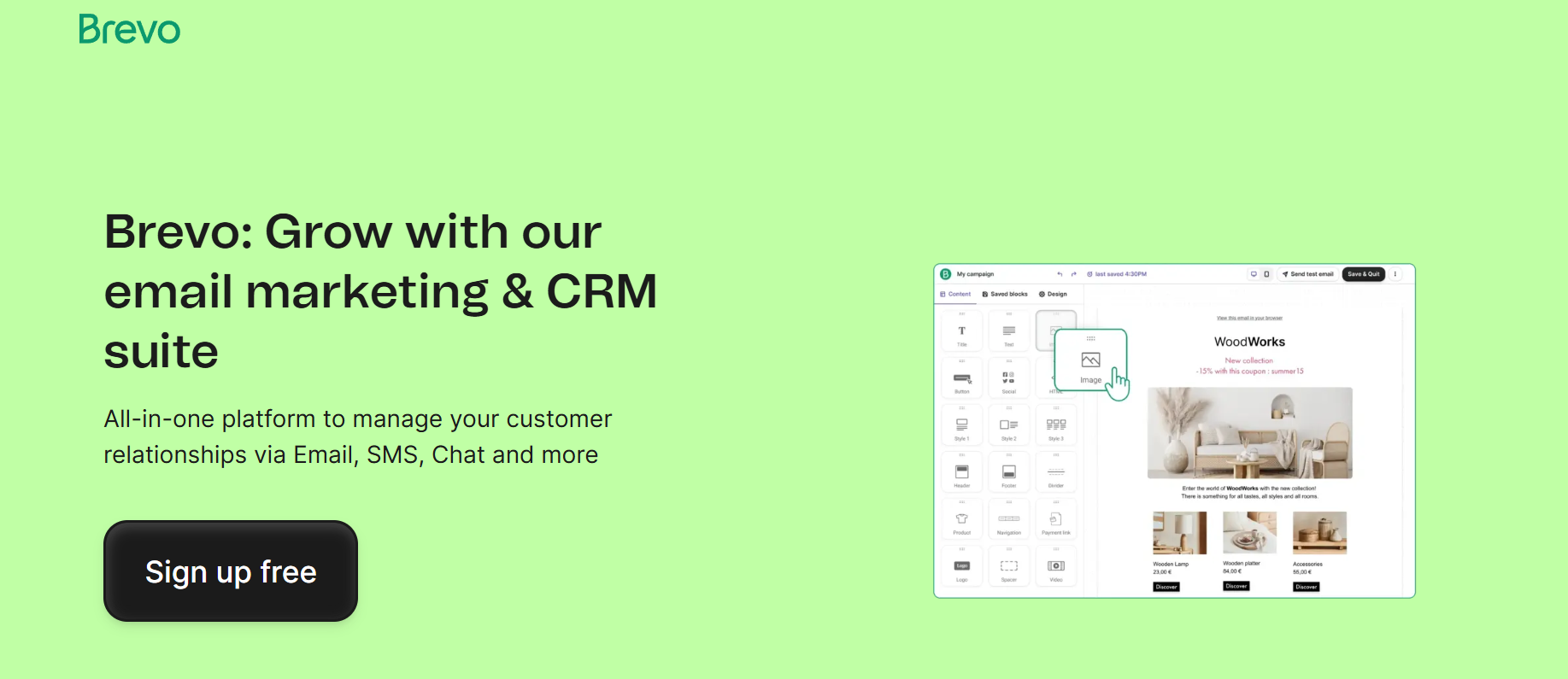
Brevo offers affordable AI email automation with strong deliverability and workflow support. The platform enables behaviour-based automation and basic predictive timing, making it accessible for SMEs seeking structured email workflows without high costs.
Brevo suits businesses prioritising scalability and operational simplicity. Its pricing structure allows teams to adopt automation early and expand as needs grow.
Pricing and plans
| Plan | Price (USD/month) | Email automation included | Limitations |
| Free | 0 | Basic automation workflows | Send limits |
| Starter | From 9 | Simple email automation | Limited logic |
| Business | From 18 | Behaviour-based workflows, optimisation | Moderate AI depth |
| Enterprise | Custom | Advanced automation | Quote required |
7. MailerLite

MailerLite focuses on ease of use and workflow clarity for email automation. The platform supports trigger-based workflows and segmentation without heavy configuration. AI features are limited, but automation reliability and usability drive strong adoption.
MailerLite suits SMEs and creators managing straightforward email lifecycles where consistency and simplicity matter.
Pricing and plans
| Plan | Price (USD/month) | Email automation included | Limitations |
| Free | 0 | Basic automation workflows | Subscriber caps |
| Growing Business | From 10 | Behaviour-based triggers | Limited AI |
| Advanced | From 21 | Advanced workflow logic | No predictive models |
| Enterprise | Custom | Dedicated support | Quote required |
Which AI Email Automation Tool Fits Different Business Types
Different businesses require different levels of automation intelligence, control, and scale. Some teams need simple behaviour-based workflows, while others require predictive decisioning across complex lifecycles. The table below maps each tool to the type of business it best supports, based on lifecycle complexity, data readiness, and operational demands.
AI Email Automation Tools by Business Type
| Business type | Recommended tools | Why these tools fit |
| Small businesses and early-stage teams | MailerLite, Brevo, Mailchimp | Simple setup, affordable pricing, behaviour-based automation without heavy configuration |
| SMEs managing growing databases | Brevo, Mailchimp, HubSpot | Scalable workflows, improved deliverability, lifecycle automation without enterprise overhead |
| Mid-market marketing teams | HubSpot, Ortto, Iterable | Structured lifecycle orchestration, advanced segmentation, and stronger automation control |
| E-commerce businesses | Brevo, Mailchimp | Purchase and behaviour-triggered workflows, transactional relevance, scalable sends |
| B2B companies with long sales cycles | HubSpot, Salesforce Marketing Cloud | Lifecycle alignment, lead and engagement prioritisation, sales-linked automation |
| Data-driven and enterprise organisations | Salesforce Marketing Cloud, Iterable | Predictive decisioning, advanced journey management, governance, and scale |
Choosing the right tool depends on how much decision-making teams want to automate and how complex their email lifecycle has become. Matching platform capability to business maturity prevents underuse, overinvestment, and workflow friction.
Conclusion
AI email automation tools support consistent, scalable email workflows by shifting decision-making from manual rules to data-driven logic, determining when messages should be sent, who should receive them, and how journeys progress based on real behavioural signals. Because automated email performance depends as much on message quality as on delivery logic, many teams also rely on AI writing tools for generating, refining, and scaling copy across campaigns, ensuring automated sequences remain relevant, coherent, and aligned with user intent as they adapt over time.
Selecting the right tool depends on how complex a business’s email lifecycle has become and how ready its data is to support automation. Tools that align with lifecycle depth and operational needs allow teams to delegate routine decisions without losing control or visibility. When chosen carefully, AI email automation platforms enable businesses to optimise email workflows, reduce operational strain, and maintain performance as they scale into 2026 and beyond.