










Real estate marketing is the engine that drives visibility, trust, and sales in a saturated and highly competitive property market. It’s not just about listing homes or posting on social media. It’s a structured mix of digital and physical tactics designed to connect with buyers and sellers at every stage of their journey.
Buyer behaviour has changed, digital platforms dominate search, and emerging technologies have raised the bar. If you’re not leveraging smart marketing, you’re invisible.
In this guide, you’ll learn what real estate marketing involves and why it’s central to business growth.
What Is Real Estate Marketing?

Real estate marketing is the coordinated effort to promote property listings and agent brands to generate qualified leads and close transactions. It blends storytelling, data, and media to make properties stand out and build trust with audiences.
Core components include:
- Property promotions: Highlighting listings with compelling descriptions, visuals, and distribution.
- Agent brand visibility: Positioning the agent as a credible expert in their local market.
- Client engagement: Keeping potential buyers and sellers informed, interested, and moving closer to action.
Scope of activities:
- Online: SEO-optimised websites, Google Ads, YouTube property tours, social media campaigns, email nurturing.
- Offline: Brochures, signage, networking events, printed newsletters, open houses.
- Hybrid: QR codes linking print ads to digital content, co-branded partnerships with mortgage brokers, and branded podcasts.
Real estate marketing spans everything from a single Instagram listing post to a national campaign launching an entire residential development.
Why Real Estate Marketing Matters
Effective marketing makes the difference between sitting on listings and closing deals. It builds visibility, generates inbound interest, and enhances brand authority.
1. Visibility in Saturated Markets
In high-density or high-value markets, standing out is harder than ever. With more listings competing for the same eyeballs, visibility becomes currency. Strong marketing cuts through the clutter. It uses SEO, high-impact visuals, and platform-specific messaging to drive awareness where your audience is most active.
Visibility also improves perceived professionalism. A consistent online presence, updated Google Business profile, and active social media pages signal that you’re invested in your market.
2. Quality Buyer & Seller Attraction
Attracting qualified leads means aligning your message with what buyers and sellers actually want. That begins with understanding local search behaviour and layering your campaigns with intent signals. Instead of generic outreach, segment audiences by life stage, urgency, and purchase goals.
Instead of broad messaging, you create tailored content that speaks to HDB upgraders in Serangoon or to foreign investors considering new launches in Orchard. Digital marketing platforms let you filter leads before they even contact you, saving time and boosting conversion rates.
3. Accelerated Property Turnover
Property turnover is directly influenced by the digital assets attached to a listing. Properties with high-resolution photos, SEO-optimised copy, and video tours receive higher engagement.
According to Realtor.com, listings that include a virtual tour receive 87% more views than those without. Additionally, 54% of buyers are likely to skip over listings that don’t offer a virtual walkthrough. This underscores the impact of interactive media on buyer decision-making and the urgency to adopt richer formats.
Digital tools reduce friction in the discovery-to-viewing process. Interactive content shortens the decision cycle and increases the likelihood of full-price offers, particularly in competitive markets like Singapore’s core central region.
4. Brand Authority and Local Trust
Digital content is now the primary way agents demonstrate expertise and build authority. Regular posting of hyperlocal market updates, explainer videos, and even short-form reels on Instagram allows agents to own the narrative in their neighbourhoods.
Educational blog posts and buyer guides on your website act as long-term trust builders. They remain searchable, shareable, and continuously drive traffic. When done right, this positions your brand as the trusted voice in districts like Bukit Timah, Katong, or Toa Payoh—even before a client is ready to transact.
5. Scalable Lead Generation
Digital marketing platforms offer the only viable path to scalable growth without linear cost increases. From lead-gen ads on Facebook to CRM-integrated email automation, digital tools enable 24/7 nurturing without requiring manual effort at every stage.
Smart use of retargeting ads, lookalike audiences, and automated qualification flows creates a lead funnel that improves over time. It’s not just about generating traffic but also about converting the right traffic at the right time.
6. Consistent Market Relevance
Maintaining top-of-mind status is only possible through consistent digital content. Scheduling weekly email updates, creating scheduled social campaigns, and maintaining a regular blog presence ensure your brand stays relevant throughout the year.
Even when you’re not running listings, your digital content keeps working in the background, educating, building familiarity, and supporting future pipeline growth. It’s this type of evergreen relevance that delivers compounding results.
How These Benefits Translate Into Business Outcomes
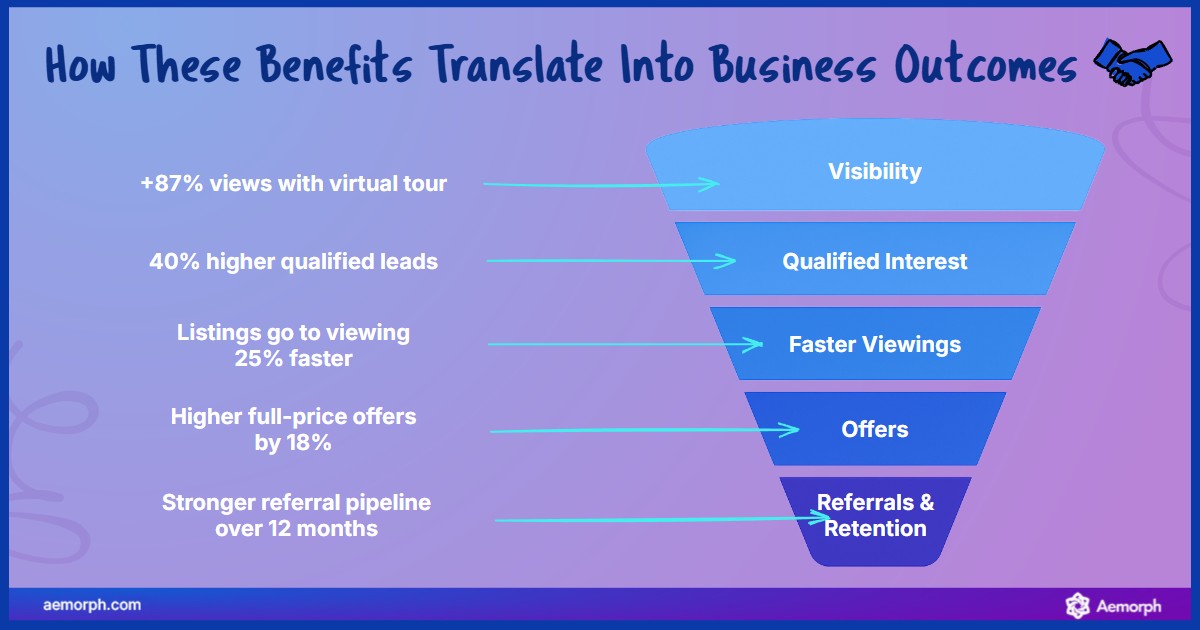
Marketing tactics are only as valuable as the results they produce. The advantages outlined above lead to tangible business growth and operational improvement for agents, teams, and agencies.
Here’s how these benefits convert into bottom-line outcomes:
- Higher revenue per listing: Faster turnover and stronger engagement lead to fewer price negotiations and more full-value offers.
- Lower lead acquisition cost: Automated funnels, intent-based ads, and retargeting reduce the cost per qualified enquiry.
- Increased lead-to-close ratio: Pre-qualified and better-educated prospects lead to shorter sales cycles and higher conversion.
- Stronger referral business: A trusted brand presence increases repeat and referral transactions, especially in local markets.
- Improved operational efficiency: Marketing automation reduces time spent on follow-ups and unqualified leads.
When done correctly, these results stack.
For example, an agent who consistently ranks on page one for “condo for sale in Bishan” is not just generating traffic but also dominating visibility in a high-intent search segment. Combine that with remarketing ads and value-led content, and they build a pipeline that compounds over time.
Marketing also gives you leverage in business development. Agencies that show lead volume, listing velocity, and campaign ROI attract top agents, developers, and investors. This is where the shift from “tactics” to “strategy” happens. Each marketing activity supports bigger commercial goals, with clarity on its role in the overall system.
Elevate Your Real Estate Business with Smart Marketing
Real estate marketing is a promotional function and a growth engine that connects your brand with the right audience, nurtures trust, and accelerates transactions. From crafting compelling listings to automating lead flows and owning your local market narrative, a data-informed marketing strategy multiplies your visibility and competitive leverage. It turns every listing into an opportunity, every impression into an asset, and every campaign into a measurable business outcome.
At Aemorph, we help real estate professionals implement marketing systems built on real data, from keyword demand and search intent to platform-specific performance insights. Our campaigns are grounded in SEO, local targeting, and content that connects users with agents and listings they’re actively searching for and not just passively scrolling past.
In a saturated, high-speed industry, the agents and agencies that win are those who consistently deliver value, authority, and relevance. Effective real estate marketing doesn’t just generate traffic; it also drives qualified enquiries, reduces time-on-market, and positions your brand as the go-to choice in your district. When anchored within a broader marketing strategy, these efforts compound to build long-term brand equity and market leadership.