










Marketing automation has become a vital part of modern business strategy. It allows organisations to streamline repetitive tasks, deliver personalised communication, and gain insights from customer data. From email campaigns to lead nurturing and CRM integration, automation helps companies maintain consistent engagement across the entire customer journey.
This article explores what marketing automation is, how it works, and the benefits it provides. You will also find practical examples, use cases from different industries, and best practices for choosing and implementing the right tools.
What is Marketing Automation
Marketing automation involves using software to automate, streamline, and measure marketing tasks and workflows. It helps businesses deliver timely and relevant content to their audiences based on specific behaviours and preferences.
One of the key functions of marketing automation is that it operates without the need for manual intervention. Once the workflows are set up, the system can continue running based on the defined rules and user behaviour.
How Marketing Automation Works
Marketing automation works by using software tools to complete repetitive marketing tasks. These systems rely on customer data, user behaviour, and predefined rules to deliver relevant messages across various channels.
Marketing automation is not limited to email campaigns. It includes lead scoring, behavioural tracking, audience segmentation, and data syncing with CRM systems. These systems support the full marketing funnel. From initial awareness to customer retention, marketing automation helps ensure consistent engagement at every stage.
Key Components of a Marketing Automation System
A typical marketing automation system includes several key features:
- CRM Integration: This allows the automation tool to sync with customer databases, providing real-time updates and access to contact information.
- Behavioural Triggers: These are actions that users take, such as visiting a webpage or clicking a link, which prompt automated responses from the system.
- Conditional Logic: Also known as if/then logic, this enables the system to make decisions based on user behaviour. For example, if a user downloads a guide, then they receive a follow-up email.
- Lead Scoring: This is the process of assigning values to leads based on their behaviour and engagement. It helps sales and marketing teams prioritise outreach.
- Multi-Channel Messaging: Marketing automation tools can manage messages across different platforms, including email, SMS, and paid advertising channels. This helps maintain consistent communication with the audience.
Workflow Automation Logic
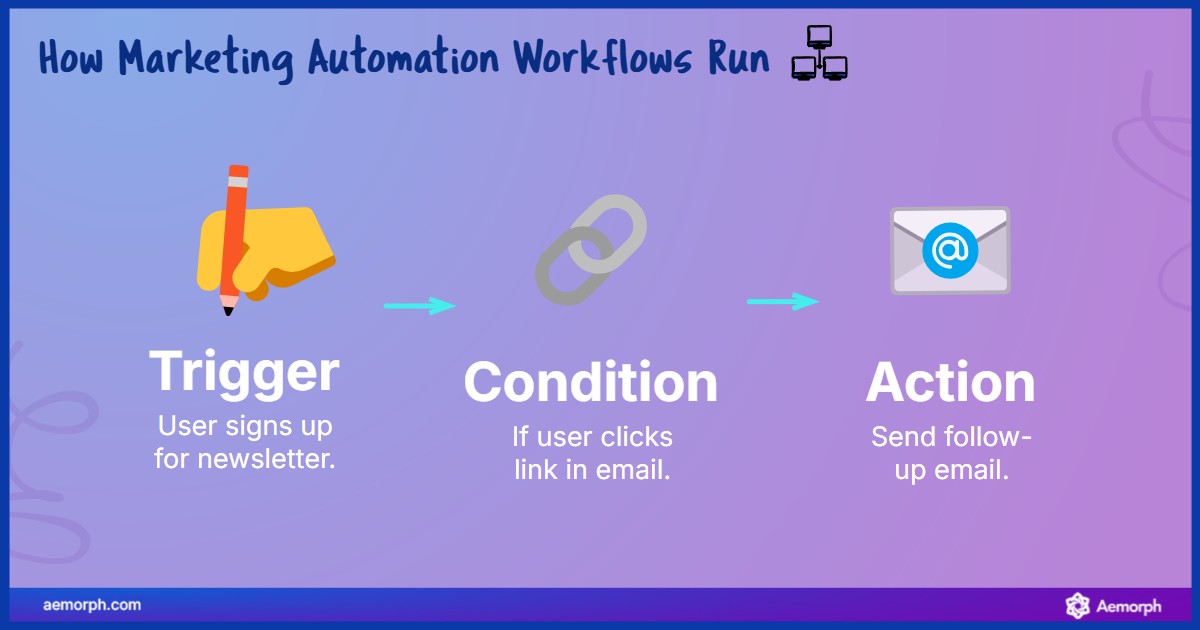
Marketing automation workflows are structured sequences that guide the system’s reaction to specific triggers. A workflow begins when a user takes an action, such as signing up for a newsletter. The system then follows a defined path based on the conditions set by the marketer. These workflows use triggers, conditions, and actions to determine what happens next.
Examples:
- If a user abandons their shopping cart, the automation can send a reminder email after a set period.
- A follow-up series for webinar registrations. When someone signs up, they receive a confirmation email. A few days later, they received a reminder. After the event, they might get a thank-you message with additional resources.
These logic-based flows help businesses stay organised and ensure that each lead or customer receives timely and relevant communication.
Why Integration with CRM System Matters
CRM integration is a fundamental part of marketing automation. It allows customer data to flow between systems, keeping records up to date and providing a single view of each contact. This integration enables accurate lead tracking. Marketers can see how contacts interact with different campaigns and adjust their strategies accordingly.
Unified customer profiles bring all relevant data into one place, including past interactions, behavioural data, and demographic information. This helps in creating personalised experiences for each contact.
Common CRM software that integrates with marketing automation tools includes HubSpot, Salesforce, and Zoho. These platforms offer robust features for managing contacts, segmenting audiences, and tracking campaign performance.
Benefits of Using Marketing Automation
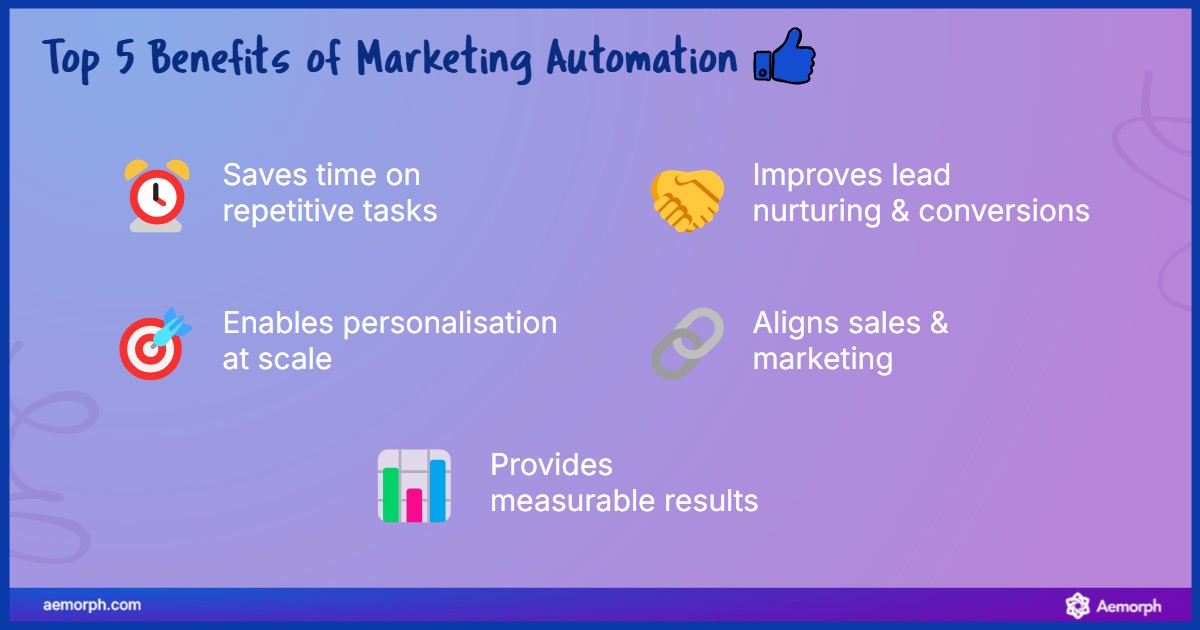
Marketing automation supports businesses in streamlining their processes and improving campaign outcomes. By automating key tasks, it becomes easier to maintain consistent communication, manage leads effectively, and evaluate performance.
1. Saves Time and Reduces Manual Tasks
One of the core advantages of marketing automation is the ability to remove repetitive manual tasks from daily operations. Actions such as sending emails, tagging leads, and scheduling follow-ups can be completed automatically. This allows teams to focus on strategic planning and creative development rather than operational execution.
2. Improves Lead Nurturing and Conversion Rates
Marketing automation helps to build structured customer journeys. This means leads receive relevant messages based on their behaviour or position in the sales funnel. For example, a cold lead who downloads a guide can be entered into a series that introduces product benefits, leading up to a sales consultation. Over time, these automated touchpoints help move leads towards a purchase decision.
3. Enables Personalised Campaigns at Scale
Automation systems allow marketers to segment audiences and deliver personalised messages at scale. Using dynamic content and behavioural targeting, emails can be customised based on actions taken by individual users. This ensures content is relevant and delivered at appropriate times.
4. Boosts Alignment Between Marketing and Sales
Marketing automation platforms often include lead scoring and tracking features that are visible to both marketing and sales teams. This shared visibility ensures both teams understand lead status, recent interactions, and qualification levels. As a result, sales teams can reach out at the right moment, and marketing can refine campaigns based on feedback.
5. Offers Measurable Results
Automation tools come with built-in analytics that track email open rates, click-throughs, form submissions, and other user actions. These insights help marketers understand what is working, identify areas for improvement, and assess the performance of multi-touch campaigns. Attribution models can also show how different interactions contribute to conversions.
Email Workflows and Campaign Types
Email remains one of the most effective marketing channels. Marketing automation supports a range of email workflows designed to guide users through their journey.
1. Drip Campaigns
Drip campaigns consist of scheduled messages that are triggered by specific user actions or time delays. They align with different lifecycle stages such as welcome emails, onboarding series, or post-purchase follow-ups. Each email builds on the previous one, providing users with relevant information over time.
2. Behavioural Emails
These emails are sent based on real-time user behaviour. Examples include follow-ups after visiting a pricing page or clicking a product link. These targeted messages address the user’s current interest and can help encourage further action.
3. Segmented Campaigns
Segmentation involves dividing contacts based on characteristics such as lifecycle stage, interests, or location. This allows for more tailored communication. Tools such as tagging, custom fields, and list creation are commonly used to manage segmented audiences.
4. Transactional and Event-Based Emails
These emails are triggered by specific actions or system events. Examples include order confirmations, appointment reminders, and password reset notifications. They are often linked to eCommerce or CRM platforms and provide important information at critical points in the user journey.
Choosing the Right Marketing Automation Software
Selecting the right platform depends on business size, technical requirements, and marketing goals. Some tools are designed for simple use, while others provide complex features for advanced automation.
Factors to Consider
When choosing a marketing automation system, several factors should be reviewed:
- CRM Integration: The platform should connect seamlessly with your customer relationship management system. This ensures that data flows smoothly between marketing and sales, creating a unified view of customer interactions.
- Workflow Complexity: Different platforms offer different levels of workflow design. If your strategy requires multi-step triggers and branching actions, look for a tool that supports advanced logic.
- Scalability: As your business grows, the system should be able to handle a larger volume of contacts, campaigns, and channels without performance issues.
- Analytics and Reporting: Detailed reporting features allow you to track campaign success, identify opportunities for improvement, and measure return on investment.
- Usability: A user-friendly interface makes it easier for teams to design, launch, and manage campaigns without extensive technical training.
Best Practices for Implementing Marketing Automation
Map the Customer Journey First
A successful automation strategy starts with a clear understanding of the customer journey. Begin by listing every stage a customer goes through, from discovering your brand to becoming a loyal client. Within each stage, identify the touchpoints where automation can add value.
For example:
- In the awareness stage, an automated welcome email can introduce your brand.
- During the consideration stage, a drip campaign can share case studies or guides.
- At the decision stage, a triggered message with a product demo invitation can encourage conversion.
Documenting these stages ensures that automation supports the customer at the right moment and avoids irrelevant messaging.
Start with One Campaign
It can be tempting to automate multiple processes at once, but beginning with one high-impact campaign is more effective. Select a campaign that addresses a clear business goal, such as lead nurturing or onboarding new users.
Once this campaign is running smoothly, you can expand into other workflows such as re-engagement or upsell sequences. Starting small helps teams learn the system and build confidence before scaling up.
Align Marketing and Sales
Automation delivers the most value when marketing and sales teams work together. Without alignment, leads may receive mixed messages or slip through the cracks.
To avoid this, set up shared definitions of lead stages. For example:
- Marketing Qualified Lead (MQL): A contact who has downloaded a guide or attended a webinar.
- Sales Qualified Lead (SQL): A contact who has requested a demo or viewed the pricing page multiple times.
With these definitions in place, automation can score leads and send high-intent prospects directly to sales. This ensures the sales team spends time on leads that are ready to engage, while marketing continues to nurture those still in earlier stages.
Monitor and Optimise
Automation is not static. Campaigns that worked at launch may decline in performance if not regularly maintained. Create a routine for reviewing results, such as a monthly or quarterly audit.
Key actions include:
- Testing subject lines and send times to improve open rates.
- Analysing drop-off points within workflows to see where engagement declines.
- Refreshing content in long-running campaigns to keep it relevant.
By treating automation as an ongoing process, you ensure that campaigns continue to perform and evolve with customer behaviour.
Maximising the Impact of Marketing Automation
Marketing automation is more than a way to save time. It brings structure to customer journeys, ensures consistent communication, and provides measurable results that guide future strategy. When combined with CRM integration and email workflows, it becomes a complete system for managing relationships and driving business growth.
The key to success lies in careful planning and ongoing optimisation. Mapping the customer journey, aligning marketing with sales, and monitoring campaign performance all help businesses achieve sustainable outcomes. With the right tools and best practices in place, marketing automation can support long-term growth and create stronger connections with customers.