










Developing a clear and tailored business strategy has become a non-negotiable priority for enterprises and SMEs operating in Singapore. Amid shifting global dynamics, rising operational costs, evolving digital trends, and complex regulations, the ability to craft and execute an effective business strategy separates resilient businesses from those that stagnate.
This guide offers a comprehensive overview of business strategy, with practical applications for both emerging enterprises and established firms in Singapore. It covers the essential aspects of strategy, from understanding what it is and why it matters, to recognising the most effective strategy types. You can also find hands-on guidance for choosing the right approach, implementing it effectively, and sustaining growth over time.
What Is Business Strategy?
Business strategy is a course of action or set of decisions that supports a company in achieving specific business goals. It outlines the direction the organisation intends to take, its initiatives, and how it will allocate resources to gain competitive benefits and grow sustainably.
Components of a Business Strategy
A solid business strategy is a structured framework that aligns vision with action. These core components ensure clarity of purpose, informed decision-making, efficient resource use, and measurable progress throughout the execution process.
- Mission, Vision, and Core Values: These elements define the company’s purpose, aspirations, and the value it aims to create.
- Market and Competitive Analysis: Understanding the external environment, including competitors and market trends, through tools like SWOT analysis and frameworks like Porter’s Five Forces.
- Resource Allocation: Planning how to efficiently deploy financial, human, and technological resources to support strategic initiatives.
- Implementation Plan: Defining clear objectives, key performance indicators (KPIs), and collaborative efforts to execute the strategy effectively.
- Continuous Evaluation: Establishing reporting systems to track performance and enable timely adjustments.
Importance of Having a Business Strategy
A clearly defined business strategy is essential for sustainable success. It aligns resources, sharpens decision-making, and prepares the business to adapt to market shifts. Below are the key reasons why strategy matters:
- Clarifies Vision and Direction: A business strategy sets a clear long-term direction. It ensures all departments and teams are aligned in their goals and that daily decision-making supports the organisation’s broader objectives.
- Supports Resource Allocation: Strategy helps leaders allocate time, talent, and capital effectively. This is crucial in Singapore, where labour and operational costs are high. Strategic planning ensures that resources are invested where they generate the greatest returns.
- Enables Competitive Advantage: A well-designed strategy differentiates a company from its rivals. Whether through cost leadership, innovation, or customer intimacy, strategy allows businesses to offer compelling value that others struggle to match.
- Prepares for Market Uncertainty: In fast-moving and complex markets like Singapore, strategy provides a flexible roadmap for adapting to new challenges, such as economic shifts, regulatory updates, or technological disruption.
- Guides Sustainable Growth: Strategy enables businesses to scale methodically, avoid overextension, and manage risks during expansion. It helps firms prioritise markets, products, and timing for growth.
Types of Business Strategies
Business strategies can be broadly categorised into several foundational types. These strategies define how a business competes in the market, attracts and retains customers, manages growth, and responds to competition. Below are the core types of business strategies, each explained with general principles and their potential applications in Singapore’s context.
1. Cost Leadership Strategy
This strategy centres on being the lowest-cost producer in the industry while maintaining reasonable quality. Businesses achieve this through operational efficiencies, economies of scale, and cost-saving technologies. It suits price-sensitive markets or sectors where standardisation is feasible.
Key Principles:
- Offer standardised products at the most competitive price.
- Maximise production and operational efficiency to reduce costs.
- Negotiate bulk purchasing or favourable supplier terms to lower input expenses.
2. Differentiation Strategy
A differentiation strategy focuses on offering unique value, be it in quality, innovation, service, or brand image, that justifies a premium price. It relies on creating clear value that customers are willing to pay more for. This approach fosters customer loyalty and brand strength, often enabling companies to compete on factors beyond price. It is ideal for businesses that consistently innovate or provide a superior experience, common in tech, fashion, or premium consumer goods.
Key Principles:
- Create distinctive products or services that solve customer problems better than alternatives.
- Invest in branding, design, and storytelling to build an emotional connection.
- Offer exceptional customer service to reinforce the value of the experience.
3. Focus Strategy
The focus strategy involves targeting a clearly defined market niche, tailoring offerings to the specific needs of that segment more effectively than broader competitors. This allows smaller or specialised companies to serve customer groups overlooked by mainstream providers. The strategy can be based on either cost (Cost Focus) or differentiation (Differentiation Focus), depending on whether the goal is to provide budget-friendly solutions or premium, niche-specific value.
- Cost Focus: Offers lower-cost products or services to a niche segment without broad appeal (e.g. budget travel for students).
- Differentiation Focus: Delivers high-end or specialised solutions for a specific audience (e.g. bespoke software for dentists or organic skincare for sensitive skin).
4. Growth Strategy
A growth strategy outlines how a business plans to expand its operations, customer base, and revenue over time. It’s a core component of long-term strategic planning and often determines a company’s trajectory in competitive markets. Growth can be pursued through organic means (such as improving internal capabilities, launching new products, or expanding marketing efforts) or inorganic methods (such as mergers, acquisitions, or strategic alliances).
Common Growth Paths:
- Market Penetration: Increase sales within existing markets by attracting more customers or encouraging repeat purchases.
- Market Development: Enter new geographic areas or target new customer segments with existing products or services.
- Product Development: Launch new products or improve existing ones to meet evolving customer needs.
- Diversification: Expand into entirely new markets with new offerings to reduce reliance on current operations.
5. Innovation Strategy
An innovation strategy focuses on creating competitive advantage through new technologies, products, or business models that challenge industry norms or redefine customer expectations. This approach often prioritises long-term growth over short-term returns and is commonly adopted by tech-driven companies or those in fast-evolving industries.
Key Principles:
- Invest consistently in research, development, and innovation pipelines.
- Be first to market with novel offerings that solve unmet needs.
- Secure intellectual property rights to protect and monetise innovation.
Applying Business Strategies to Meta Business Models
Companies embracing automation, digital-first operations, and immersive technologies need strategies that go beyond traditional models. Whether you’re exploring decentralised platforms, virtual workspaces, or AI-driven services, your planning must evolve to match.
See how Meta Business Suite is reshaping strategy and execution in the digital economy.
6. Defensive Strategy
A defensive strategy aims to preserve a company’s current market share by protecting its customer base, brand position, and operational strengths against competitive threats. Market leaders or mature businesses often use it to prioritise stability and risk management over aggressive expansion. Effective defensive tactics ensure customer retention, improve efficiencies, and make it harder for new entrants to gain traction.
Common Tactics:
- Strengthen customer loyalty through incentives and personalised service.
- Streamline operations to maintain pricing and service advantages.
- Use patents, trademarks, and legal action to block competitive threats.
Below are the core business strategy types, each explained in detail, and how they may be applied in Singapore’s context.
| Strategy Type | When It Works | Singapore Context |
| Cost Leadership | In industries with high competition and low differentiation | Logistics and wholesale sectors targeting price-sensitive ASEAN markets |
| Differentiation | In markets where buyers value quality, prestige, or uniqueness | Fintech and education providers emphasising trust and innovation |
| Focus (Cost or Differentiation) | When the niche is underserved or too small for large competitors | SMEs serving niches like halal food, elderly care, or B2G education |
| Growth | When current markets are saturated or growth opportunities lie elsewhere | Firms pursue regional growth through ASEAN partnerships or new market entry |
| Innovation | In dynamic, fast-moving industries or emerging tech sectors | Startups under RIE2025 or Smart Nation programmes |
| Defensive | In saturated markets or when protecting a loyal customer base | Banks or telcos maintaining their market position against new entrants |
Businesses often blend elements from multiple strategies depending on their industry, maturity, and goals. Strategic combinations are frequently the most effective approach in Singapore, where agility, compliance, and scalability are essential.
How to Choose the Right Business Strategy
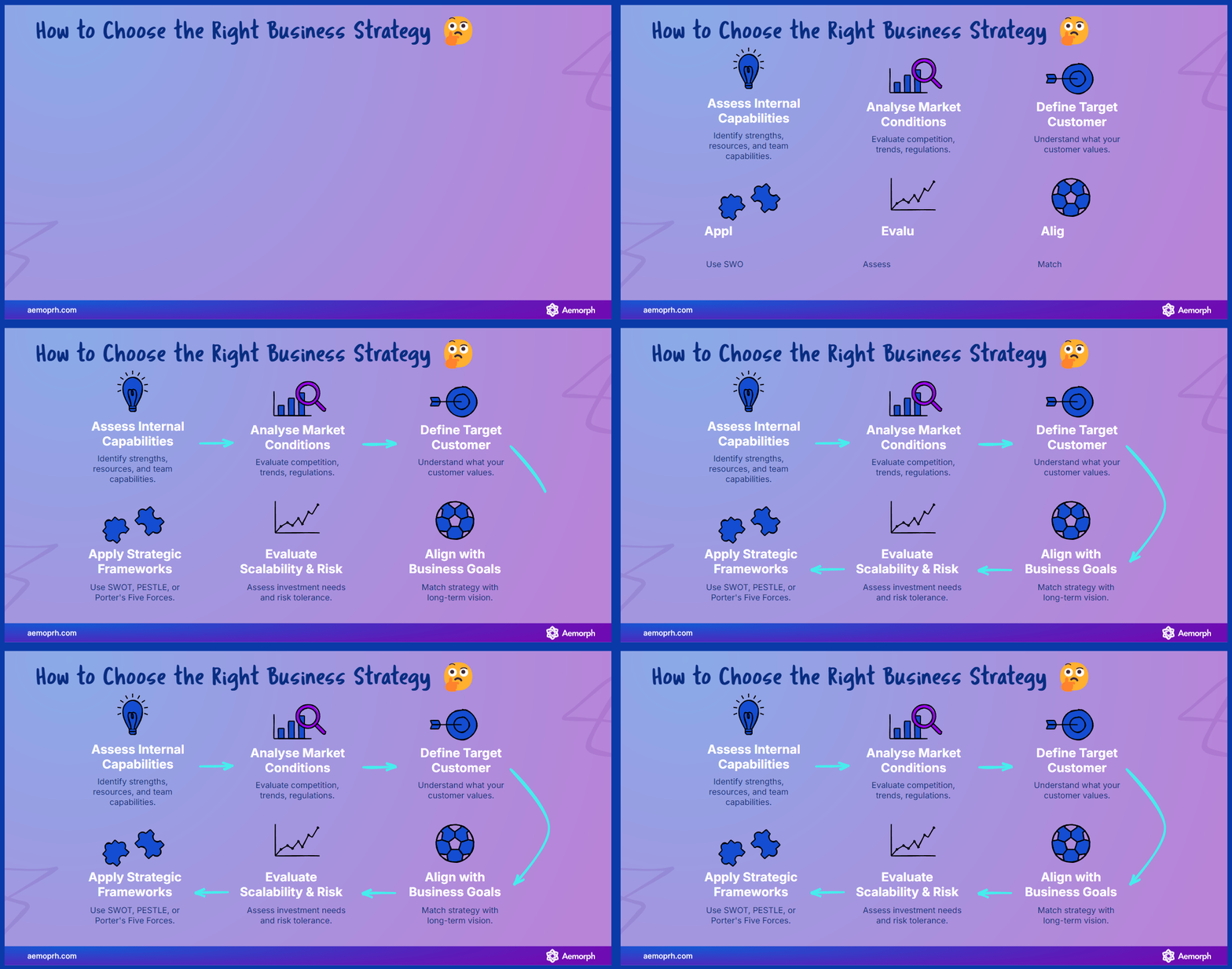
Choosing the most suitable business strategy depends on internal capabilities, market conditions, customer needs, and long-term goals. Here’s how businesses can evaluate and select the right path:
1. Assess Your Internal Capabilities
Start with a clear understanding of your company’s strengths, weaknesses, resources, and culture. A strong internal operation may support a cost leadership strategy, while innovative talent might align better with a differentiation or innovation strategy.
2. Analyse Market Conditions
Evaluate your industry’s level of competition, customer expectations, pricing pressure, and regulatory factors. For example, highly regulated sectors may require defensive strategies prioritising compliance, while fast-moving consumer sectors may benefit from growth or differentiation strategies.
3. Define Your Target Customer
Know who you’re serving and what they value most, like price, quality, service, innovation, or personalisation. A focus strategy works best when a well-defined niche is underserved or customers demand specialised solutions.
4. Align with Long-Term Business Goals
Your choice of strategy should reflect your aspirations, whether it’s regional expansion, product innovation, operational efficiency, or protecting existing market share. Avoid switching strategies too frequently, which can dilute execution.
5. Consider Scalability and Risk Tolerance
Some strategies require significant investment (e.g., innovation), while others offer more stable returns (e.g., cost leadership or defensive approaches). Match your strategy to your appetite for risk and capacity to execute.
6. Use Strategic Frameworks to Guide the Decision
Tools like SWOT, PESTLE, and Porter’s Five Forces can help clarify strategic fit. Combine internal and external analysis to shortlist viable options.
The best strategy aligns with your specific business environment, utilises available resources effectively, and can be realistically executed and sustained. Blended strategies are common in Singapore, where firms must be both nimble and compliant, regional and localised.
Work with a Business Consultant in Singapore to Refine Your Strategy
If you’re unsure which strategy aligns with your business model or market conditions, it may be time to get external guidance.
A business consultant in Singapore can help you evaluate your options, clarify blind spots, and implement a strategy that fits your capabilities and growth goals. This is especially useful for SMEs or founders navigating competitive or regulated sectors.
Actionable Business Strategy Tips
Below are practical, high-impact tips that businesses, especially SMEs, can implement to strengthen their strategic capabilities:
- Conduct a Strategic Audit Annually: Review current performance, capabilities, and market position. Utilise frameworks such as SWOT or PESTLE to identify strategic blind spots or opportunities.
- Align Strategy with Market Realities: Ensure your strategy reflects customer behaviour, competitor movements, and regulatory conditions in Singapore. Avoid importing global strategies without adapting them.
- Involve Cross-Functional Teams in Planning: Strategy is most effective when developed collaboratively. Include marketing, operations, HR, and finance in strategic discussions to align execution with planning.
- Set Measurable KPIs: Break strategy into quarterly targets linked to clear metrics. Use OKRs (Objectives and Key Results) to maintain accountability across departments.
- Monitor Trends and Update Frequently: Don’t let your strategy gather dust. Reassess every quarter and pivot where necessary. This is essential for SMEs operating in volatile or competitive sectors.
- Prioritise Implementation Over Perfection: An average strategy executed well often outperforms a perfect strategy stuck in planning. Allocate resources for execution, training, and tracking.
Turning Strategy into Competitive Advantage
A business strategy is one thing; making it work in your context is another. The most effective strategies align with your internal strengths, market realities, and long-term ambitions. From refining your focus to innovating your offerings or expanding regionally, clarity in strategy allows your team to act with purpose and resilience in uncertain conditions.If you are unsure where to begin or how to validate your current approach, consider engaging with local SME advisory centres or resources, such as Enterprise Singapore’s business toolkits. Strategic clarity today lays the groundwork for sustainable success tomorrow.